Introduction
The boron value chain has moved from a relatively quiet industrial niche to a strategically watched segment of the global chemicals market. In the United States, borax pentahydrate is a critical input for glass, ceramics, detergents, metallurgy, agriculture, and increasingly for advanced materials. Over the past few years, the supply chain for this product has faced recurring pressure, driven by a mix of geopolitical shifts, logistics bottlenecks, and changing demand patterns.
In 2024, many U.S. buyers report tighter availability, longer lead times, and greater price volatility for borax pentahydrate. These issues are not occurring in isolation; they are linked to broader stresses in global mineral and specialty chemical markets. For procurement teams, production planners, and technical specialists, understanding what is really driving these pressures is essential for securing reliable supply and managing cost risk.
This article analyzes the current state of the borax pentahydrate market, highlights the main forces behind supply chain disruptions, and explains how structured sourcing strategies and partners such as chemtradeasia.com can help U.S. buyers navigate uncertainty. It also reviews key product specifications, applications, and benefits so that stakeholders can align technical requirements with market realities.
Global Borax Pentahydrate Market Overview
Borax pentahydrate (Na₂B₄O₇·5H₂O) is one of the most commercially important borates, alongside borax decahydrate and boric acid. Global boron mineral production is relatively concentrated: according to publicly available industry data, the United States and Turkey together account for well over half of world boron reserves and a large share of refined borate output. Additional production comes from South America (notably Argentina), China, and a few other regions, but the supply base is far from diversified.
Demand for borates has historically been anchored in glass and ceramics. Boron compounds improve thermal resistance, chemical durability, and mechanical strength, making them indispensable in borosilicate glass, fiberglass insulation, and enamel coatings. Over the last decade, however, new demand drivers have emerged. Borates are now increasingly used in agriculture (as micronutrient fertilizers), detergents and cleaning products, metallurgy (as fluxes), flame retardants, and certain high-tech applications such as neodymium-iron-boron (NdFeB) magnets and lithium-boron battery materials.
As a result, the global borates market has grown steadily, with various analyst estimates placing compound annual growth in the low- to mid-single-digit range. While this growth is not explosive, it is layered on top of a supply system that is geographically concentrated and capital-intensive. Bringing new borate capacity online can take many years due to permitting, environmental considerations, and complex beneficiation and refining processes. This structural rigidity means that when demand shifts or logistics are disrupted, products such as borax pentahydrate can quickly experience tightness and price spikes.
Key Factors Driving Supply Chain Pressure in 2024
Several overlapping factors are putting pressure on the borax pentahydrate supply chain in 2024, particularly for U.S. buyers. One of the most visible drivers is logistics disruption. Over the past few years, global shipping has been impacted by port congestion, container imbalances, and route diversions related to geopolitical tensions and climate-related events. Even when production volumes are adequate, delays at major export hubs or constrained vessel capacity can stretch lead times and increase freight costs for borax shipments.
Energy and input cost inflation is another important factor. Borate mining and refining are energy-intensive, involving crushing, beneficiation, dissolution, crystallization, and drying steps. Rising natural gas, electricity, and transportation fuel prices in key producing regions translate directly into higher production costs for borax pentahydrate. Environmental regulations and carbon-pricing mechanisms in some jurisdictions can add further cost layers, especially for older facilities that require upgrades to meet stricter emissions standards.
On the demand side, certain end-use sectors have rebounded strongly from pandemic-era slowdowns. Construction-related glass and insulation demand, consumer durables using borosilicate glass, and industrial cleaning products have all contributed to firmer borate consumption. At the same time, emerging applications connected to energy efficiency and electrification—such as high-performance glass for solar panels or advanced magnets—are beginning to exert incremental pull on boron supply. When combined with limited new capacity, these trends create a tighter global balance, making the U.S. market more sensitive to any production outage or export restriction in major supplying countries.
Product Spotlight: Borax Pentahydrate Specifications, Uses, and Benefits
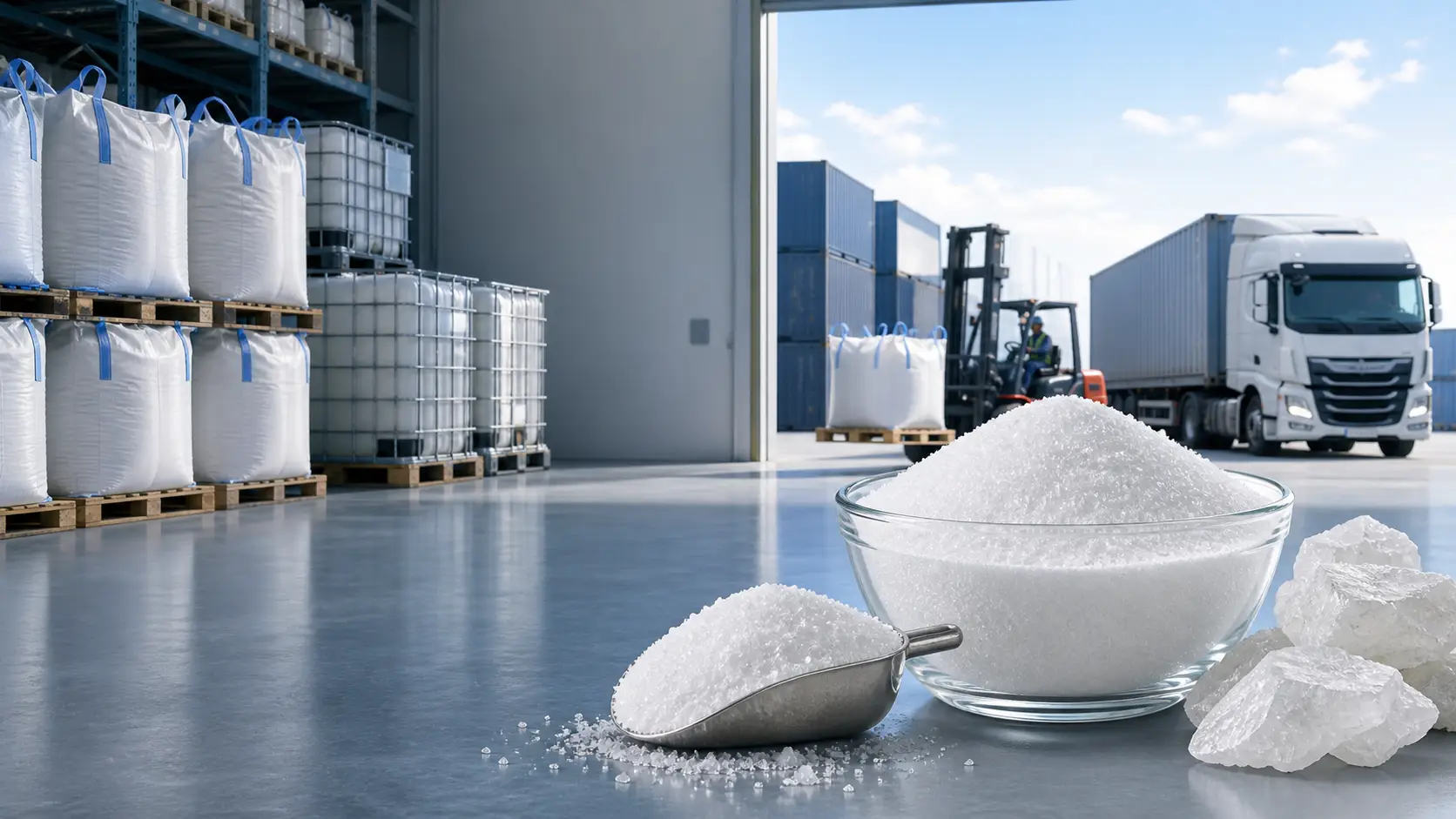
Borax pentahydrate is a white, crystalline powder or granule, typically containing around 47–48% B₂O₃ and about 14–15% boron (by weight), with the remainder primarily sodium and water of crystallization. Commercial grades are usually offered with low impurity levels (e.g., controlled iron content to avoid discoloration in glass and ceramics) and tightly managed particle size distributions to support consistent dissolution and handling. Common packaging formats include 25 kg bags, 50 lb bags, and bulk bags (FIBCs), with some suppliers offering bulk shipments for large industrial users.
From a functional standpoint, borax pentahydrate acts as a flux, buffer, and source of boron in multiple formulations. In glass and fiberglass, it lowers melting temperatures and improves thermal and chemical resistance, enabling stronger, lighter products with better durability. In ceramics and enamels, it promotes smooth, defect-free surfaces and enhances adhesion. In detergents and cleaning agents, borax pentahydrate can serve as a builder, pH buffer, and mild abrasive, improving cleaning performance and stability in powder and tablet formulations.
The benefits of using borax pentahydrate compared with some alternative boron sources include its relatively stable crystalline form, good solubility profile, and ease of handling. It offers a high boron content in a solid form that is less hygroscopic than some other hydrates, simplifying storage in a range of climates. For formulators, this translates into predictable performance and dosing, while for procurement teams it provides flexibility in sourcing, as the product is compatible with many standard handling systems for bulk powders and granules.
Applications and Sector-Specific Demand Trends
In the U.S., one of the largest application segments for borax pentahydrate is glass and fiberglass production. Borosilicate glass used in laboratory ware, cookware, and specialty lighting relies on borax pentahydrate to achieve low coefficients of thermal expansion and high resistance to thermal shock. Fiberglass insulation and reinforcement products also depend on boron compounds to reach the necessary mechanical and fire-resistance properties. As building energy codes become more stringent and demand for energy-efficient insulation grows, these applications continue to support robust borate consumption.
The detergents and cleaning products sector represents another important use case. Borax pentahydrate can be incorporated into powder laundry detergents, automatic dishwashing formulations, and multipurpose cleaners. It contributes to water softening, pH control, and stain removal, and can synergize with surfactants and bleaching systems. While liquid detergents have captured a significant share of the consumer market, industrial and institutional cleaning products still rely heavily on powder and solid formats where borax pentahydrate plays a central role.
Additional applications include metalworking and metallurgy, where borax pentahydrate functions as a flux in ferrous and nonferrous alloy production, helping to remove oxides and improve metal cleanliness. In agriculture, borax-based fertilizers supply boron as a micronutrient essential for plant growth, particularly in crops sensitive to boron deficiency. Flame retardant systems, wood preservatives, and certain polymer formulations also use borates to enhance fire resistance and durability. These diverse applications mean that fluctuations in any one sector can ripple through overall demand, contributing to the complex supply-demand dynamics observed in 2024.
Strategic Sourcing: How chemtradeasia.com Supports U.S. Buyers
Given the structural and cyclical pressures on the borax market, many U.S. buyers are reevaluating how they source borax pentahydrate. Instead of relying on a single origin or short-term spot purchases, companies are increasingly looking for partners that can offer multi-origin options, flexible logistics, and transparent market intelligence. This is where platforms like chemtradeasia.com play a valuable role, connecting buyers with a network of vetted producers and distributors across different regions.
Through chemtradeasia.com, U.S. customers can access a range of borax pentahydrate grades tailored to specific applications—whether for glass, detergents, agriculture, or metallurgy—along with technical documentation such as typical specifications and safety information. The platform’s focus on bulk and semi-bulk industrial chemicals means it is structured to handle consistent, repeat shipments as well as project-based or seasonal requirements. By aggregating demand and coordinating logistics, it can help optimize freight routes and packaging choices, which is especially important when ocean freight and inland transportation remain volatile.
Another advantage for procurement teams is the ability to benchmark offers and gain insight into prevailing market conditions. While prices for borax pentahydrate will continue to reflect underlying supply-demand balances and input costs, having clearer visibility through a specialized trading platform can support better budgeting and contract planning. In addition, the ability to engage with experienced commercial and technical support staff via chemtradeasia.com helps buyers align product selection with process requirements, reducing the risk of mismatches that might otherwise lead to production issues or costly reformulations.
Risk Management and Supply Chain Resilience Strategies
To cope with ongoing supply chain pressure, U.S. users of borax pentahydrate are adopting a variety of risk management strategies. One foundational step is diversifying supply sources where technically feasible. This may involve qualifying multiple grades or origins, provided they meet required specifications for B₂O₃ content, impurity limits, and particle size. While qualification can take time and resources, it reduces exposure to disruptions at any single mine, refinery, or export route.
Inventory and contract strategies are also evolving. Some buyers are moving away from purely spot purchasing toward a mix of medium-term contracts and safety stock policies. Holding additional inventory can buffer short-term disruptions, though it must be balanced against working capital and storage constraints. Structured agreements with suppliers or trading partners, including those accessed via chemtradeasia.com, can help stabilize volumes and pricing formulas, even if absolute prices remain sensitive to global trends.
Finally, closer collaboration between procurement, operations, and technical teams is becoming more important. Understanding the degree of flexibility in formulations—such as the potential to adjust dosage rates, particle size requirements, or even consider partial substitution with other borates—can create options when supply is tight. Regular communication with suppliers about forecast demand, maintenance schedules, and shipping windows further enhances resilience. Organizations that treat borax pentahydrate as a strategic raw material, rather than a routine commodity, are generally better positioned to navigate the current environment.
Conclusion
The supply chain pressures affecting borax pentahydrate in 2024 are the result of a complex interplay between concentrated production, rising energy and logistics costs, and steadily expanding demand across multiple industries. For U.S. buyers, these dynamics manifest as tighter availability, longer lead times, and more frequent price adjustments. At the same time, the underlying importance of borax pentahydrate in glass, detergents, metallurgy, agriculture, and advanced materials means that demand is likely to remain structurally robust.
In this context, building a more resilient sourcing strategy is critical. Technical teams need a clear understanding of product specifications and application requirements, while procurement teams must cultivate relationships with reliable suppliers and trading partners who can offer flexibility and market insight. Platforms such as chemtradeasia.com provide a practical route to accessing multiple borax pentahydrate sources, technical documentation, and commercial support, helping U.S. manufacturers manage risk without compromising on quality or performance.
This article is intended solely for informational and market insight purposes and does not constitute technical, safety, or professional advice. Readers should independently verify all information with qualified experts, consult official documentation such as MSDS/SDS and regulatory guidance, and contact their suppliers or our team via chemtradeasia.com for recommendations tailored to specific processes, products, and applications.
Leave a Comment