Introduction
In the evolving landscape of sustainable industry and circular economies, few materials have seen a transformation in perception quite like crude glycerine. Once considered a problematic waste stream from soap manufacturing, the boom in biodiesel production has catapulted this viscous, amber-colored liquid into a commodity of significant interest. Today, crude glycerine is a pivotal co-product, representing approximately 10% of the output from biodiesel transesterification processes. Its availability has surged, with the U.S. alone producing hundreds of millions of gallons annually, creating both a challenge and an opportunity for industries seeking cost-effective, renewable feedstocks.
This article delves deep into the multifaceted world of crude glycerine, exploring its traditional and modern applications across diverse sectors. From its foundational role in chemical manufacturing to its innovative uses in animal feed and biogas production, we will unpack how this substance is driving efficiency and sustainability. Furthermore, we will examine the critical function of specialized chemical suppliers, such as Chemtradeasia, in connecting producers with end-users, ensuring quality, reliability, and market fluidity for this essential bio-based product.
Understanding Crude Glycerine: A Primer
Crude glycerine, also known as raw or glycerin, is the unrefined glycerol-rich material obtained primarily as a byproduct of biodiesel production or saponification in soap making. Its composition is not pure; typically, it contains 80-88% glycerol, with the remainder consisting of water, methanol or ethanol catalyst residues, soap, fatty acids, and salt (MONG - Matter Organic Non-Glycerol). This impurity profile is crucial, as it dictates the subsequent processing steps required for various applications. The specific characteristics—such as glycerol content, pH, ash content, and methanol levels—vary based on the feedstock (e.g., soybean oil, used cooking oil, animal fats) and the production process used at the biodiesel plant.
Distinguishing it from its refined counterparts is key. Refined glycerine (USP grade) undergoes extensive purification—including distillation, ion exchange, and bleaching—to achieve over 99.5% purity, making it suitable for food, pharmaceutical, and cosmetic uses. Crude glycerine, in contrast, is valued for industrial applications where high purity is not economically justified. Its appeal lies in its cost-effectiveness as a carbon-rich raw material. The surge in biodiesel mandates, particularly under the U.S. Renewable Fuel Standard (RFS), has created a steady and growing supply, turning what was once a disposal cost for biodiesel producers into a valuable revenue stream and a cornerstone of the bio-economy.
Primary Industrial Applications of Crude Glycerine
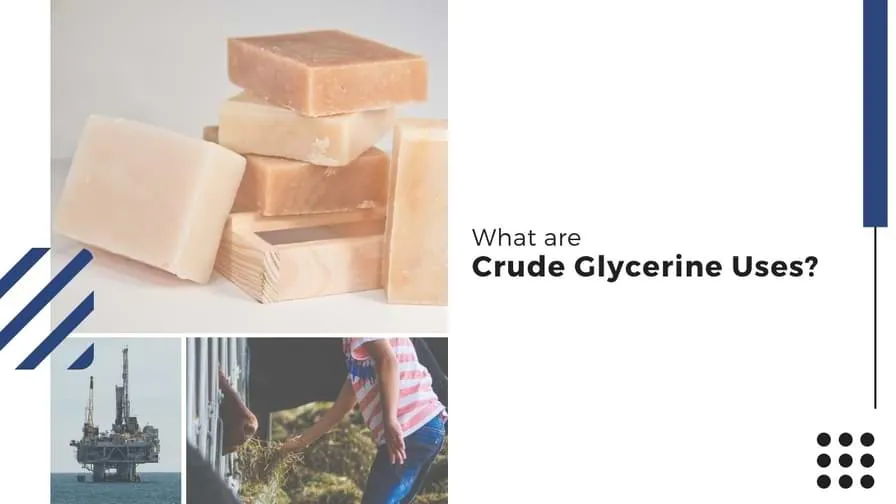
The majority of globally produced crude glycerine finds its way into established industrial pathways that capitalize on its chemical properties. One of the most significant uses is in animal feed, particularly for ruminants. Here, crude glycerine serves as a high-energy feed ingredient, providing a readily available source of calories. It is metabolized in the rumen and can help improve feed efficiency. However, its inclusion rates are carefully managed due to the presence of methanol and salts, with typical dietary inclusions ranging from 5% to 15%. This application provides a direct route for recycling a biofuel byproduct back into the agricultural value chain.
Another cornerstone application is in industrial fermentation. The glycerol molecule serves as an excellent carbon source for various microorganisms. It is extensively used in the production of citric acid, a ubiquitous compound in food and beverages, and in the biosynthesis of 1,3-Propanediol (PDO), a valuable monomer for producing advanced bio-based polymers like Sorona®. Furthermore, crude glycerine is a key feedstock in anaerobic digestion plants. Its addition to digesters significantly boosts biogas (methane) production, enhancing the energy yield from wastewater treatment or agricultural waste operations. This makes it a powerful tool for renewable energy generation beyond its origin in biodiesel.
Within the chemical industry itself, crude glycerine undergoes processes like gasification to produce synthesis gas (syngas—a mix of hydrogen and carbon monoxide), which can then be converted into methanol or other chemicals. It is also used in the production of epichlorohydrin, a precursor for epoxy resins, through a catalytic process. While many of these chemical conversions often require a more purified glycerine stream, technological advancements are increasingly allowing for the direct use of lower-grade material, improving process economics and sustainability metrics by reducing pre-treatment energy costs.
Emerging and Innovative Uses
Beyond traditional industries, research and development are continuously unlocking new, high-value avenues for crude glycerine. One promising area is in thermochemical conversion for advanced biofuels. Processes like pyrolysis and hydrothermal liquefaction can convert crude glycerine, often mixed with other biomass streams, into bio-crude oil that can be upgraded into renewable diesel, jet fuel, or gasoline. This represents a potential "second life" for glycerine within the broader biofuels sector, creating a more integrated and efficient biorefinery model.
In the realm of materials science, crude glycerine is being explored as a plasticizer and humectant in less sensitive applications, such as in certain construction materials or industrial-grade de-icing fluids. Its hygroscopic nature makes it suitable for dust control on unpaved roads. Perhaps one of the most innovative frontiers is its use in the production of hydrogen through steam reforming. As the world seeks green hydrogen, using a renewable, biogenic source like glycerine presents a compelling alternative to fossil fuel-based reforming, though purification and catalyst development remain active areas of research to manage impurities effectively.
The Role of Suppliers like Chemtradeasia
Navigating the market for crude glycerine requires expertise, as its variable quality and logistical handling needs present challenges for end-users. This is where established global suppliers like Chemtradeasia play an indispensable role. They act as vital intermediaries, aggregating supply from multiple biodiesel producers, performing essential quality assurance checks, and often providing basic stabilization or pre-treatment to ensure consistency for their customers. Suppliers manage the complex logistics of transporting this viscous liquid, which may require heated tanks in colder climates, and provide the market intelligence needed for strategic sourcing.
For businesses, partnering with a reputable supplier such as Chemtradeasia mitigates risk. They offer reliability of supply, which is crucial for industrial processes that run continuously. They can provide technical data sheets and specifications—such as glycerol content, MONG percentage, methanol content, and ash—allowing buyers to select the grade most suitable for their specific application, whether it's for fermentation, animal feed, or chemical synthesis. This supplier network is fundamental to the efficient functioning of the global glycerine market, ensuring that this abundant byproduct finds its optimal use rather than becoming a waste liability.
Market Trends and Future Outlook
The market dynamics for crude glycerine are intrinsically linked to the health of the biodiesel and renewable diesel industries. In America, supportive policies like the RFS, state-level low-carbon fuel standards (e.g., in California), and growing demand for sustainable aviation fuel (SAF) are driving robust production of these fuels, thereby ensuring a plentiful supply of glycerine. However, this abundance can suppress prices, making the development of new and expanded applications not just a technical pursuit but an economic imperative to maintain market balance and profitability for the entire biofuel value chain.
Looking ahead, the future of crude glycerine utilization hinges on innovation in two key areas: purification technology and catalysis. Advances in membrane separation, ion exchange, and low-energy distillation could make it more economical to upgrade crude streams to technical or even USP grades, opening higher-value markets. Concurrently, the development of more robust and impurity-tolerant catalysts will enable more chemical processes to directly consume crude material. The trend towards a circular bio-economy positions crude glycerine not as an end-of-pipe output, but as a central feedstock in integrated biorefineries, contributing to decarbonization goals across energy, chemicals, and materials.
Conclusion
From its origins as a simple soap byproduct to its current status as a cornerstone of the bio-economy, crude glycerine has proven to be a remarkably versatile and valuable substance. Its applications span from foundational industrial processes in chemicals and animal nutrition to cutting-edge research in renewable fuels and hydrogen production. The sustained growth of the biodiesel sector guarantees its availability, challenging industries and researchers to continuously innovate and find new, efficient pathways to utilize this carbon-rich resource. Effective utilization of crude glycerine is a clear indicator of a mature and sustainable industrial ecosystem, turning potential waste into wealth and contributing to a more circular economic model.
Disclaimer: This article is for informational and market insight purposes only. It is not intended as technical, safety, or professional advice. The applications and data mentioned are based on general industry trends and should not be relied upon for specific operational decisions. We strongly advise readers to independently verify all information with qualified experts, consult official documentation such as Material Safety Data Sheets (MSDS/SDS) for handling and safety protocols, and contact our technical team at Chemtradeasia for guidance on specifications and suitability for your particular application.
Leave a Comment