
Introduction
In the American chemicals and manufacturing landscape, gum rosin has evolved from a commodity pine-derived resin into a strategically important raw material for adhesives, inks, coatings, rubber, and paper industries. As supply chains become more complex and end-user expectations rise, buyers are no longer focused solely on unit cost. They increasingly evaluate gum rosin suppliers on a wide set of criteria that directly impact product performance, operational reliability, and regulatory compliance.
Companies sourcing gum rosin for use in hot-melt adhesives, pressure-sensitive labels, road-marking paints, and printing inks need consistent quality and dependable logistics. Volatile freight rates, changing environmental rules, and geopolitical disruptions have pushed procurement teams to re-think how they select and manage suppliers. For many American buyers, the right partner is one who can provide technical insight, transparent documentation, and long-term supply security—often leveraging global networks such as chemtradeasia.com.
This article explores what buyers in America now expect from gum rosin suppliers beyond pricing. It covers market dynamics, quality specifications, value-added services, sustainability, and partnership models, with a particular focus on how digital platforms and integrated distributors like Gum Rosin by chemtradeasia.com can meet these evolving demands.
Understanding the Modern Gum Rosin Market in America
The American gum rosin market is shaped by both domestic demand and global supply trends. Gum rosin is primarily produced in pine-rich regions such as China, Brazil, Indonesia, and other Southeast Asian countries. According to industry estimates, Asia accounts for more than 70% of global gum rosin production, while North America remains a major importer for high-value downstream industries. This geographic mismatch makes American buyers particularly sensitive to supplier reliability and logistics performance.
Demand in the United States is driven by sectors such as pressure-sensitive adhesives, hot-melt adhesives for packaging, printing inks, soldering fluxes, and rubber compounding. Growth in e-commerce packaging, flexible packaging, and sustainable coatings has increased the need for bio-based resins like gum rosin and its derivatives. At the same time, buyers must balance technical performance with cost, making it crucial to source gum rosin grades that match their exact softening point, acid value, and color requirements.
Market volatility has also become a key concern. Over the past decade, buyers have experienced price fluctuations due to shifts in crude oil (which influence synthetic resin prices), changes in pine tapping labor availability, and environmental regulations in producing countries. These dynamics have led American manufacturers to prioritize suppliers who can provide not just competitive pricing, but also market intelligence, multi-origin sourcing options, and inventory strategies that smooth out volatility—capabilities often offered by large trading platforms such as chemtradeasia.com.
Key Expectations From Gum Rosin Suppliers Beyond Price
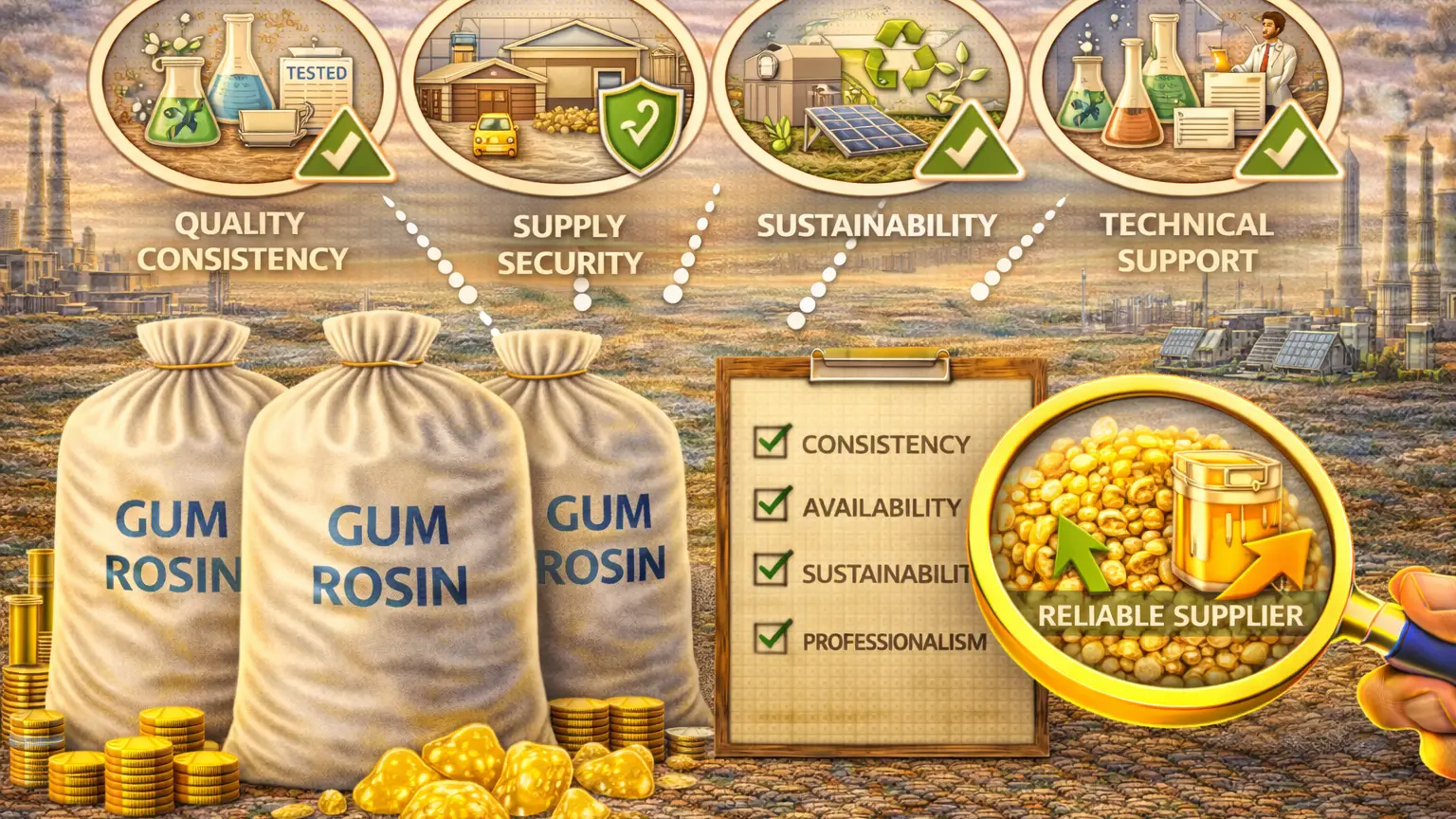
American buyers now build supplier scorecards that go far beyond a simple price comparison. One of the foremost expectations is consistency—batch-to-batch uniformity in gum rosin properties such as color (often measured on the Gardner scale), softening point, and acid value. Inconsistent material can lead to adhesive viscosity drift, color variation in inks, or performance issues in rubber compounding, which in turn cause production downtime and product rejects.
Another critical expectation is transparency and documentation. Buyers expect full Certificates of Analysis (CoA), Safety Data Sheets (SDS), and, increasingly, traceability back to production regions and facilities. This is especially relevant for companies serving regulated segments like food packaging, toys, and consumer goods, where audits and customer inquiries are frequent. Suppliers are expected to respond quickly with technical data, regulatory declarations (such as REACH, RoHS, or Proposition 65 relevance), and clear information on any formulation changes.
Responsiveness and technical support also rank high. Procurement and R&D teams frequently need guidance on selecting the right gum rosin grade or derivative for specific applications—for example, choosing between WW-grade gum rosin and modified rosin esters for hot-melt adhesives. Suppliers who can offer application know-how, lab test data, and troubleshooting support gain a competitive edge. Platforms like chemtradeasia.com add value by connecting buyers with technical experts and providing a structured catalog of product grades and specifications.
Product Quality, Specifications, and Performance of Gum Rosin
From a product standpoint, American buyers evaluate industrial gum rosin on a defined set of technical parameters. Common commercial grades include X, WW, WG, and N, with WW being one of the most widely used in adhesives and inks due to its lighter color and higher purity. Typical quality indicators include a softening point in the range of 76–80°C (Ring & Ball), an acid value around 160–170 mg KOH/g, and low levels of unsaponifiable matter. Color is often specified as WW or better on the Gardner scale for applications where appearance and color stability are critical.
Performance in end-use applications is where gum rosin truly proves its value. In hot-melt and pressure-sensitive adhesives, gum rosin and its derivatives act as tackifiers, improving adhesion to substrates like paper, cardboard, and certain plastics. The right rosin grade can enhance initial tack, peel strength, and cohesion while maintaining good heat resistance. In printing inks and varnishes, gum rosin contributes to film formation, gloss, and pigment wetting. For rubber compounding, it can improve tack between plies and enhance the processing characteristics of natural and synthetic rubbers.
American buyers expect suppliers to offer not only base gum rosin but also a range of derivatives and tailored grades—such as glycerol esters, pentaerythritol esters, and maleic-modified rosin—each with defined softening points and compatibility profiles. Global distributors like chemtradeasia.com typically list detailed specifications, including softening point ranges, acid values, and recommended applications, enabling buyers to match the product precisely to their formulation needs. In many cases, side-by-side comparisons with synthetic hydrocarbon resins help customers evaluate performance, cost, and sustainability trade-offs.
Value-Added Services and Digital Experience From chemtradeasia.com
Beyond the physical product, American buyers increasingly value the service layer that surrounds gum rosin supply. This includes flexible packaging options (bags, drums, or bulk), just-in-time deliveries from regional warehouses, and the ability to handle both spot purchases and long-term contracts. Effective inventory management by the supplier helps buyers minimize working capital tied up in stock while reducing the risk of production stoppages due to shortages.
The role of digital platforms has grown significantly. Through portals such as chemtradeasia.com, buyers can access product catalogs, technical data sheets, and pricing indications in a centralized, user-friendly interface. Online quotation requests, order tracking, and documentation downloads streamline the procurement workflow. For multi-site manufacturers in America, a unified digital interface simplifies coordination between local plants, central purchasing, and global suppliers, reducing administrative overhead.
Value-added services also extend to market insights and risk advisory. Suppliers with a broad international footprint can share trends on pine tapping seasons, freight rate movements, and regulatory developments that may affect gum rosin availability or pricing. For example, if environmental regulations in a producing country are likely to reduce output, a platform like chemtradeasia.com can alert buyers early and propose alternative origins or substitute grades. This proactive approach transforms the supplier from a transactional vendor into a strategic partner.
Sustainability, Compliance, and Risk Management in Gum Rosin Sourcing
Sustainability has become a central expectation for American buyers, especially those supplying global brands and consumer-facing products. Gum rosin, being a bio-based resin derived from pine trees, already offers a favorable profile compared to purely petrochemical tackifiers. However, buyers increasingly seek assurance that the pine tapping and processing practices are environmentally responsible and socially compliant. This includes concerns about deforestation, worker safety, and fair labor practices in producing regions.
Compliance requirements are tightening across the United States and international markets. Buyers expect gum rosin suppliers to provide documentation that supports compliance with regulations such as REACH (for imports into the EU), TSCA in the U.S., and specific food-contact or toy-safety standards where relevant. Suppliers must be ready to issue detailed regulatory statements, allergen declarations, and, where applicable, information on potential contaminants such as heavy metals or residual solvents. Platforms like chemtradeasia.com help centralize this documentation and keep it updated, which is crucial during audits.
Risk management also plays a key role. American manufacturers learned during recent global disruptions that single-source dependency can be costly. Buyers now expect gum rosin suppliers to offer multi-origin sourcing strategies, diversified logistics routes, and contingency plans. Large trading networks can source gum rosin from different countries such as Indonesia, China, Brazil, and Vietnam, reducing exposure to local disruptions. In some cases, suppliers may propose alternative rosin derivatives or blends to mitigate shortages. This strategic diversification, supported by data and scenario planning, is increasingly seen as a core part of supplier value.
Building Long-Term Partnerships With Gum Rosin Suppliers
As gum rosin becomes more integrated into critical formulations and high-performance applications, American buyers favor long-term partnerships over transactional spot buying. A partnership mindset allows both parties to invest in joint development, quality improvement, and cost optimization initiatives. For example, a supplier might work with a customer’s R&D team to tailor a rosin ester with a specific softening point and compatibility profile that enhances adhesive performance while reducing total formulation cost.
Communication and transparency are the foundations of such partnerships. Buyers expect regular business reviews, performance metrics, and open discussions on upcoming changes—whether in product specifications, production sites, or logistics arrangements. Digital platforms like chemtradeasia.com can support this by providing shared dashboards, order histories, and documentation repositories, ensuring that both parties have a clear view of the relationship and can plan ahead.
Pricing still matters, but within the context of total value. Long-term contracts, volume commitments, and collaborative forecasting can yield more stable pricing and priority allocation during tight markets. Suppliers who demonstrate reliability during periods of scarcity often become preferred partners even when prices normalize. For American buyers, the ideal gum rosin supplier is one who combines competitive cost with technical competence, robust compliance support, and a clear willingness to invest in mutual growth.
Conclusion
For American manufacturers in adhesives, inks, coatings, rubber, and paper, gum rosin is far more than a commodity input. It is a performance-critical, bio-based resin whose quality and availability directly influence product consistency, regulatory compliance, and brand reputation. As a result, buyers now assess gum rosin suppliers on a broad spectrum of factors that go well beyond price per ton.
Expectations include tight control of product specifications, comprehensive documentation, responsive technical support, and robust logistics capabilities. Sustainability credentials, regulatory compliance, and structured risk management are no longer optional; they are central to supplier selection. Digital platforms such as chemtradeasia.com illustrate how a modern gum rosin supply partner can integrate global sourcing, technical data, and online services to meet these complex needs.
Ultimately, the most successful gum rosin suppliers in the American market will be those who position themselves as strategic partners—offering reliable products, insightful market intelligence, and collaborative problem-solving. Buyers who cultivate such partnerships can secure a more resilient supply chain, enhance product performance, and create lasting competitive advantages that extend well beyond the initial purchase price.