
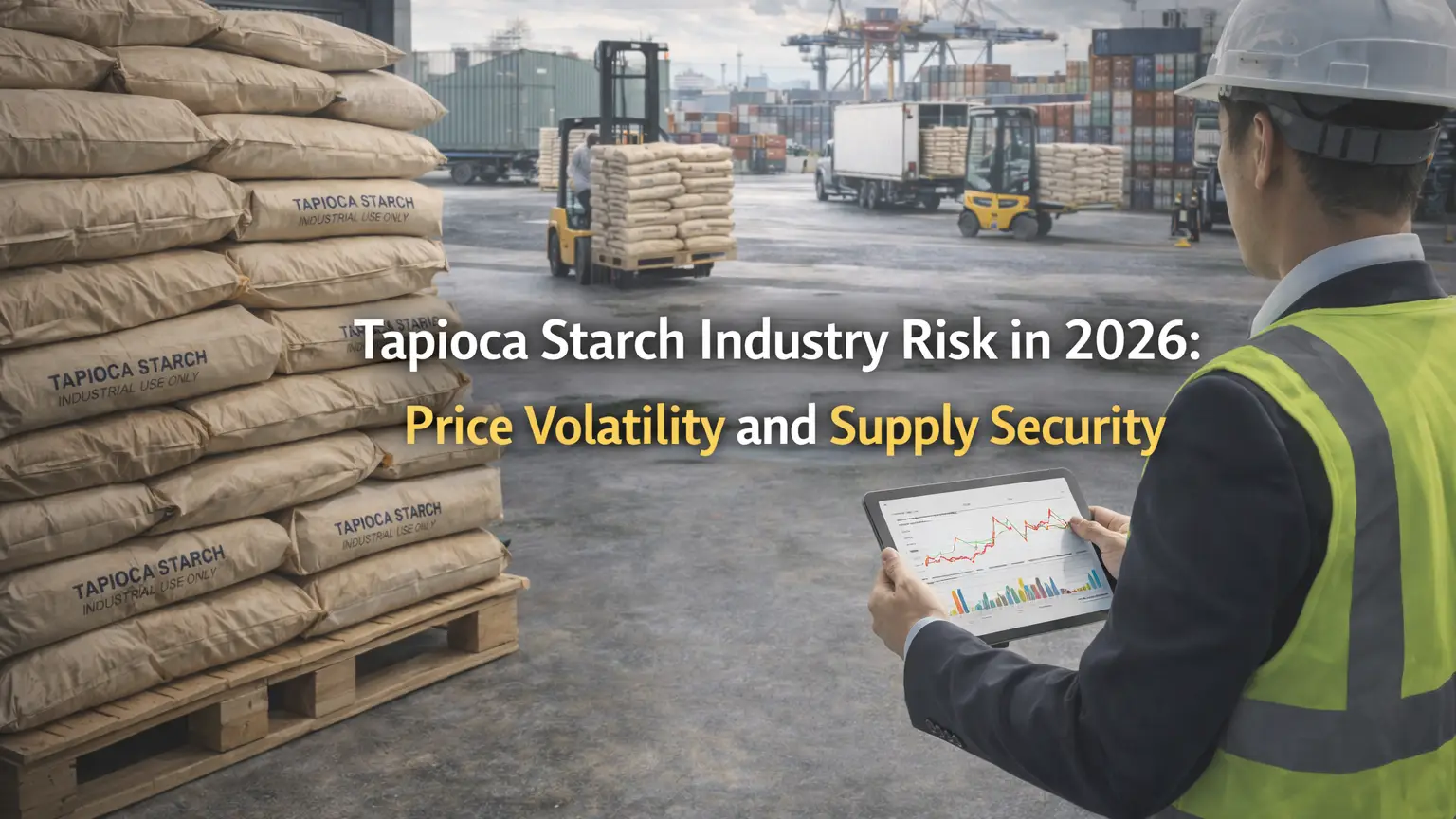
Tapioca starch price volatility in 2026 is closely tied to agricultural supply conditions, processing costs, and export logistics. For manufacturers and importers, the main risk is not only the headline FOB price, but also whether supply can stay consistent through seasonal harvesting cycles, shipping disruptions, and changing compliance requirements. In practice, procurement teams increasingly track tapioca starch supply security alongside basic pricing, because delays or quality mismatches can cost more than a small unit price difference.
Global supply concentration and why it matters
Tapioca starch trade is heavily concentrated in Southeast Asia. Thailand is one of the largest exporters and publishes regular production and export indicators that many buyers use as market signals. Recent Thai industry reporting shows large annual export volumes for tapioca starch and continued dependence on cassava root availability, with notable swings by season and crop year.
This concentration creates a practical exposure. When weather or farm-gate cassava prices shift in a single region, buyers in China, the EU, the US, and the Middle East can all feel it through lead times and offer levels. Diversifying origins is possible, but the scale outside Thailand and nearby exporters is often limited, so diversification reduces risk rather than removing it.
Key drivers of price volatility in 2026
Price movements usually come from several overlapping drivers rather than one factor.
Cassava crop variability and farm-gate pricing
Cassava yields can move with rainfall patterns, drought stress, and disease pressure. When yields tighten, processors compete for roots, and starch prices often move quickly because raw material is the dominant input. Even when export demand is stable, a tighter cassava market can lift starch offers.
Processing cost pass-through
Tapioca starch production relies on washing, milling, and drying. Energy costs and plant efficiency matter, especially for drying. When power and fuel costs rise, many suppliers adjust offers rather than absorbing the full impact. Labor costs and environmental compliance costs can also matter at the margin, depending on the local regulatory environment and wastewater handling requirements.
Freight and route disruption risk
In 2026, freight remains a meaningful variable in landed cost planning. Route disruptions and rerouting effects in major shipping lanes have shown they can raise transit times and shipping costs, even when product fundamentals are unchanged. UNCTAD has documented how Red Sea related disruptions increased distances and affected maritime trade flows and costs, which can translate into higher CIF costs for starch moving to Europe or the Americas.
Currency effects
Many tapioca starch contracts reference USD terms. When exporter currencies move, suppliers may reprice. On the buyer side, a weaker local currency raises the effective landed cost even if the USD offer is unchanged.
Supply security risks beyond price
Even when buyers accept price volatility as normal, supply security issues can be harder to manage.
Export timing and port capacity
Tapioca starch shipments often peak around harvest and processing cycles. When port congestion rises, container availability tightens, or inland logistics slow, suppliers may extend lead times. This risk is more operational than financial, but it can disrupt production plans if safety stock is thin.
Grade consistency and specification drift
Food processors and paper or adhesive users often need consistent viscosity behavior and moisture limits. Variability can increase when plants switch cassava sources or when production runs at high utilization. Buyers typically reduce this risk by tightening COA requirements, increasing inbound testing, and aligning on acceptable ranges rather than single-point specs.
Policy and compliance risk
Import procedures can tighten around documentation, labeling, and product claims. For buyers shipping into regulated markets, traceability expectations are trending upward. Even without a formal tariff change, more inspections or stricter documentation checks can add delays and costs.
What a realistic 2026 risk outlook looks like
A practical way to view 2026 is as a year where volatility is likely to remain “normal” rather than exceptional.
-
Price direction risk: weather and cassava availability remain the biggest swing factor, with freight acting as an amplifier.
-
Availability risk: most buyers can source product, but lead time risk increases during seasonal peaks or when shipping lanes are disrupted.
-
Quality risk: manageable with tighter specs, supplier qualification, and routine testing, but it adds workload and sometimes cost.
Thai industry updates on output and export flow can be useful reference points for planning, since they provide market visibility into one of the most important exporting bases
.
Conclusion
Tapioca starch industry risk in 2026 is mostly about managing variability: cassava-driven supply shifts, processing cost pass-through, and freight-related landed cost changes. Supply concentration in key exporting hubs means global buyers often see the same risk signals at the same time, so early planning tends to work better than reactive buying. With qualified suppliers, clear specifications, and contract and inventory policies that reflect real lead times, most buyers can keep supply stable even when prices move.
If you need support validating tapioca starch specifications, documentation, and shipment planning for your target destination market, Chemtradeasia can help align grades and logistics requirements with your procurement plan in a practical, compliance-aware way.