Introduction Polyaluminium Chloride
The global leather industry is undergoing a period of rapid transformation driven by sustainability pressures, evolving fashion trends, and heightened regulatory scrutiny on effluent and waste. At the heart of this change is the chemicals value chain, where coagulants and auxiliaries play a decisive role in the efficiency, cost, and environmental footprint of leather production. Among these, Polyaluminium Chloride (commonly abbreviated as PAC) has emerged as a critical enabler for wastewater treatment and process water conditioning across tanneries worldwide.
As we approach 2026, the supply chain for Polyaluminium Chloride for industry leather chemicals is being reshaped by shifting raw material availability, stricter discharge norms in key producing countries, and the growing need for reliable, diversified sourcing partners. Stakeholders from tanneries and finishing plants to chemical distributors are reassessing their procurement strategies and technical choices to ensure continuity of operations while meeting environmental and quality benchmarks.
This article provides a structured, in‑depth look at the global PAC supply chain for leather applications with a focus on 2026. It explores market outlook, key specifications, and application benefits, while highlighting how integrated platforms such as chemtradeasia can support manufacturers and traders with robust sourcing, logistics, and market intelligence. The objective is to equip decision‑makers with actionable insight into managing risk, cost, and performance in their leather chemicals portfolio.
Global Market Outlook for Polyaluminium Chloride and Leather Chemicals
The global Polyaluminium Chloride market has historically been driven by municipal and industrial water treatment, but leather processing is an increasingly important niche segment. Industry analyses estimate the overall PAC market size at around USD 1.7–2.0 billion in the early 2020s, with projected compound annual growth rates of 4–6% through 2026, largely propelled by emerging economies in Asia‑Pacific, the Middle East, and parts of Africa. As leather production is heavily concentrated in countries such as China, India, Pakistan, Brazil, Vietnam, and Italy, demand for PAC as a primary coagulant in tannery effluent treatment plants (ETPs) is expected to grow in parallel.
Leather chemicals as a broader category, including beamhouse chemicals, tanning agents, fatliquors, dyes, and finishing agents—are projected to reach over USD 9–10 billion by the mid‑2020s. Within this segment, environmental auxiliaries such as coagulants and flocculants are gaining strategic significance. Regulatory tightening in major export markets (for example, EU REACH requirements and stricter buyer audits from global brands) has made high‑performance effluent treatment non‑negotiable. This trend directly supports higher‑value consumption of PAC grades optimized for leather wastewater, which often contains a complex mixture of chromium, sulfides, fats, and organic load.
From a geographic perspective, Asia‑Pacific remains the growth engine for both leather production and PAC consumption. China and India are dominant producers of PAC, leveraging access to alumina and hydrochloric acid feedstocks, while also hosting large clusters of tanneries and leather goods manufacturers. However, there is a clear trend toward diversification of supply, with buyers increasingly looking to multi‑origin sourcing through global distributors and platforms such as chemtradeasia to reduce dependence on any single country. By 2026, resilient, multi‑node supply chains are expected to be a defining characteristic of the PAC and leather chemicals market.
Key Properties and Specifications of Polyaluminium Chloride for Leather Applications
Polyaluminium Chloride is an inorganic polymer coagulant produced by the controlled reaction of aluminium hydroxide or bauxite with hydrochloric acid, yielding a range of basicity levels and polymer structures. For leather industry wastewater, PAC is primarily valued for its high charge density, rapid coagulation kinetics, and ability to perform over a relatively wide pH range. These features enable efficient removal of suspended solids, colloidal particles, fats, oils, and a significant portion of color and heavy metals from tannery effluent.
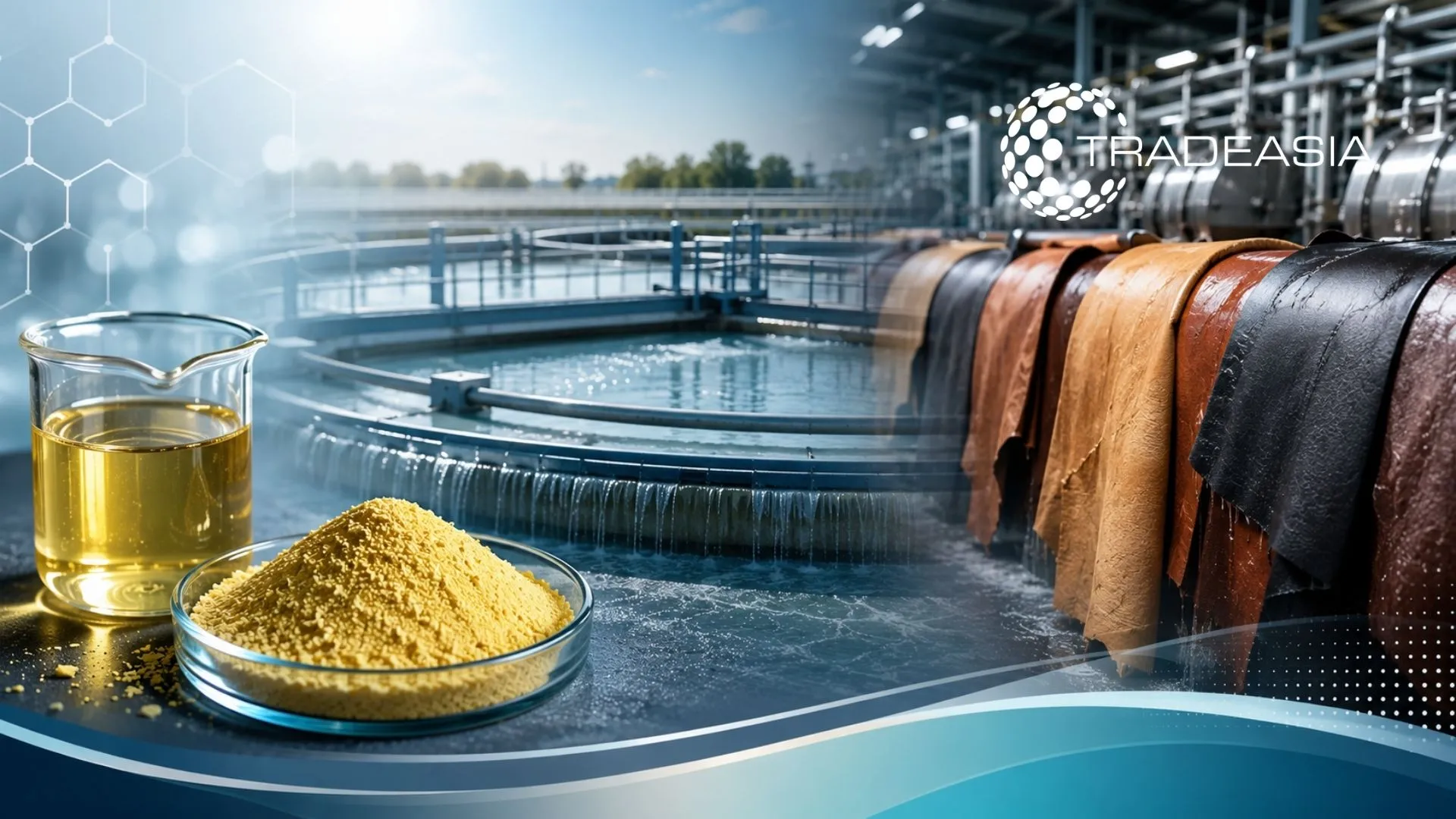
Commercial PAC grades for leather applications are typically supplied either as a yellowish liquid (with Al2O3 content around 9–18%) or as a light yellow powder or granule (with Al2O3 content commonly in the 28–31% range). Important specification parameters include basicity (often 60–90%), insoluble matter (<0.5% for high‑grade products), pH of a 1% solution (around 3.5–5.0), and low levels of impurities such as heavy metals. For tanneries, consistency of Al2O3 content and basicity is particularly important, as fluctuations can impact coagulation efficiency, sludge volume, and downstream biological treatment performance.
Compared with traditional coagulants such as aluminium sulfate (alum) or ferric salts, Polyaluminium Chloride often offers lower dosage requirements, faster floc formation, and reduced sludge generation. In leather effluent treatment, these advantages translate into smaller clarifier sizes, lower chemical consumption, and reduced sludge handling and disposal costs—critical factors in regions where landfilling and incineration are increasingly regulated and expensive. Many tanneries have reported improved clarity of treated water, better color reduction, and more stable operation of biological treatment units after switching from alum to PAC, particularly when working with formulations tailored to their specific wastewater profile.
Supply Chain Dynamics and Sourcing Strategies for 2026
The supply chain for Polyaluminium Chloride is closely tied to the availability and pricing of key feedstocks—alumina or aluminium hydroxide, hydrochloric acid, and energy. Disruptions in bauxite mining, fluctuations in chlorine‑alkali production, and energy price volatility can all cascade into PAC pricing and availability. The COVID‑19 pandemic highlighted the vulnerability of single‑origin sourcing models, as logistics bottlenecks, port congestion, and export controls led to sharp, localized shortages of water treatment chemicals, including PAC, in several markets.
Looking toward 2026, leather manufacturers and chemical traders are adopting more sophisticated sourcing strategies to mitigate these risks. Multi‑origin procurement, long‑term offtake agreements with reputable producers, and collaboration with global distributors are becoming standard practice. Buyers are prioritizing suppliers with robust quality systems (ISO‑certified plants, consistent batch documentation, and transparent traceability) and proven export capabilities. In parallel, there is increased interest in digital platforms and integrated trading networks such as chemtradeasia, which aggregate supply from multiple producers across Asia, the Middle East, and other regions, while offering logistics optimization and documentation support.
Logistics considerations are equally important. PAC powder is typically shipped in 25 kg bags, jumbo bags, or bulk, while liquid PAC is transported in IBCs, drums, or tankers. For leather industry hubs located far from seaports or in regions with limited storage infrastructure, product form, packaging, and shelf life must be carefully evaluated. Powdered PAC generally offers better storage stability and lower transportation cost per unit of active content, whereas liquid PAC can simplify on‑site handling and dosing. Strategic warehousing, buffer stocks, and just‑in‑time delivery models are increasingly used by distributors to ensure continuous supply to tanneries operating on tight production schedules.
Role of chemtradeasia and Other Global Suppliers in the Leather Chemicals Chain
Global trading and distribution platforms play a crucial role in connecting PAC producers with leather industry end users across multiple continents. chemtradeasia is one such platform that specializes in chemicals supply chain management, linking manufacturers in Asia and other regions with buyers around the world. By aggregating demand from tanneries, formulators, and regional distributors, such platforms can negotiate competitive pricing, secure production slots, and coordinate shipping routes that smaller buyers would struggle to access independently.
For Polyaluminium Chloride specifically, chemtradeasia and similar suppliers typically offer a portfolio of grades differentiated by Al2O3 content, basicity, and physical form, allowing leather manufacturers to select products aligned with their process and effluent characteristics. Technical data sheets (TDS), indicative dosing guidelines, and sample support enable customers to conduct plant‑scale trials before committing to large‑volume purchases. In many cases, distributors also assist with documentation for regulatory compliance, including conformity to local environmental norms, and can coordinate third‑party testing if required by brand auditors or regulatory bodies.
Beyond PAC, integrated suppliers support the leather value chain with a broader basket of products—such as degreasers, surfactants, neutralizing agents, fatliquors, dyes, and finishing resins—helping tanneries streamline their vendor base and logistics. When PAC is sourced alongside other leather chemicals, synergies in freight consolidation, customs clearance, and inventory management can significantly reduce overall procurement costs. As 2026 approaches, the ability of partners like chemtradeasia to provide not only product but also market insight, demand forecasting, and risk management will be a key differentiator for tanneries seeking resilience and competitiveness.
Conclusion
By 2026, the supply chain for Polyaluminium Chloride in the leather chemicals sector is expected to be more diversified, data‑driven, and sustainability‑oriented than ever before. PAC will remain a cornerstone of tannery wastewater treatment, enabling producers to meet stringent discharge limits while optimizing operating costs and safeguarding relationships with global brands. Strategic sourcing from multi‑origin suppliers, careful selection of product specifications, and integration of PAC within a holistic leather chemicals package will be central to success for tanneries and chemical traders alike.
Platforms such as chemtradeasia are positioned to play a pivotal role in this evolving landscape by connecting reliable PAC manufacturers with leather industry buyers worldwide, offering technical documentation, logistics support, and market intelligence. As environmental regulations tighten and supply chain disruptions become more frequent, collaboration with experienced, globally networked suppliers will help stakeholders manage risk and capture growth opportunities in both established and emerging leather hubs.
This article is intended solely for informational and market insight purposes and does not constitute technical, safety, or professional advice. Readers should independently verify all information with qualified experts, consult official documentation such as MSDS/SDS and relevant regulations, and contact appropriate technical professionals or our team before making decisions on specific products, processes, or applications.
Leave a Comment