
The first wave of plant-based meat and dairy alternatives captured shelf space but lost repeat buyers. Texture — specifically the absence of fat-derived juiciness, creaminess, and bite cohesion — was the primary reason consumers switched back to animal products. Plant-Based 2.0 is the industry's answer to that failure: a reformulation cycle defined not by protein substitution alone, but by precision fat and emulsifier architecture. Soya lecithin sits at the centre of that rebuild.
Why the First Generation of Plant-Based Products Failed on Mouthfeel
Replicating the sensory architecture of animal meat or dairy is a multi-variable problem. The general composition of a plant-based meat analogue runs at 50–80% water content, 10–25% textured protein, and 3–10% fat, a matrix that behaves fundamentally differently from animal muscle tissue under heat and mechanical stress. First-generation products solved the protein structure challenge using extrusion technology, but underinvested in the fat emulsification layer. The result was products consumers consistently described as dry, chalky, or lacking the coating sensation that fat delivers on the palate.
Sensory research published in peer-reviewed food science literature identified texture as the central driver of consumer acceptability, ranking above flavour and appearance in purchase intent decisions. Flexitarian consumers who account for the largest volume opportunity in plant-based food hold particularly high texture expectations because they regularly compare plant-based alternatives to the animal products they still consume. If texture does not hold up in that comparison, the product loses the repeat purchase.
What Soya Lecithin Does Inside a Plant-Based Matrix
Soya lecithin is a complex mixture of phospholipids, primarily phosphatidylcholine, phosphatidylethanolamine, and phosphatidylinositol. Each molecule carries both hydrophilic and hydrophobic regions, enabling it to position itself at the oil-water interface inside a plant-based food matrix. This interfacial activity is what makes it commercially indispensable in reformulation: it does not merely blend oil and water, it stabilises the emulsion against separation during processing, retort, and on-shelf storage.
In the context of plant-based burgers and structured meat analogues, fat droplet distribution directly determines juiciness perception and coating mouthfeel. Proteins — whether from pea, soy isolate, or faba bean — tend to aggregate under heat and expel moisture, creating the dry texture characteristic of first-generation products. Soya lecithin interrupts this process by stabilising small oil droplets within the protein network, ensuring that fat disperses evenly during cooking rather than pooling or separating. The result is a product that retains moisture longer and delivers fat sensation progressively through the chew — the same mechanism that defines the eating quality of ground beef.
Structured Meat Alternatives (Burgers, Mince, Nuggets)
Structured meat analogues represent the highest-volume application for soya lecithin in the plant-based sector. Leading producers including Beyond Meat, Impossible Foods, and their OEM manufacturing equivalents have each iterated their emulsification systems across product generations, with fat distribution control emerging as the differentiating variable between generations. Beyond Meat's fourth-generation burger formulation, launched in 2023, addressed juiciness and fat cohesion as primary reformulation targets — the exact sensory dimensions that lecithin-stabilised emulsion systems are designed to solve.
At industrial scale, soya lecithin is incorporated either in liquid form directly into the protein-water-fat blend during high-shear mixing, or in de-oiled powder form in dry blended systems where precise dosing is required. Nugget and processed formats that undergo breading and frying benefit additionally from lecithin's release agent properties, which reduce surface sticking and maintain coating integrity. The functional load in these applications is typically 0.2–0.5% of the finished product weight, making per-unit lecithin costs manageable even against the margin pressure that plant-based manufacturers currently face.
Plant-Based Dairy Alternatives (Oat, Almond, Coconut Beverages)
Plant-based milk beverages represent the largest single category in plant-based food retail globally. Lecithin's role in these formats is structural: plant proteins have substantially lower water-solubility and emulsifying capacity than dairy caseins and whey proteins, which means that without an added emulsifier, plant beverages stratify rapidly and deliver inconsistent mouthfeel across the serving. Soya lecithin stabilises the oil-in-water emulsion, produces the homogeneous suspension consumers associate with dairy milk, and supports the creamy coating sensation that high-fat dairy products deliver.
The barista format — high-concentration plant-based beverages designed to foam and integrate with espresso without breaking — represents the most technically demanding application within this category. Stabilising a plant-based emulsion through steam heating, pressure, and turbulence requires an emulsifier with both thermal stability and rapid interfacial adsorption. Soya lecithin, particularly in its de-oiled and hydrolysed forms, meets this specification at cost-effective inclusion levels. Palsgaard and Cargill both offer lecithin-based blends engineered specifically for barista-grade plant-based drinks, indicating the commercial scale of this demand segment.
Plant-Based Spreads, Dressings, and Fat Emulsion Systems
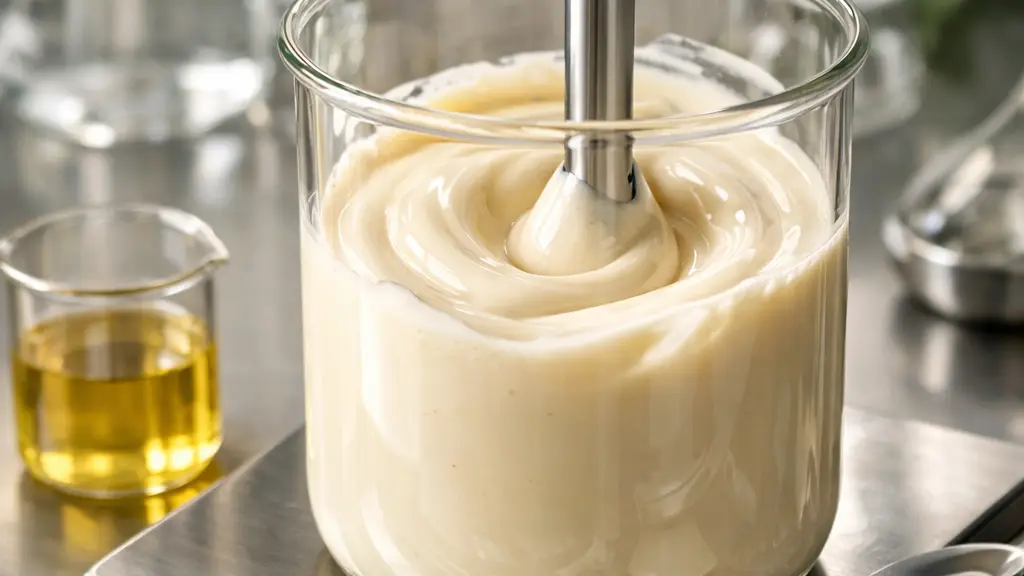
Beyond meat and beverage formats, the Plant-Based 2.0 cycle is producing a second tier of reformulated fat-based products: vegan butter alternatives, plant-based mayonnaise, and oil-rich dressings that must deliver the viscosity and mouth-coating sensation of their dairy or egg-based counterparts. These are classical water-in-oil or oil-in-water emulsions where lecithin's function maps directly from its industrial heritage in margarine production.
Archer Daniels Midland partnered with a plant-based snack manufacturer in 2024 to develop lecithin-infused fibre blends, indicating ingredient supplier investment in crossover applications that combine fat emulsification with fibre-based texture modification. This signals a formulation direction where soya lecithin operates as part of a multi-functional ingredient system rather than as a standalone emulsifier, expanding its role in plant-based fat architecture beyond simple oil-water stabilisation.
The Clean-Label Tension: Soya Lecithin Under Competitive Pressure
Soya lecithin accounts for approximately 78% of global lecithin revenue, a dominance built on the scale economics of soybean processing. In soy crushing operations, lecithin is a co-product of crude soy oil refining, which means its cost structure is fundamentally tied to oilseed throughput rather than standalone production capacity. This gives it a pricing advantage that sunflower and rapeseed lecithins, extracted as primary products from dedicated processing lines, cannot replicate at equivalent volume. Major producing countries — Brazil, the United States, and Argentina — back this supply base with infrastructure suited to high-volume food ingredient procurement.
The commercial pressure on soya lecithin in plant-based applications, however, is not technical. It is label-driven. Soy is classified among the top allergens in both US FDA and EU regulatory frameworks, requiring source disclosure on finished product labels. In plant-based products that are simultaneously positioning as free from animal ingredients, dairy, and now soy, this allergen label creates a formulation paradox: the most cost-effective emulsifier conflicts with a key marketing claim. The EU's approach to GMO labelling amplifies this tension. European plant-based manufacturers operating under identity-preserved non-GMO sourcing requirements face either a premium for certified non-GMO soy lecithin or reformulation toward sunflower or rapeseed alternatives.
Sunflower lecithin is growing at 10.9% CAGR through 2030 — a rate that outpaces the broader lecithin market — driven precisely by this allergen-and-GMO positioning gap. The price premium runs at 20–40% above soya lecithin, which limits sunflower's penetration to premium, allergen-conscious, or organic-certified product tiers. For mainstream plant-based food manufacturers buying at volume, soya lecithin remains the default emulsifier, with non-GMO certified soya grades as the practical midpoint between conventional soy and the fully sunflower-derived option.
Regional Demand Dynamics: Where the Reformulation Cycle Is Happening
North America leads lecithin market revenue, with a 35% share in 2025, driven by the density of plant-based food manufacturers and a retail base that moved early on plant-based meat and dairy alternatives. The Good Food Institute reported that 59% of US households purchased plant-based foods in 2024, sustaining the ingredient demand that flows into lecithin procurement pipelines.
Asia-Pacific is the fastest-growing regional market for lecithin, projected at 8.32% CAGR through 2031. China's domestic plant-based food sector, expanding on the back of health awareness and government promotion of plant-sourced proteins, is drawing lecithin supply from domestic soybean processing infrastructure as well as from Louis Dreyfus Company's expanded powdered lecithin range launched at Food Ingredients China in March 2025. Southeast Asian food manufacturers — particularly those supplying foodservice chains that have added plant-based menu options — represent a volume growth segment that remains underpenetrated by ingredient-level lecithin marketing.
Europe occupies the most complex regulatory position. The EU requirement to declare GMO-derived ingredient sources has accelerated a gradual shift from conventional soya lecithin toward identity-preserved non-GMO soy and sunflower alternatives, raising input costs for European plant-based food manufacturers relative to their North American counterparts.
Barriers to Full-Scale Adoption in Next-Generation Formulations
Soya lecithin's functional limitations in Plant-Based 2.0 formats are real, though manageable. At high-protein concentrations — which newer formulations target to meet consumer demand for protein density — lecithin must compete with plant proteins for interfacial positions in the emulsion. Proteins are effective emulsifiers in their own right, and at high inclusion rates, they can displace lecithin from fat droplet surfaces, reducing emulsification efficiency. Formulators address this through de-oiled and enzymatically modified lecithin grades, including hydrolysed soya lecithin variants such as Orison Chemicals' LeciOIL Hy50, which offer enhanced interfacial activity at lower dosage rates.
The soy allergen label constraint will not disappear from the regulatory landscape. As plant-based products move further into mass retail and foodservice channels, where cross-contamination controls and allergen management are operationally complex, the compliance cost of maintaining a soy allergen label across an otherwise animal-free product increases. This structural pressure will drive continued investment in sunflower and rapeseed lecithin capacity, though it will not displace soya lecithin from cost-sensitive mainstream formulations within the next five-year window.
Where Soya Lecithin Demand Grows Fastest in Plant-Based
The organic soya lecithin segment is growing at 6.6% CAGR, reaching a projected USD 100 million by 2032 from a USD 60 million base in 2024. Within plant-based applications specifically, the demand impulse will come from three directions. First, the continued reformulation cycle in meat analogues, where third-generation products are targeting texture parity with animal products rather than simply achieving commercial acceptability. Second, the expansion of plant-based dairy alternatives into barista and functional food formats where emulsification precision matters more than in standard beverage applications. Third, the growth of plant-based fortified and nutritional formats — protein bars, meal replacements, and functional beverages — where lecithin operates simultaneously as an emulsifier, bioavailability enhancer, and clean-label stabiliser.
Producers who position non-GMO certified soya lecithin grades ahead of demand growth in Asia-Pacific, and who develop technical support capabilities for reformulation work in the meat analogue segment, stand to capture the majority of the incremental volume. The commodity-grade soya lecithin market is already well-served; the commercial opportunity in Plant-Based 2.0 belongs to the specialty and certified grades that carry both functional performance and label compatibility.
FAQ
What is the role of soya lecithin in plant-based meat alternatives? Soya lecithin acts as an emulsifier in plant-based meat analogues, stabilising fat droplets within the protein-water matrix. This prevents fat separation during cooking and delivers the distributed juiciness and mouthfeel that first-generation products lacked. It is typically incorporated at 0.2–0.5% of finished product weight.
Why is mouthfeel the central challenge in Plant-Based 2.0 reformulation? Mouthfeel — the sensation of fat coating, juiciness, and bite cohesion — is the primary sensory dimension separating plant-based products from their animal-based equivalents. Sensory studies identify texture as the leading driver of consumer repurchase decisions, ahead of flavour and appearance. Plant-based proteins expel moisture under heat, creating the dry texture that drove consumer attrition from first-generation products.
What plant-based food categories use soya lecithin most? The largest application categories are structured meat analogues (burgers, mince, nuggets), plant-based dairy alternatives (oat, almond, coconut beverages including barista formats), and fat-based emulsion products such as vegan spreads and dressings. Functional food and protein supplement formats represent a growing secondary category.
How does sunflower lecithin compete with soya lecithin in plant-based formulation? Sunflower lecithin offers equivalent emulsification performance to soya lecithin without soy allergen labelling requirements and with inherent non-GMO status. It carries a 20–40% price premium and is currently growing at 10.9% CAGR. Plant-based manufacturers targeting premium, organic, or allergen-sensitive consumer segments are the primary adopters of sunflower lecithin at current price differentials.
What drives global demand for soya lecithin in the plant-based sector? The primary demand drivers are the volume expansion of plant-based food categories, the reformulation cycle targeting texture parity with animal products, and the growth of functional and fortified plant-based formats. Regional industrial scaling in Asia-Pacific, particularly in China and Southeast Asia, represents the fastest-growing geographic demand pool.
Is soya lecithin a clean-label ingredient? Soya lecithin is accepted as a natural, minimally processed emulsifier by consumers and regulatory bodies in most markets. Its clean-label status is conditioned on source: non-GMO certified soya lecithin carries stronger clean-label positioning than conventional soya grades extracted from genetically modified soybeans. The EU's GMO labelling framework and the US FDA's allergen disclosure requirements both apply to soya lecithin-containing products.
Who are the major producers of soya lecithin for plant-based applications? The principal global producers are Cargill (LECIPRIME, TOPCITHIN, EMULPUR, EMULTOP product lines), Archer Daniels Midland, Bunge, and Louis Dreyfus Company. Each operates within the soybean crushing value chain, producing lecithin as a co-product of soy oil refining. Specialty producers such as Orison Chemicals and Lipoid supply modified and pharmaceutical-grade lecithin to higher-specification applications.
What are the limitations of soya lecithin in high-protein plant-based formulations? At high plant protein concentrations, native proteins compete with lecithin for emulsion interface positions, reducing lecithin's effectiveness. Enzymatically modified and hydrolysed soya lecithin grades address this by offering enhanced interfacial adsorption at lower inclusion rates. The soy allergen label requirement remains the primary commercial limitation in allergen-sensitive product categories.