Sodium sulphate moves internationally in three primary formats: loose bulk via Handysize vessel, 1,000 kg FIBC (big bag) via container FCL, and 25 kg woven sacks via container FCL or LCL. For large industrial buyers consuming 5,000+ MT per year at a single site, bulk shipment delivers the lowest per-tonne freight cost but requires dedicated unloading infrastructure — silos, pneumatic conveyors, and covered storage. Buyers without that infrastructure, or those purchasing smaller volumes across multiple delivery points, will pay a 15–30% logistics premium in bagged format but gain flexibility, reduced capital expenditure, and compatibility with general warehouse handling.
Why Sodium Sulphate Logistics Decisions Are More Complex Than They Appear
Sodium sulphate (Na2SO4) is not a hazardous chemical. It is non-toxic, non-corrosive, and classified as a dry solid. That apparent simplicity is what makes its logistics trade-offs easy to underestimate. Moisture sensitivity, hygroscopic caking, and volume fragmentation across buyer segments mean that the cheapest shipping format is not always the lowest total cost option. In 2026, with rail bottlenecks affecting North American inland supply, port berth congestion recurring in Europe, and Red Sea rerouting adding 10–14 days and 30–40% cost to Asia-Europe freight, the packaging decision has become more commercially consequential than in prior years.
The global sodium sulphate market reached approximately 12.6 million tonnes in 2024, with detergent manufacturing accounting for roughly 36% of demand, followed by glass production, kraft pulp, and textiles. Production is geographically concentrated: Asia-Pacific produces approximately 55% of global supply, with China the dominant source, followed by natural-source producers in Spain (SULQUISA, Grupo Industrial Crimidesa, MINERA DE SANTA MARTA), Turkey (Alkim Alkali Kimya), and North America (Saskatchewan Mining and Minerals). This geographic spread means that buyers in different regions face structurally different logistics cost profiles depending on which origin they source from and in what format.
The Three Packaging Formats: What They Are and Who Uses Them
Sodium sulphate is traded commercially in three formats, each occupying a distinct cost-efficiency niche.
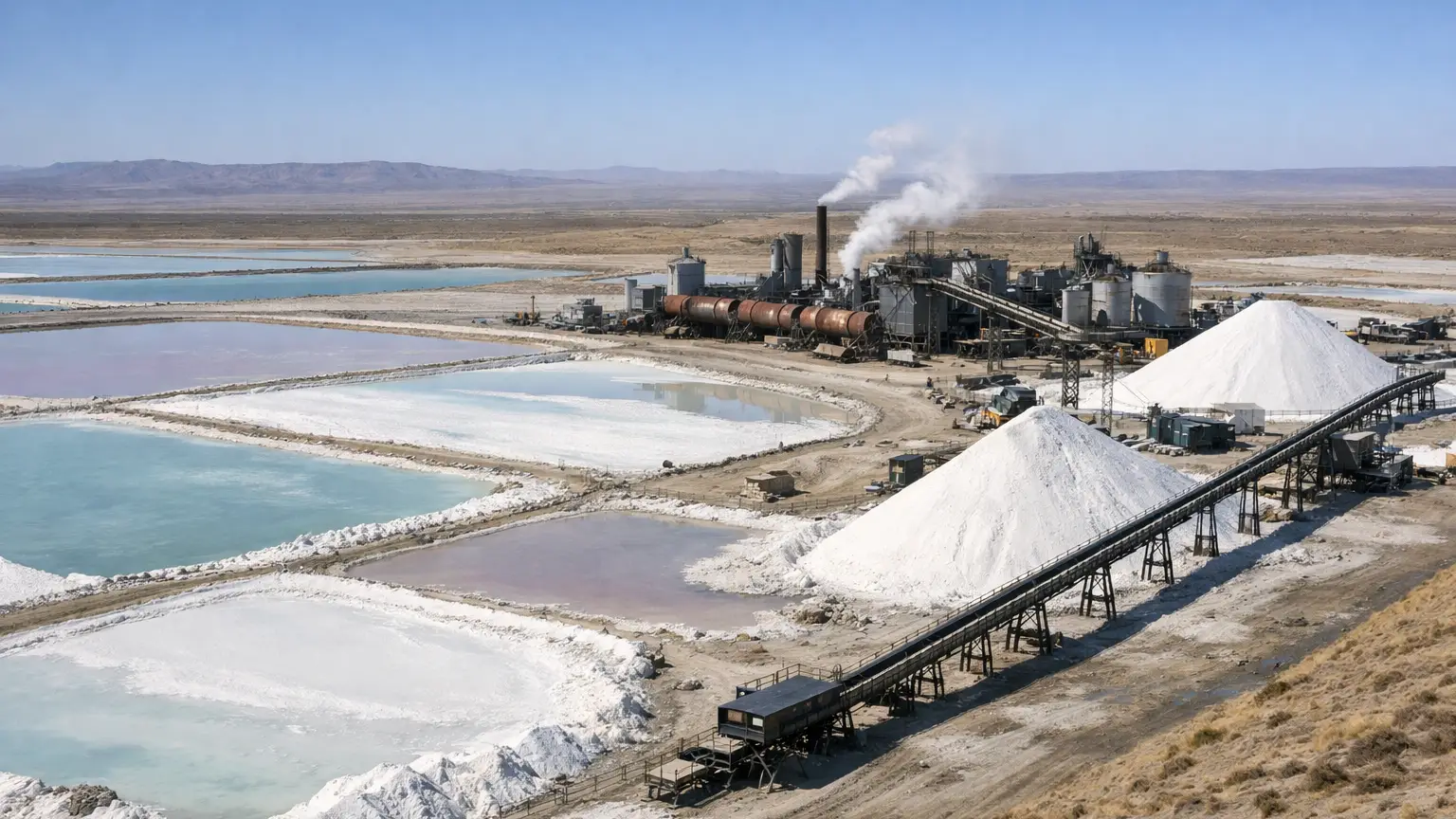
Loose bulk (vessel or bulk truck): Product is loaded unpackaged into the hold of a Handysize bulk carrier (typically 20,000–40,000 DWT) or conveyed directly into bulk road tankers for domestic delivery. This is the format used by the largest industrial consumers — detergent manufacturers in Europe and North Africa, kraft pulp mills, and large glass producers — who receive multi-thousand-tonne shipments directly to dedicated storage terminals.
1,000 kg FIBC (big bag / jumbo bag): Polypropylene woven bulk bags containing one metric tonne of product, typically palletized two or four to a pallet and loaded into 20- or 40-foot dry containers. This is the dominant export format from Chinese producers to Southeast Asian buyers and from Spanish producers to medium-scale European distributors. A 20-foot container holds approximately 20–22 big bags (20–22 MT); a 40-foot container holds 24–26 MT depending on stacking configuration and product density.
25 kg woven sacks (small bag): The retail-adjacent format used by industrial buyers with mixed-volume requirements, pharmaceutical and food-grade users, and markets with fragmented downstream demand. A 20-foot FCL carries approximately 800–850 bags (20–21 MT); pallet configuration matters significantly for moisture protection and loading efficiency.
Cost Comparison: Freight Per Tonne Across Formats
The freight cost differential between bulk and bagged is real but context-dependent. The following estimates are indicative of 2025–2026 market conditions and will vary by route, vessel availability, and seasonal demand.
| Shipment Format | Typical Volume | Freight Cost Range (USD/MT, ocean) | Additional Handling Cost (USD/MT) | Effective Delivered Premium vs. Bulk |
|---|---|---|---|---|
| Loose bulk (Handysize) | 5,000–25,000 MT per voyage | $18–35/MT | Minimal — pneumatic unloading at destination | Baseline (0%) |
| FIBC big bag (FCL) | 20–26 MT per container | $35–60/MT | $5–12/MT (forklift, silo-to-bag, palletizing) | +40–80% |
| 25 kg sacks (FCL) | 20–21 MT per container | $45–75/MT | $10–20/MT (manual/semi-auto bag handling, pallets) | +70–130% |
The freight premium for bagged product reflects two compounding costs: the container rate itself (which carries the same fixed port/terminal charges as bulk but moves far less product per unit), and the upstream cost of packaging. A 1,000 kg FIBC costs approximately $5–15 per unit at Chinese origin; multiply by 20–22 per container and that alone adds $5–17/MT before the container rate is applied. For 25 kg sacks, the packaging unit cost is lower per bag but the labor intensity of filling, palletizing, and unloading 800+ individual sacks per container adds significantly to total cost.
Where bulk shipment loses its advantage is when the minimum economic vessel size (typically 3,000–5,000 MT for a part-cargo booking; 15,000+ MT for a full voyage) exceeds the buyer's storage capacity or consumption rate. A detergent blender consuming 200 MT per month cannot practically receive a bulk Handysize shipment without shared terminal access or a trading intermediary absorbing the volume risk.
Where Logistics Logistics Costs Are Actually Being Driven in 2026
Three structural pressures are shaping sodium sulphate delivered costs in 2026 in ways that affect format decisions.
Rail bottlenecks in North America: Saskatchewan Mining and Minerals, the dominant North American natural sodium sulphate producer, operates its Chaplin, Saskatchewan plant adjacent to the Canadian Pacific Railway. In Q4 2025 and into Q1 2026, rail equipment tightness on CP's mainline corridors raised delivered costs from inland mines to coastal distribution points, constraining spot availability and supporting higher FOB prices for US buyers. Buyers relying on spot rail allocation rather than committed railcar contracts faced delivery delays of 2–4 weeks. This bottleneck has no near-term structural fix; it reflects wider North American covered hopper car allocation competition with grain. Buyers who secured annual railcar allocation contracts maintained supply continuity; those dependent on spot rail access were squeezed.
Port congestion in Europe: In Q4 2025, port berth reconstruction and congestion at key European handling terminals increased handling lead times, elevating inland delivery costs for sodium sulphate arriving from Spanish and Turkish origins. Spain's natural sulphate exports, primarily from mining operations in the Castilla-La Mancha region, move through Mediterranean ports; disruption at berths directly affects the delivered cost to German, French, and North African buyers. European prices averaged approximately USD 241–250/MT during Q1–Q2 2025, with congestion-driven logistics costs contributing to upward cost pressure even when feedstock (sulfuric acid) costs were easing.
Red Sea rerouting: Bulk shipments and containerized bagged product from China and the Middle East bound for Europe are now predominantly routed via the Cape of Good Hope, adding approximately 10–14 days of transit time and 30–40% to freight costs compared to the pre-2024 Suez baseline. For sodium sulphate specifically, where the product value is low relative to freight cost (FOB China prices at USD 95–110/MT on a Tokyo/APAC basis; higher for Europe), the freight cost as a percentage of delivered value is material. A $15/MT freight increase on a $100/MT product is a 15% delivered cost increase. Buyers in Europe who historically sourced Chinese origin to supplement Spanish domestic supply are re-evaluating the economics.
Handling Infrastructure: The Real Barrier to Bulk Adoption
The per-tonne economics strongly favor bulk for high-volume buyers — but the infrastructure requirement is decisive.
Receiving loose bulk sodium sulphate requires covered dry storage (the product is hygroscopic and will cake if exposed to humidity), pneumatic conveying or mechanical transfer systems capable of moving crystalline dry solid, and weighbridge or weigh hopper systems for inventory reconciliation. For a large detergent manufacturer with a dedicated sodium sulphate silo, these systems are already in place and represent sunk capital. For a mid-sized distributor or a chemical blender without dedicated solid chemical receiving infrastructure, the capex to install a 500–1,000 MT silo, pneumatic conveyor, and dust extraction system can reach $200,000–500,000 depending on site and regulatory requirements. At that level of infrastructure investment, a buyer would need to be confident of sustained bulk volumes for 5+ years to justify the capex against the per-tonne freight saving.
FIBC big bags represent a middle path that many buyers in Southeast Asia, India, and smaller European markets have adopted precisely because they eliminate this barrier. A single forklift and a bag discharge frame (cost: $5,000–25,000 depending on capacity) is sufficient to receive and discharge big bags into process equipment or smaller packaging lines. The handling efficiency of FIBCs versus 25 kg sacks is significant: filling, palletizing, and unloading 40 individual 25 kg sacks (the equivalent of one big bag) requires 4–5 workers and several hours; moving a 1,000 kg FIBC by forklift requires one operator and takes seconds.
For buyers currently handling 25 kg sacks who are scaling volume, the switch to FIBCs is typically justified at consumption levels above 50 MT per month, where the labor saving alone pays for the handling equipment within 12–18 months.
Format Selection by Buyer Type: A Practical Framework
The right format depends on four variables: annual volume, number of delivery points, receiving infrastructure, and downstream process requirements.
| Buyer Type | Annual Volume | Recommended Format | Key Reason |
|---|---|---|---|
| Large detergent manufacturer (single site) | 10,000+ MT | Loose bulk (vessel + rail/road) | Lowest freight/MT; infrastructure already in place |
| Medium glass or kraft pulp producer | 3,000–10,000 MT | Loose bulk (part cargo) or FIBC FCL | Volume justifies bulk; FIBC if no silo |
| Chemical distributor (multi-site) | 500–5,000 MT | FIBC FCL | Flexibility; forklift-only handling; no silo capex |
| Textile dye house or mid-scale processor | 100–1,000 MT | FIBC or 25 kg sacks | Batch process compatibility; controlled dosing |
| Pharmaceutical / food-grade buyer | Any volume | 25 kg sacks (lined) or certified FIBC | Grade certification and contamination control |
| Small industrial or specialty buyer | Under 100 MT | 25 kg sacks (LCL or local distribution) | Below FCL minimum; spot access needed |
Pharmaceutical and food-grade buyers should note that the sodium sulphate grade spec — particularly sulfate purity (typically 99%+ for technical grade; higher for BP/EP/USP) and heavy metal limits — interacts with packaging choice. FCC (Food Chemical Codex) or USP-grade product moving in bulk or standard FIBC without appropriate liners risks cross-contamination or moisture ingress that downgrades specification on arrival. Grade-certified buyers should specify PE inner liners on FIBCs or multi-wall laminated inner bags on 25 kg sacks, and confirm that the supplier's CoA covers the specific packaging format.
Moisture and Quality Risk: The Hidden Cost of the Wrong Packaging Choice
Sodium sulphate is hygroscopic. When exposed to humidity above approximately 60%, the anhydrous form (Na2SO4) absorbs moisture and can revert to the decahydrate (Glauber's salt, Na2SO4·10H2O), changing the product's weight, flowability, and specification. In practice, this creates a quality risk that is more severe for certain packaging formats.
Loose bulk product held in covered but not climate-controlled silos is generally stable in temperate climates. The risk increases in tropical receiving environments (Southeast Asia, West Africa) where ambient humidity is consistently high and product may sit for weeks before use.
25 kg sacks with standard woven polypropylene outer but no inner PE liner are vulnerable during ocean transit in container environments where temperature cycling creates condensation. A container arriving at a tropical port in February from a Northern Hemisphere winter origin can experience significant internal condensation — a phenomenon known in the shipping industry as container rain. Sodium sulphate in unlimed sacks exposed to container rain will cake and potentially fail specification on arrival. Buyers in high-humidity receiving markets should specify either: (a) multi-wall bags with inner PE liner, or (b) FIBC bags with PE insert liner, and confirm that loading containers at origin uses desiccant packs (calcium chloride absorbers). The cost of proper moisture protection — approximately $0.50–1.50/MT for desiccant packs at origin — is trivial against the cost of a quality claim or a refused shipment
Frequently Asked Questions
Q: What is the minimum order quantity for bulk vessel shipments of sodium sulphate?
A: Part-cargo bookings on Handysize bulk carriers typically require a minimum of 3,000–5,000 MT. Full voyages are typically 15,000–25,000 MT. Chinese producers such as those in Hunan province will supply bulk vessel to South African, Iranian, and Latin American buyers at these volumes. Buyers below 3,000 MT per shipment are more cost-effectively served by containerized FIBC or sacked product.
Q: How is sodium sulphate typically shipped from China to Southeast Asian buyers?
A: The dominant format is FIBC big bag in 20- or 40-foot FCL containers, shipped from Tianjin, Qingdao, or Shanghai to ports including Port Klang, Jakarta Tanjung Priok, Ho Chi Minh City, and Manila. Transit time is typically 1–3 weeks. Bulk vessel supply from China to large buyers in Southeast Asia is available with minimum volumes of 3,000+ MT.
Q: What are the main supply chain risks for sodium sulphate in 2026?
A: The two most immediate risks are North American rail equipment tightness affecting inland delivery from Saskatchewan mines, and Red Sea rerouting adding cost and transit time to Chinese exports bound for European buyers. European buyers also face intermittent port congestion at Mediterranean terminals handling Spanish natural sodium sulphate shipments.
Q: When is it cost-justified to switch from 25 kg sacks to FIBC big bags?
A: At consumption volumes above approximately 50 MT per month at a single site, the labor and freight savings from FIBC typically justify the handling equipment investment within 12–18 months. The break-even point shifts lower in labor-cost markets (Europe, North America) and higher in lower labor-cost markets (South and Southeast Asia).
Q: Which packaging format is required for food-grade or pharmaceutical sodium sulphate?
A: Food Chemical Codex (FCC), BP, EP, or USP grade sodium sulphate should be packaged in 25 kg multi-wall sacks with inner PE liner, or in FIBCs with certified PE insert liner. The CoA must be tied to the specific packaging batch. Buyers should confirm that the supplier's quality management system covers packaging-specific contamination controls.