
Introduction
In the competitive American industrial landscape, procurement decisions for essential chemicals like sodium sulfate are undergoing a significant transformation. While competitive pricing remains a fundamental factor, it is no longer the sole determinant for savvy buyers in sectors ranging from detergents and textiles to glass and pulp manufacturing. Today's procurement managers and plant operators are looking for partners, not just vendors. They seek suppliers who can guarantee not only a cost-effective product but also a seamless, reliable, and risk-mitigated supply chain that supports their operational continuity and product integrity.
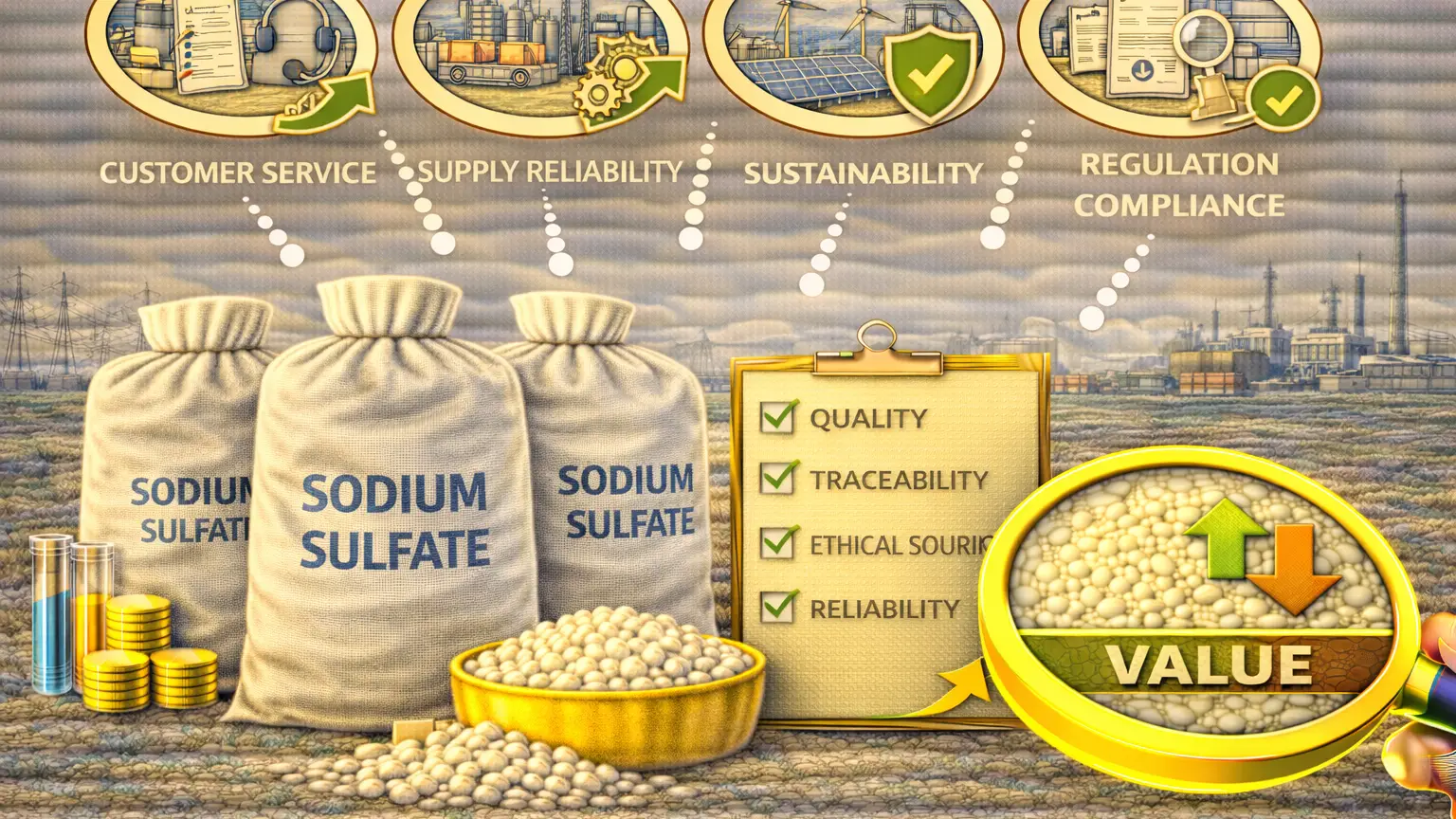
The modern buyer's checklist extends far beyond the price per ton. It encompasses stringent quality assurance, demonstrable supply chain resilience, deep technical expertise, and unwavering commitment to safety and regulatory compliance. This shift reflects a broader trend in B2B purchasing, where total cost of ownership (TCO)—factoring in downtime, quality inconsistencies, and logistical failures—trumps the initial invoice price. For a sodium sulfate supplier to succeed in the American market, understanding and excelling in these non-price dimensions is not an advantage; it is a necessity.
Uncompromising Product Quality and Consistent Specifications
For industrial end-users, consistency is king. Variations in the purity, crystal size, or moisture content of sodium sulfate anhydrous can have cascading effects on production processes. In detergent manufacturing, inconsistent particle size can affect bulk density and flowability, leading to filling line issues and final product performance. In the glass industry, impurities like iron or chloride in sodium sulfate can introduce defects or coloration, compromising the quality of the finished glass. Buyers, therefore, expect suppliers to provide detailed, batch-specific certificates of analysis (CoA) that verify key specifications such as Na2SO4 content (typically 99%+ for anhydrous grade), moisture, water-insoluble matter, pH, and heavy metal limits.
Leading suppliers differentiate themselves by offering multiple grades tailored to specific applications. Beyond standard anhydrous and decahydrate (Glauber's salt) forms, they may provide low-iron grades for clear glass production or dedusted, free-flowing versions for automated packaging lines. The ability to consistently meet these precise specifications, batch after batch, builds immense trust. This reliability reduces the need for frequent in-house quality control checks by the buyer, streamlining their operations and reducing hidden costs associated with quality verification and potential production adjustments.
Supply Chain Reliability and Logistics Mastery
In an era marked by global disruptions, from port congestions to raw material shortages, a supplier's logistical capabilities are under intense scrutiny. American buyers prioritize partners with a robust and transparent supply chain. This includes diversified sourcing of raw materials, strategic inventory management with adequate buffer stocks at key distribution points across North America, and flexible transportation options. A supplier's ability to provide real-time shipment tracking and reliable delivery windows is now a standard expectation, as production schedules are tightly optimized and warehouse space is costly.
Logistics mastery also involves understanding the specific handling requirements of sodium sulfate. Whether shipped in 50-lb bags, 1-ton super sacks, or in bulk hopper trucks, the packaging must be durable, moisture-resistant, and suitable for the buyer's material handling equipment. Suppliers who proactively manage these logistics—anticipating weather-related delays, offering flexible delivery schedules, and providing efficient last-mile solutions—directly contribute to the buyer's operational efficiency. This reliability transforms the supplier from a cost center into a strategic asset that ensures production never stops.
Technical Expertise and Proactive Customer Support
The value of a knowledgeable technical support team cannot be overstated. Buyers expect their sodium sulfate supplier to possess deep application knowledge. A proficient supplier should be able to consult on optimal grade selection for a new paper pulp recipe, troubleshoot a caking issue in stored material, or advise on handling procedures to maintain product quality. This expertise is often the differentiator when problems arise; a supplier who can provide swift, accurate technical guidance helps minimize downtime and potential product loss.
Proactive support goes beyond troubleshooting. It involves regular communication about market trends, potential regulatory changes affecting sodium sulfate use, and innovations in product forms or applications. Suppliers who act as an extension of the buyer's own team—offering formulation advice, sharing industry best practices, and conducting periodic reviews—create immense stickiness. This partnership approach ensures the buyer is always leveraging the chemical in the most efficient, cost-effective, and innovative way possible for their specific use case.
Safety, Compliance, and Transparent Documentation
Safety is non-negotiable. American industrial buyers operate under strict regulations from OSHA, EPA, and other bodies. They require suppliers to be impeccable partners in compliance. This starts with providing immediately accessible, accurate, and up-to-date Safety Data Sheets (SDS) that comply with the Globally Harmonized System (GHS). These documents are critical for safe handling, storage, emergency response, and employee training. A delay or error in SDS documentation can halt receiving operations and violate compliance protocols.
Beyond the SDS, buyers expect full transparency regarding the product's origin, manufacturing process, and any relevant regulatory listings or certifications. For instance, is the sodium sulfate anhydrous suitable for use in food-contact applications or pharmaceutical aids? Does it meet specific standards like USP or FCC grades if required? Suppliers must also ensure their transportation partners are fully compliant with DOT regulations for hazardous materials (though sodium sulfate is generally non-hazardous, proper classification is still essential). This comprehensive, transparent approach to safety and compliance mitigates significant risk for the buyer and fosters a relationship built on trust and shared responsibility.
Strategic Partnership and Value-Added Services
The pinnacle of a supplier-buyer relationship is a true strategic partnership. This evolves from transactional interactions to collaborative planning. Forward-thinking suppliers offer value-added services such as vendor-managed inventory (VMI), where they monitor the buyer's stock levels and automatically schedule replenishments. This service optimizes inventory costs, frees up the buyer's capital, and guarantees material availability. Other services might include just-in-time (JIT) delivery programs, dedicated account management with deep knowledge of the buyer's business, and collaborative forecasting to plan for seasonal demand shifts or planned plant maintenance.
In a competitive market, these services create a formidable barrier to switching suppliers. When a supplier understands a buyer's production cycles, growth plans, and quality benchmarks intimately, they can anticipate needs and offer customized solutions. This could involve developing a unique blend, creating a specific packaging format, or establishing a dedicated logistics lane. This level of integration moves the conversation permanently away from a simple price-per-metric-ton comparison and towards a discussion on shared value creation, operational excellence, and long-term business growth.
Conclusion
The American market for industrial chemicals is sophisticated and demanding. For sodium sulfate buyers, the selection of a supplier is a strategic decision with direct implications for product quality, plant efficiency, and bottom-line profitability. While price will always be a component of the decision matrix, the defining factors are increasingly found in the areas of guaranteed quality, ironclad reliability, expert support, and unwavering compliance. Suppliers who excel in these dimensions provide not just a commodity, but a critical, worry-free input that enables their customers to focus on their core business with confidence.
The future belongs to chemical distributors and manufacturers who embrace this holistic model of partnership. By investing in supply chain resilience, technical application teams, and transparent communication, they become indispensable allies in their customers' success. In doing so, they build long-term loyalty that is far more valuable and sustainable than any short-term price advantage, securing their position as leaders in the North American sodium sulfate supply landscape.
Disclaimer: This article is for informational and market insight purposes only. It is not intended as technical, safety, or professional advice. Specifications, applications, and regulatory information are subject to change. Readers are strongly advised to verify all information independently with qualified experts, consult official documentation such as Safety Data Sheets (SDS), and contact our technical team for guidance on specific applications and requirements.