
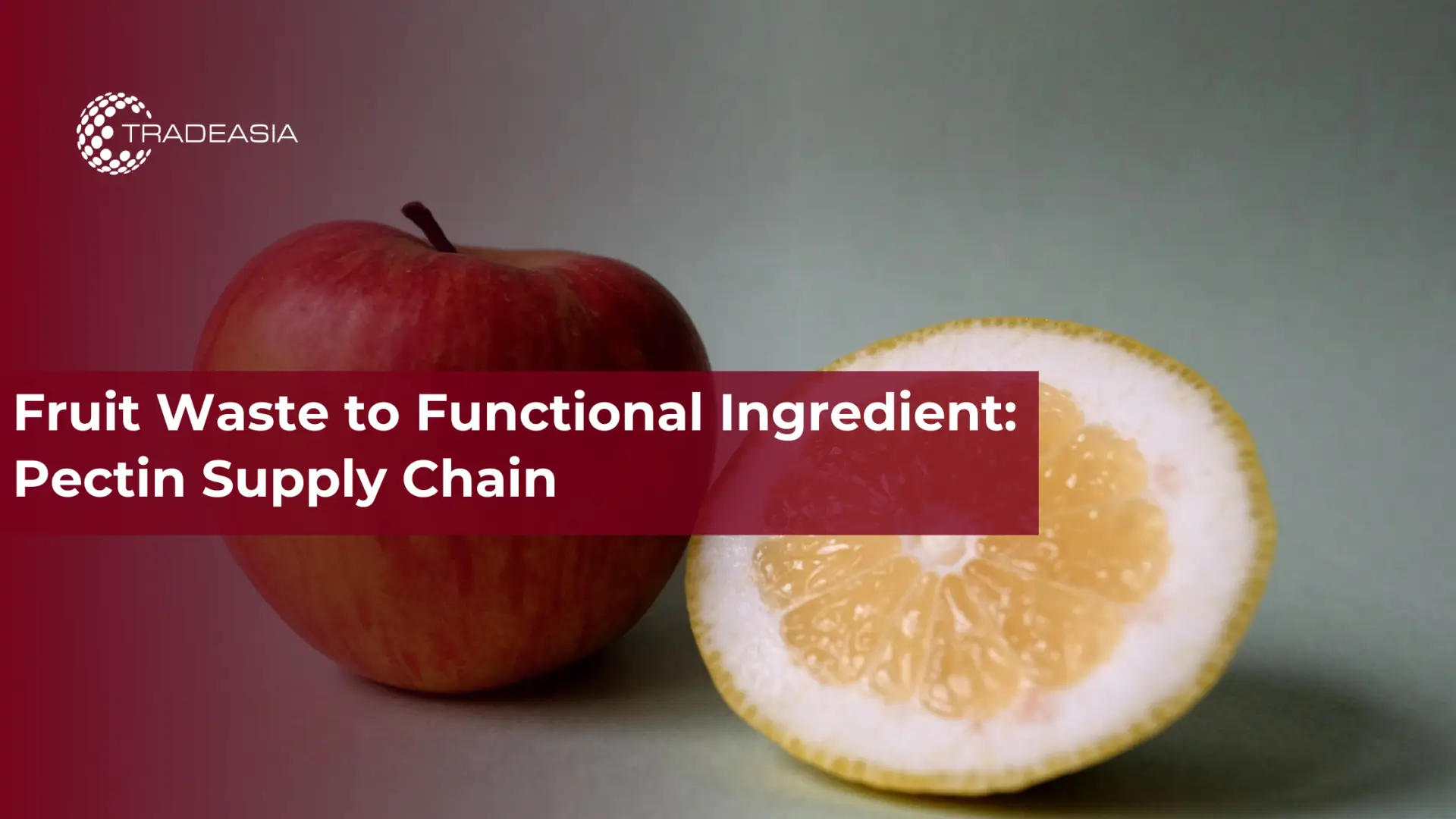
Upcycling Citrus Peel and Apple Pomace into High-Value Food Ingredients
Introduction: Reframing Waste as a Strategic Resource in the Global Food System
In the modern food industry, few transformations illustrate the shift toward sustainability and resource efficiency as clearly as the evolution of pectin. Once regarded as a secondary by-product of fruit processing, pectin has emerged as a high-value functional ingredient that plays a central role in food formulation across multiple categories. Derived primarily from citrus peels and apple pomace—the residual materials generated during juice production—pectin exemplifies how industrial by-products can be re-engineered into essential components of the global food supply chain. This transformation is not only technological but also structural, reflecting broader changes in how industries approach waste, value creation, and sustainability.
The global pectin market has grown steadily over the past decade, driven by increasing demand for natural, plant-based, and clean-label ingredients. As consumers become more conscious of ingredient transparency and environmental impact, manufacturers are seeking alternatives to synthetic additives and animal-derived gelling agents. Pectin, with its plant origin and multifunctional properties, fits seamlessly into this evolving landscape. However, unlike many other ingredients, its supply is inherently tied to the availability of fruit processing by-products, creating a unique supply chain dynamic that links agricultural production, industrial processing, and global trade.
Understanding the supply chain transformation of pectin requires examining how citrus peel and apple pomace—materials once considered waste—are collected, processed, and converted into standardized ingredients with consistent functional properties. It also involves analyzing how this transformation supports circular economy principles, reduces environmental impact, and creates new economic opportunities. This article provides a comprehensive exploration of these processes, offering insights into the upstream sourcing of raw materials, the technological pathways of extraction, the global distribution network, and the challenges and opportunities shaping the future of the pectin supply chain.
Upstream Raw Materials: Citrus Peel and Apple Pomace as the Foundation of Supply
The foundation of the pectin supply chain lies in the availability of citrus peel and apple pomace, both of which are by-products of large-scale fruit processing industries. Citrus fruits such as oranges, lemons, and limes are processed primarily for juice, generating significant quantities of peel, membranes, and seeds. Similarly, apple processing for juice, cider, and puree produces pomace consisting of skins, pulp, and core residues. These materials, which can account for up to 50 percent of the original fruit mass, represent a substantial and continuous source of raw material for pectin production.
The geographic distribution of these raw materials is closely aligned with major fruit-producing regions. Countries with large citrus industries, such as Brazil, the United States, and parts of Southern Europe, play a dominant role in supplying citrus peel. Brazil, in particular, stands out as the world’s leading orange juice producer, generating millions of tons of peel annually. This abundance provides a strong foundation for pectin extraction and positions the country as a key player in the global supply chain.
Apple pomace, on the other hand, is more widely distributed across regions with significant apple production, including Europe, China, and North America. While citrus-derived pectin is generally preferred for its higher quality and consistency, apple-based pectin offers an important supplementary source, particularly in regions where citrus availability is limited. The coexistence of these two raw material streams adds flexibility to the supply chain but also introduces variability in composition and processing requirements.
The reliance on by-products creates a unique supply dynamic. Unlike primary crops grown specifically for ingredient production, the availability of citrus peel and apple pomace is directly linked to the demand for juice and other processed fruit products. This means that pectin supply is indirectly influenced by consumer preferences, beverage consumption trends, and seasonal harvest cycles. While this dependency supports efficient resource utilization, it also introduces constraints that must be managed through strategic sourcing and inventory planning.
Circular Economy in Action: Transforming Waste into Value
The conversion of citrus peel and apple pomace into pectin is a prime example of circular economy principles in practice. Instead of being discarded or used for low-value applications such as animal feed or compost, these by-products are transformed into high-value ingredients that re-enter the food system. This process not only reduces waste but also maximizes the economic and environmental value of agricultural resources.
From an environmental perspective, the upcycling of fruit by-products helps mitigate the challenges associated with waste disposal. Citrus peel, for instance, contains high levels of moisture and organic compounds that can lead to rapid decomposition and environmental pollution if not properly managed. By redirecting these materials into pectin production, processors can significantly reduce waste volumes and associated emissions. Similarly, apple pomace, which can be difficult to store and transport due to its high water content, is effectively stabilized and utilized through extraction processes.
Economically, the circular use of by-products creates additional revenue streams for fruit processors. Instead of incurring costs for waste management, companies can generate income by supplying raw materials for pectin production or by integrating extraction processes into their operations. This integration enhances overall profitability and supports the development of more sustainable business models.
The circular economy framework also aligns with broader industry trends and regulatory pressures. Governments and organizations worldwide are increasingly promoting resource efficiency and waste reduction, encouraging companies to adopt practices that minimize environmental impact. In this context, pectin production serves as a model for how industries can transition toward more sustainable and resilient supply chains.
Extraction and Processing: Converting Raw Materials into Functional Ingredients
The transformation of citrus peel and apple pomace into pectin involves a series of complex processing steps designed to extract, purify, and standardize the final product. The most common method of extraction is acid hydrolysis, in which the raw material is treated with hot dilute acid to release pectin from the plant cell walls. This process is followed by filtration to remove insoluble residues, concentration of the extract, and precipitation of pectin using alcohol.
Once precipitated, the pectin is washed, dried, and milled into a powder form suitable for commercial use. Throughout this process, careful control of parameters such as pH, temperature, and extraction time is essential to achieve the desired functional properties. Variations in these conditions can affect the degree of esterification, molecular weight, and gelling behavior of the pectin, all of which influence its performance in food applications.
Standardization is a critical step in ensuring that pectin meets the specifications required by food manufacturers. This often involves blending different batches or adjusting composition to achieve consistent gel strength, viscosity, and setting characteristics. Additives such as sugars or buffering agents may also be incorporated to tailor the product for specific uses.
Advanced processing technologies are increasingly being adopted to improve efficiency and sustainability. These include enzymatic extraction methods, membrane filtration systems, and energy-efficient drying techniques. Such innovations not only enhance product quality but also reduce resource consumption and environmental impact, further strengthening the sustainability profile of the pectin supply chain.
Global Supply Chain Structure: From Production Regions to Demand Centers
The global supply chain for pectin is characterized by a clear separation between production regions and consumption markets. Raw materials are concentrated in fruit-producing areas, while demand is driven by food manufacturing hubs in Europe, North America, and Asia. This creates a network of trade flows that connect upstream suppliers with downstream users across multiple continents.
Major pectin producers are typically located close to raw material sources, allowing them to minimize transportation costs and ensure the freshness of input materials. These producers often operate integrated facilities that combine juice processing and pectin extraction, leveraging economies of scale and operational efficiencies. From these production hubs, pectin is exported to global markets, where it is used by food manufacturers in a wide range of applications.
Europe represents one of the largest consumption markets for pectin, driven by strong demand for natural and clean-label ingredients. The region’s well-developed food industry and stringent regulatory standards create a stable and high-value market for pectin suppliers. North America also plays a significant role, with demand supported by the growth of processed foods and health-oriented products.
Asia, particularly China and Japan, is emerging as a key growth region, driven by increasing urbanization, rising incomes, and expanding food processing industries. While some domestic production exists, imports remain an important source of supply, especially for high-quality pectin used in specialized applications.
Demand Drivers: Clean Label, Plant-Based Trends, and Functional Performance
The demand for pectin is closely linked to broader trends in the food industry, particularly the shift toward clean-label and plant-based products. Consumers are increasingly seeking foods with simple, recognizable ingredients, prompting manufacturers to replace synthetic additives with natural alternatives. Pectin, derived from fruit and perceived as a natural ingredient, aligns well with these preferences.
In addition to clean-label trends, the rise of plant-based diets is contributing to demand for pectin as a functional ingredient. It is widely used in applications such as plant-based dairy alternatives, fruit preparations, and low-sugar products, where it provides texture, stability, and mouthfeel. Its ability to form gels without the need for animal-derived components makes it particularly attractive in vegan formulations.
Functional performance is another key driver. Pectin offers unique properties that cannot be easily replicated by other hydrocolloids, particularly in high-acid and high-sugar systems such as jams and jellies. This makes it an essential ingredient in certain applications, ensuring consistent demand even as new alternatives emerge.
Supply Chain Challenges: Raw Material Dependency and Market Volatility
Despite its advantages, the pectin supply chain faces several challenges that can impact availability and pricing. The most significant is the dependence on fruit processing by-products. Because pectin production relies on citrus peel and apple pomace, any changes in juice consumption or fruit harvest volumes can directly affect supply.
Seasonality is another important factor, as fruit harvesting occurs during specific periods of the year. While processing and storage can help smooth supply, they cannot fully eliminate fluctuations. Weather conditions, pests, and diseases can also impact crop yields, introducing additional uncertainty.
Logistical challenges, including transportation and storage, further complicate the supply chain. Raw materials must be processed quickly to prevent degradation, requiring efficient coordination between suppliers and processors. Finished pectin, while more stable, must still be transported and stored under appropriate conditions to maintain quality.
Future Outlook: Scaling Sustainability and Meeting Growing Demand
Looking ahead, the pectin supply chain is expected to continue evolving in response to increasing demand and sustainability pressures. Investments in processing capacity, technological innovation, and supply chain optimization will be critical to meeting future needs.
Expanding the use of alternative raw materials, such as other fruit by-products, may provide additional sources of supply and reduce dependency on citrus and apple processing. At the same time, advances in extraction technology can improve yields and reduce environmental impact, enhancing the overall efficiency of the supply chain.
Sustainability will remain a central focus, with companies seeking to reduce waste, lower emissions, and improve resource utilization. The circular economy model embodied by pectin production is likely to become increasingly important, serving as a benchmark for other industries.
Conclusion: A Model of Value Creation Through Circular Supply Chains
The transformation of pectin from fruit waste to a high-value functional ingredient highlights the potential of circular supply chains to create economic, environmental, and social value. By leveraging by-products from the citrus and apple industries, the pectin supply chain not only reduces waste but also supports the development of sustainable and efficient food systems.
As global demand for natural and functional ingredients continues to grow, the importance of pectin will only increase. Ensuring a stable and resilient supply chain will require ongoing innovation, strategic collaboration, and a commitment to sustainability. For industry participants, this represents both a challenge and an opportunity to redefine how value is created and delivered in the modern food economy.
For businesses seeking high-quality Pectin or other food additives and ingredients products and reliable sourcing solutions, visit foodingredientsasia.com for more information about specifications, applications, and supply capabilities. For direct inquiries, product details, or customized requirements, please contact food@chemtradeasia.com. Our team is ready to assist you with professional support and comprehensive solutions tailored to your needs.