
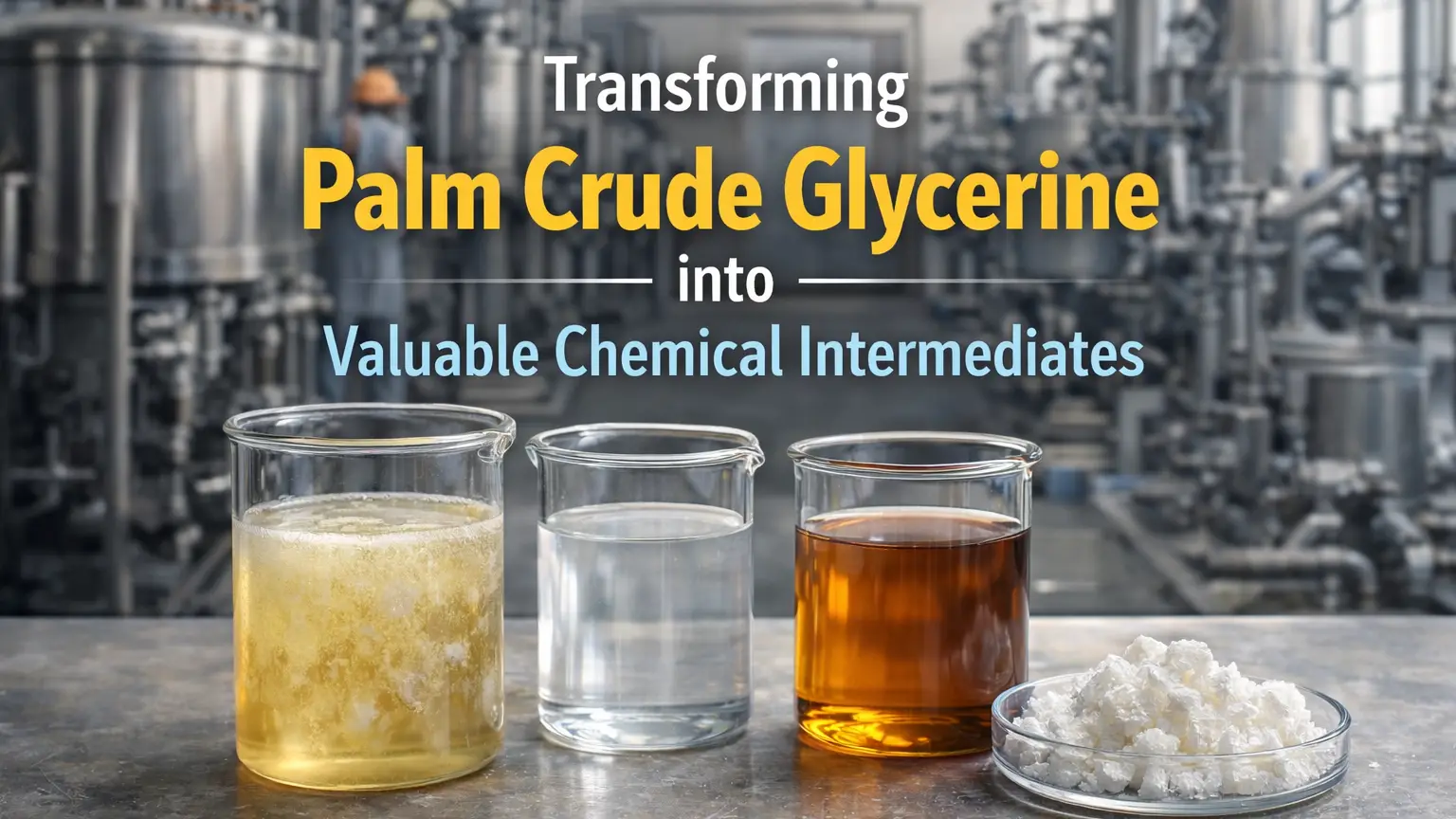
Palm-based crude glycerine has become an important renewable feedstock in the production of chemical intermediates. Generated as a co-product of palm oil biodiesel, it offers chemical manufacturers a cost efficient and bio-based alternative to fossil derived raw materials. As industries shift toward sustainable sourcing and lower carbon footprints, palm-based crude glycerine is increasingly integrated into oleochemical value chains across Asia and beyond.
This article explores how palm-based crude glycerine is used in chemical intermediates, its technical advantages, key applications, and why it continues to gain acceptance among manufacturers, procurement teams, and formulation specialists.
Why Palm-Based Crude Glycerine Is Valuable for Chemical Intermediates
One of the strongest advantages of palm-based crude glycerine lies in its cost structure. Because it is a biodiesel by-product, it is often priced 30 to 50 percent lower than refined or synthetic glycerine. This pricing advantage allows intermediate producers to improve margins without sacrificing output quality.
Its renewable origin also aligns with sustainability objectives. Palm-based glycerine offers a lower carbon footprint compared to petrochemical routes, which is increasingly important for companies pursuing ESG targets and regulatory compliance.
From a supply perspective, crude glycerine availability remains robust. Millions of metric tons are generated annually, reducing the risk of feedstock shortages. This consistency supports large scale chemical production and long term sourcing strategies.
Role of Crude Glycerine as a Chemical Feedstock
Crude glycerine serves as a versatile chemical feedstock due to its molecular structure. With three hydroxyl groups, glycerol readily participates in reactions such as hydrogenolysis, etherification, oxidation, and chlorination.
In many cases, crude glycerine can be used directly after simple pretreatment steps such as acidification or phase separation. These steps remove soaps and excess salts, enabling high conversion efficiency in catalytic processes.
Glycerine based feedstocks integrate smoothly into existing chemical value chains. Their reactivity often exceeds that of linear petroleum derived alternatives, making them suitable for producing polyfunctional intermediates at industrial scale.
Key Chemical Intermediates Produced from Crude Glycerine
Palm-based crude glycerine is converted into a wide range of industrial intermediates through established chemical pathways.
Glycols and Polyols
Through hydrogenolysis, crude glycerine can be transformed into propylene glycol and 1,3-propanediol. These intermediates are used in polyester resins, polyurethanes, and antifreeze formulations. Modern catalytic systems achieve high selectivity even when crude glycerine is used as the starting material.
Epichlorohydrin
Glycerine based epichlorohydrin production has gained attention as a cleaner alternative to traditional petrochemical routes. This intermediate is essential for epoxy resins used in coatings, adhesives, and composites. Glycerine derived processes significantly reduce salt waste and emissions compared to allyl chloride methods.
Solvents and Humectant Intermediates
Etherification reactions produce glycerol ethers such as solketal, which are used as green solvents and fuel additives. Oxidation pathways yield glyceric acid and related compounds applied in humectants and specialty formulations. These processes tolerate moderate impurity levels, making crude glycerine a suitable feedstock.
Resin and Polymer Precursors
Dehydration of glycerine produces acrolein, a precursor for acrylic acid and superabsorbent polymers. Epoxidation routes yield glycidol, which is used in coatings and polyether amines. These intermediates support industries ranging from construction to automotive manufacturing.
Applications Across Industrial Chemical Sectors
Chemical intermediates derived from palm-based crude glycerine are used across multiple industries. In pharmaceuticals, glycerol derivatives support active ingredient synthesis and formulation stability. Agrochemical producers use glycerine based polyols as dispersants and adjuvants.
In resins and coatings, epichlorohydrin derived from glycerine enables durable epoxy systems with improved sustainability credentials. Detergent manufacturers incorporate glycerine based surfactants to enhance foaming and cleaning efficiency.
Oleochemical intermediates such as monoglycerides also serve as emulsifiers in industrial cleaners and specialty products, supporting performance while increasing bio-based content.
Palm-Based Versus Synthetic Glycerine in Intermediate Production
Palm-based crude glycerine offers clear advantages over synthetic glycerine derived from petrochemical cracking. Synthetic routes depend heavily on fossil feedstocks and are subject to naphtha price volatility.
Palm-based glycerine benefits from Asia’s dominance in palm oil production, ensuring supply stability. While crude glycerine requires basic pretreatment, its overall processing demand remains lower than the energy intensive purification required for synthetic glycerine.
Cost differences remain significant, with palm-based crude glycerine generally available at a fraction of the price of synthetic alternatives. This gap continues to drive adoption in bulk intermediate production.
Choosing a Reliable Supplier of Palm-Based Crude Glycerine
Selecting the right supplier is critical for consistent intermediate production. Buyers should prioritize suppliers that offer stable glycerol content, transparent quality documentation, and reliable logistics support.
Experience in oleochemical supply chains and technical assistance for pretreatment and trials can significantly reduce integration risks. Long term partnerships also help manage pricing volatility and supply continuity.
Chemtradeasia supports chemical manufacturers with consistent palm-based crude glycerine sourcing across Asia. With established logistics networks and quality assurance practices, Chemtradeasia helps ensure reliable feedstock supply for intermediate production.
Conclusion
Palm-based crude glycerine plays a strategic role in the production of chemical intermediates by combining cost efficiency, renewable sourcing, and industrial versatility. Its growing integration into oleochemical and specialty chemical value chains reflects both economic and sustainability driven demand.
For manufacturers seeking to strengthen their bio-based portfolio and secure stable feedstock supply, palm-based crude glycerine remains a practical and competitive solution. Partnering with an experienced supplier such as Chemtradeasia enables businesses to capitalize on this opportunity while maintaining operational reliability.