
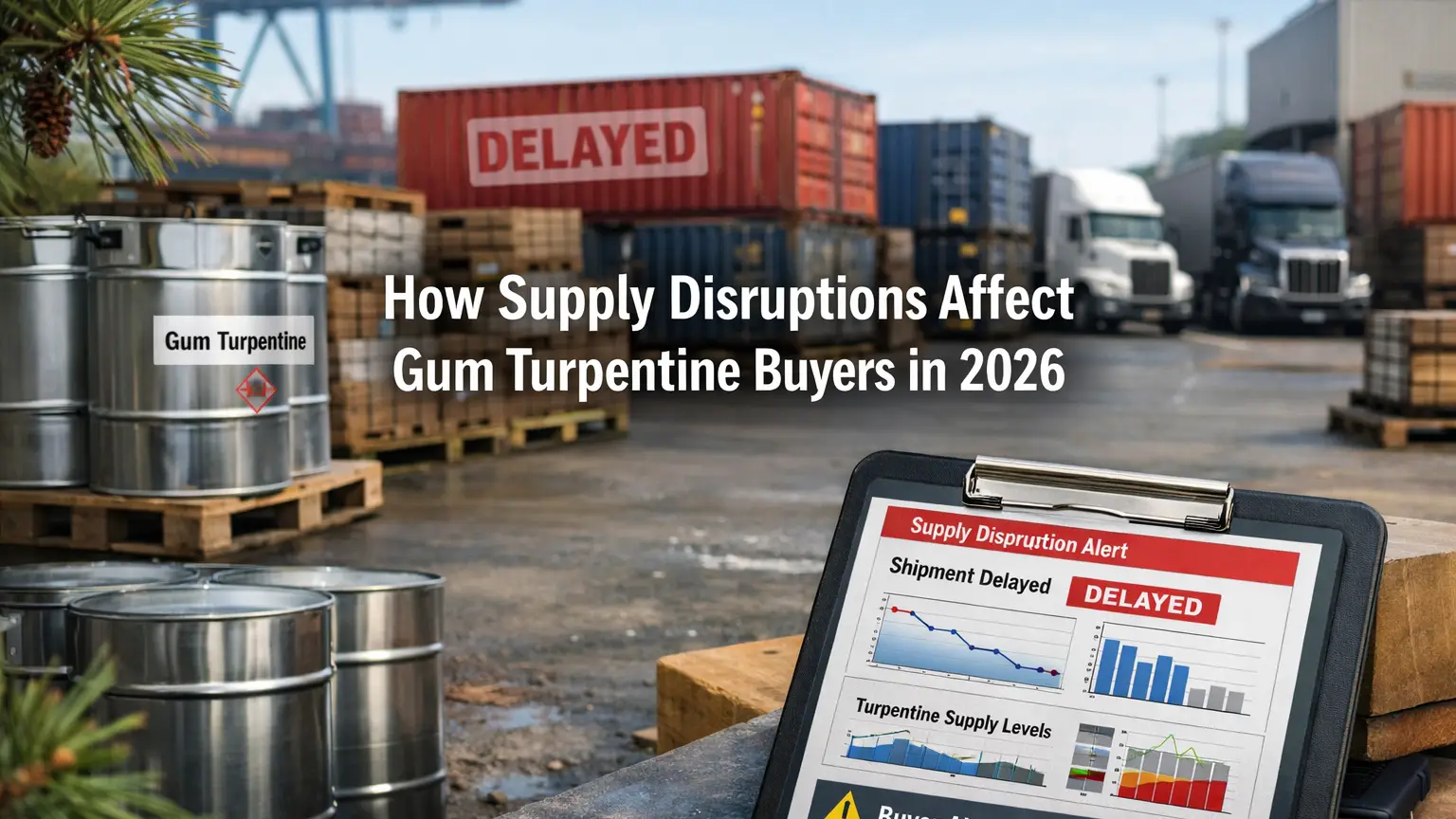
Gum turpentine supply disruptions in 2026 are creating measurable risks for buyers across coatings, adhesives, fragrance, and chemical industries. Because gum turpentine is derived from natural pine resin harvesting rather than synthetic production, its availability depends heavily on climate conditions, seasonal tapping cycles, and export logistics. When disruptions occur, the effects move quickly through global supply chains, leading to extended lead times and sharp price volatility.
For procurement teams, understanding how these structural vulnerabilities affect gum turpentine supply is essential for managing risk in 2026.
Why Gum Turpentine Supply Is Structurally Vulnerable
Gum turpentine is produced through steam distillation of crude pine oleoresin collected from living trees. Major producing regions include Southeast Asia, Brazil, and parts of Southern Europe such as Portugal and Spain. Unlike petrochemical solvents that can scale output based on refinery economics, gum turpentine production depends on biological cycles and manual harvesting.
Resin tapping generally takes place during warmer and drier months, when sap flow is optimal. Heavy rainfall, drought, labor shortages, or forest health issues directly impact raw material availability. As a result, the supply chain has inherent seasonal tightness that buyers must anticipate.
In 2026, climate variability and global trade uncertainties are intensifying these risks.
Understanding the Gum Turpentine Supply Chain
Resin Collection and Distillation
The supply chain begins in pine plantations where workers extract resin through controlled tapping. The collected oleoresin is transported to processing facilities, where it is heated and distilled into two main products: gum rosin and gum turpentine oil.
Any disruption at the harvesting stage reduces feedstock for distillation. Since resin production cannot be quickly ramped up like synthetic chemicals, shortages in crude gum immediately translate into tighter turpentine supply.
Export-Oriented Trade Flows
Most gum turpentine enters global trade markets. Asia-Pacific and Brazil are key exporters, shipping bulk volumes to Europe, North America, and other Asian destinations. Buyers therefore depend on international freight, container availability, and port efficiency.
When shipping congestion or fuel costs rise, delivered pricing becomes more volatile even if raw production remains stable.
Key Causes of Supply Disruptions in 2026
Climate and Weather Variability
Weather remains the most significant structural risk. Drought reduces resin flow, while excessive rainfall can delay tapping schedules and affect labor productivity. Storm events also damage plantations, limiting output for entire seasons.
In early harvest periods, even short delays can tighten supply and push buyers into the spot market at elevated prices.
Logistics and Freight Constraints
Ocean freight remains sensitive to geopolitical tensions and fuel price fluctuations. Congestion at export ports in Southeast Asia or Brazil can extend shipment timelines by several weeks. Rising bunker fuel costs increase CIF pricing and erode contract predictability.
Buyers relying on just-in-time delivery models are especially exposed to these disruptions.
Regulatory and Sustainability Pressures
Forest product exports are increasingly subject to sustainability verification and documentation requirements. Certification systems that ensure responsible forest management add compliance layers to trade flows.
If export policies shift or sustainability enforcement tightens, shipment approvals may slow. Buyers without compliant documentation risk delayed customs clearance or contract disputes.
Immediate Impacts on Gum Turpentine Buyers
Longer Lead Times
Under normal conditions, gum turpentine shipments may require four to six weeks from production to delivery, depending on origin and destination. During supply disruptions, this can extend significantly due to delayed harvesting or port congestion.
Extended lead times disrupt production planning for coatings, inks, adhesives, and fragrance manufacturers. Facilities operating on tight inventory cycles may need emergency purchases at higher spot rates.
Price Volatility and Spot Premiums
Historically, gum turpentine spot prices have reacted strongly to feedstock shortages. During tight supply cycles, premiums can rise sharply as buyers compete for available volumes.
Alpha-pinene, a key component of gum turpentine used in terpene derivatives, becomes particularly sensitive during supply shortages. This directly affects fragrance ingredients, aroma chemicals, and specialty solvent markets.
Budget planning becomes more complex when raw material pricing swings unpredictably.
Secondary Effects on Downstream Industries
Fragrance and Flavor Manufacturers
Gum turpentine is an important source of alpha-pinene and other terpenes used in aroma chemicals. When availability tightens, manufacturers may face reformulation challenges or higher input costs.
Switching to synthetic alternatives can impact scent profiles and increase development costs. This is especially critical for brands emphasizing natural or bio-based ingredients.
Coatings and Adhesives Producers
In industrial coatings and adhesives, gum turpentine serves as a natural solvent and intermediate feedstock. Supply shortages may force producers to ration volumes or adjust production schedules.
Limited ability to pass through sudden cost increases places additional pressure on margins.
Contractual and Commercial Risks
Allocation and Volume Shortfalls
During supply tightness, suppliers often prioritize long-term contract customers. Buyers relying heavily on spot purchases may receive reduced allocations or delayed shipments.
This makes structured contracts more important in 2026, especially for industries with continuous production requirements.
Force Majeure and Renegotiations
Weather events or logistics disruptions can trigger force majeure clauses in supply agreements. In such cases, pricing adjustments or renegotiated delivery schedules may follow.
Contracts that lack clear risk-sharing mechanisms can create disputes or unexpected cost exposure.
Mitigation Strategies for Buyers in 2026
Diversifying Supply Origins
Sourcing from multiple producing regions reduces dependence on a single climate zone or port. A balanced portfolio that includes Southeast Asia and South America can help offset regional disruptions.
Diversification improves leverage during contract negotiations and enhances supply resilience.
Building Inventory Buffers
Maintaining safety stock equivalent to several months of consumption reduces vulnerability to shipment delays. While holding inventory increases working capital requirements, it provides insurance against peak-season shortages.
Inventory planning should align with harvest cycles to capture more stable supply windows.
Forward Contracting and Structured Agreements
Forward contracts that secure annual volumes before peak harvest periods can stabilize pricing and ensure allocation priority. Clear clauses regarding force majeure, quality specifications, and pricing formulas reduce uncertainty.
Buyers who engage in early negotiations generally secure more favorable terms than those entering the market during tight conditions.
Monitoring Market Intelligence
Tracking harvest reports, freight indices, and climate outlooks provides early warning signals. Monitoring developments in key producing regions enables proactive procurement adjustments.
Reliable market intelligence reduces reactive decision-making and improves cost control.
Conclusion
Gum turpentine supply disruptions in 2026 reflect structural characteristics of the product rather than temporary volatility. Seasonal resin harvesting, climate sensitivity, and export dependence create ongoing vulnerability in global trade flows.
Buyers who adopt diversified sourcing, structured contracts, and proactive monitoring strategies will be better positioned to manage risk and maintain production continuity.
For companies seeking reliable gum turpentine sourcing across Asia-Pacific and global markets, working with experienced trade partners can provide essential market visibility. Chemtradeasia supports industrial buyers with diversified supplier networks, contract structuring support, and real-time market insights tailored to evolving pine chemical supply conditions.
In a year where natural feedstock volatility shapes availability, informed sourcing decisions will determine procurement stability and cost control.