
Introduction
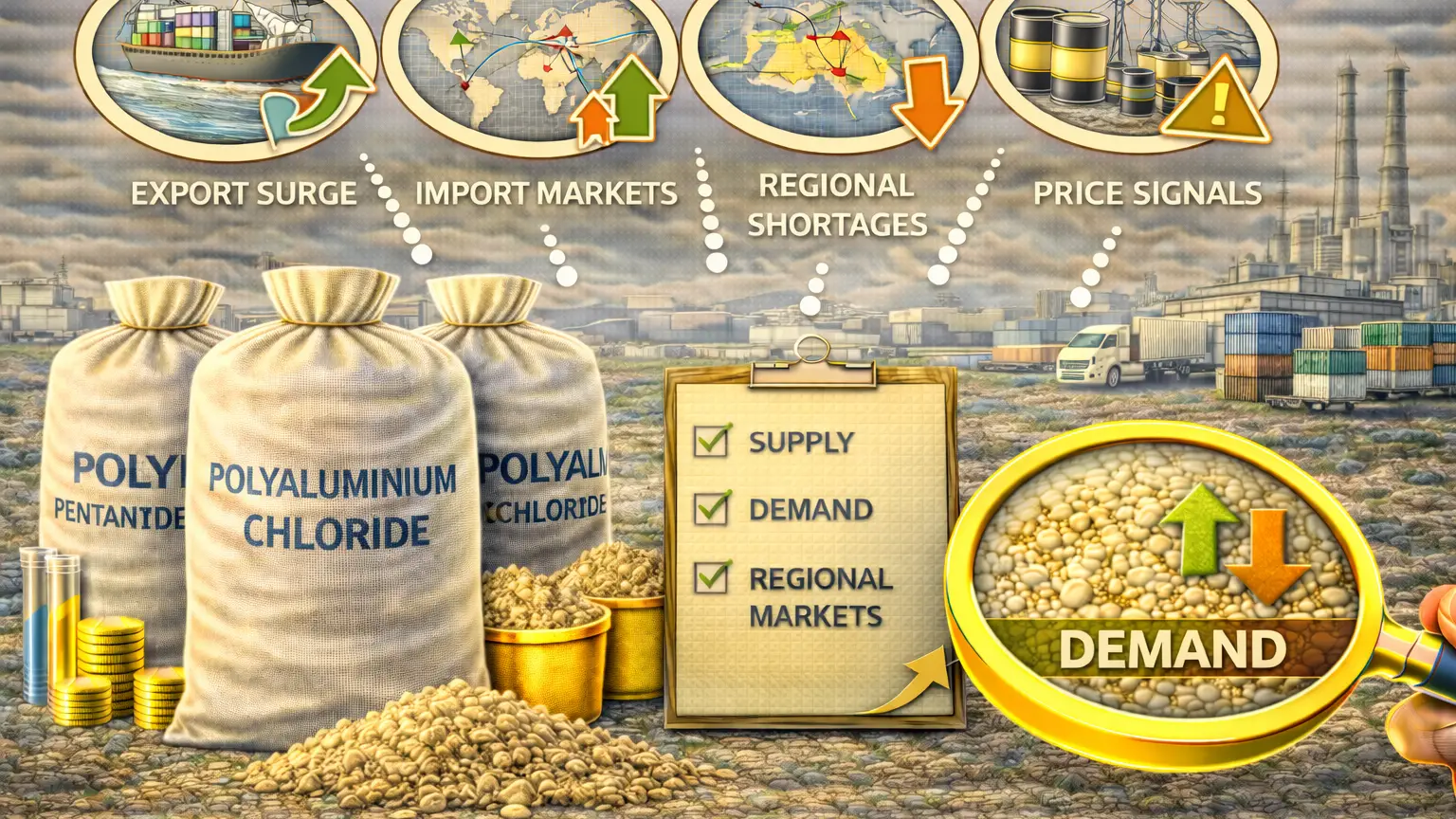
The movement of goods across borders serves as a powerful economic barometer, revealing underlying industrial needs, regulatory shifts, and competitive dynamics. For industrial chemicals like Polyaluminium Chloride (PAC), analyzing global trade flows provides unparalleled insight into regional demand patterns. In the Americas, a continent marked by diverse industrial bases and stringent environmental standards, the import and consumption of PAC tell a compelling story. This article delves into what these trade flows reveal about the demand for this critical coagulant, focusing on the drivers, applications, and strategic sourcing considerations that define the market.
By examining port data, import volumes from key producing nations, and the regulatory environment, we can map the pulse of industries reliant on effective water treatment. The demand for PAC is not uniform; it fluctuates with municipal projects, industrial expansion, and environmental compliance deadlines. Understanding these patterns is crucial for procurement managers, plant operators, and industry analysts seeking to anticipate supply needs, manage costs, and ensure operational continuity in water-intensive sectors.
Decoding America's Polyaluminium Chloride Import Landscape
America's reliance on imported Polyaluminium Chloride is a testament to both its substantial domestic consumption and the specialized production capabilities of global manufacturers. Major ports on the East and Gulf Coasts, such as Houston, New York, and Savannah, consistently show significant volumes of PAC shipments. Trade data indicates primary sourcing from Asian manufacturing hubs, particularly China, which dominates global PAC production due to economies of scale and advanced manufacturing processes. However, imports also flow from European producers and other regions, reflecting a diversified supply chain strategy to mitigate geopolitical and logistical risks.
The import landscape is characterized by two main product forms: liquid PAC and solid (powder or granular) PAC. Liquid PAC, often preferred for its ease of handling and immediate usability in municipal water plants, constitutes a large portion of bulk maritime shipments. Solid PAC, with its higher concentration and lower transportation cost per unit of active ingredient, is favored for longer supply chains and specific industrial applications. Analysis of Harmonized System (HS) code 2827.32 (Aluminium chloride) trade data shows consistent year-over-year growth in volumes, punctuated by spikes that often correlate with new environmental legislation or recovery from economic downturns, highlighting the chemical's essential role in infrastructure.
Key Drivers Fueling PAC Demand in the American Market
The sustained and growing demand for Polyaluminium Chloride in America is propelled by a confluence of regulatory, industrial, and environmental factors. Foremost among these is the increasingly stringent enforcement of water quality standards by the Environmental Protection Agency (EPA) under acts like the Safe Drinking Water Act and the Clean Water Act. Municipalities are under constant pressure to reduce turbidity, remove organic matter, and lower disinfection by-product precursors, tasks for which PAC is exceptionally effective. This regulatory push directly translates into procurement contracts and increased import volumes for high-quality coagulants.
Beyond regulation, industrial expansion plays a critical role. Sectors such as oil & gas (for produced water treatment), pulp & paper, mining, and textiles rely heavily on robust water treatment solutions. The shale boom, for instance, created a significant demand for efficient coagulants to treat frac flowback and produced water. Furthermore, aging water infrastructure across many American cities necessitates upgrades and expansions, often specifying advanced coagulation technologies. Economic recovery cycles also stimulate construction and industrial activity, leading to predictable surges in demand for water treatment chemicals, making trade flow analysis a valuable predictive tool for market participants.
Polyaluminium Chloride: Product Features and Primary Applications
Polyaluminium Chloride (PAC) is an inorganic polymer coagulant that has largely superseded traditional alum and ferric salts in many applications due to its superior performance. Its chemical structure, a polymer of aluminium hydroxychloride, provides a high charge density which enables effective neutralization of colloidal particles over a wider pH range. Key product features include a high basicity percentage (often 50-70%), which correlates with reduced acidity and lower corrosivity compared to aluminium sulfate, leading to less alkali consumption for pH adjustment and safer handling.
The applications of PAC are vast and critical. In drinking water treatment, it is the coagulant of choice for removing color, turbidity, and microorganisms, ensuring compliance with stringent potable water standards. For industrial wastewater treatment, PAC effectively treats effluents from textiles, tanneries, and food processing by precipitating contaminants and enhancing sludge dewatering. In the paper industry, it serves as a retention aid and drainage accelerator. A specialized form, Polyaluminium Chloride (PAC) for high-purity applications, is also used in sectors like electronics manufacturing. Its efficiency at lower dosages, broader operational pH window, and production of denser, faster-settling flocs make it a cost-effective and performance-driven solution across these diverse use cases.
Sourcing Strategies and the Role of Global Suppliers
Navigating the global market for Polyaluminium Chloride requires a strategic approach to sourcing. While domestic production exists, the scale, cost-competitiveness, and variety of grades available from global suppliers make imports a vital component of the supply chain. Companies like Chemtradeasia.com exemplify the role of specialized international suppliers, connecting American buyers with a network of vetted manufacturers. These platforms provide not just transactional services but also critical market intelligence, quality assurance, and logistical support, simplifying the complex process of international chemical procurement.
Effective sourcing strategies must account for several factors beyond price. Consistency of product quality, verified through Certificates of Analysis (CoA), is paramount to ensure stable treatment plant performance. Reliability of supply, influenced by production capacity, shipping schedules, and port congestion, requires building relationships with multiple suppliers or utilizing partners with robust contingency plans. Furthermore, understanding the technical specifications required for a specific application—whether it's a standard-grade PAC for municipal use or a low-iron variant for specialty industrial processes—is essential. Partnering with a knowledgeable supplier ensures the correct product is sourced, avoiding costly operational inefficiencies.
Future Outlook and Strategic Considerations
The future demand for Polyaluminium Chloride in America appears robust, shaped by megatrends such as climate change, resource scarcity, and technological advancement. Increased frequency of extreme weather events can compromise raw water quality, demanding more resilient and adaptive treatment regimens where PAC's effectiveness is crucial. The growing focus on water reuse and recycling, both in municipalities and industries, will further drive demand for high-performance coagulants that can handle challenging feed waters and meet strict discharge or reuse standards.
Strategically, industry stakeholders should monitor several key areas. First, advancements in PAC formulation, such as the development of composite or modified polymers for specific contaminants, will create new market segments. Second, supply chain resilience will remain a top priority, potentially encouraging nearshoring or regional diversification of production sources. Finally, sustainability considerations are becoming a purchase driver; suppliers that can demonstrate greener production processes or a lower carbon footprint in logistics may gain a competitive edge. For American buyers, maintaining a proactive, informed, and flexible sourcing strategy will be key to capitalizing on these trends and securing a reliable supply of this essential chemical.
Conclusion
Global trade flows offer a transparent and dynamic lens through which to view the vital role of Polyaluminium Chloride (PAC) in sustaining America's water treatment infrastructure and industrial base. The consistent import volumes and diversified sourcing routes underscore its status as a non-negotiable component in meeting environmental compliance and operational efficiency goals. From municipal plants ensuring safe drinking water to industries managing complex wastewater streams, PAC's advanced coagulation properties provide a reliable solution. As demand drivers evolve, a deep understanding of both the product's technical capabilities and the global market's intricacies will empower stakeholders to make informed, strategic decisions.
Disclaimer: This article is for informational and market insight purposes only. It is not intended as technical, safety, or professional advice for the handling, application, or specification of Polyaluminium Chloride (PAC). The data and trends discussed are based on general market analysis and should be independently verified. For specific applications, technical specifications, or safety protocols, readers must consult qualified experts, refer to official product documentation including Material Safety Data Sheets (MSDS/SDS), and directly contact our team or the chemical supplier for precise guidance tailored to their unique operational requirements.