
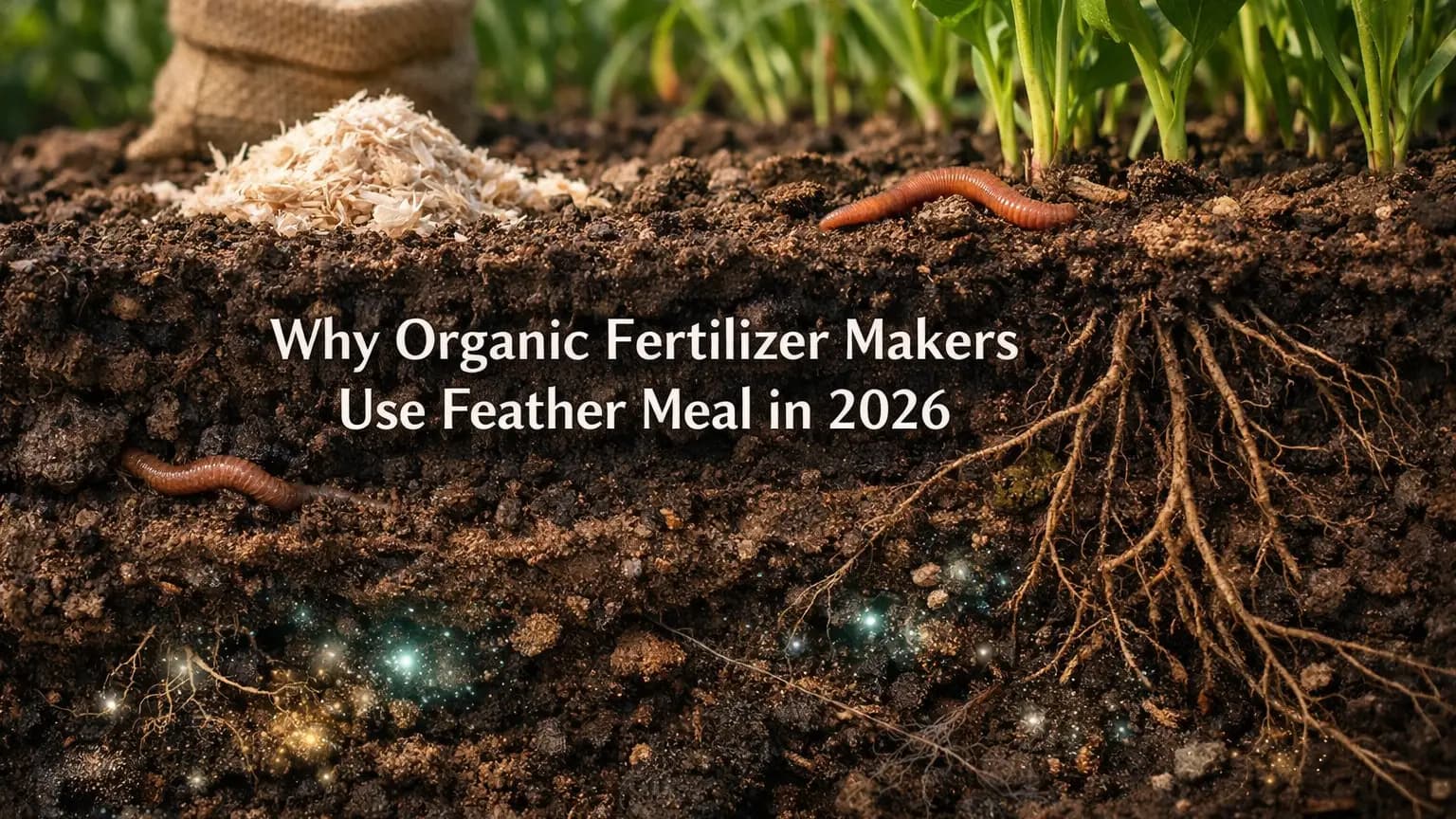
Feather meal continues to gain importance in organic fertilizer production in 2026 as manufacturers seek sustainable, high-nitrogen inputs that align with circular agriculture. Derived from recycled poultry feathers, feather meal provides a concentrated, slow-release nitrogen source that supports soil health and long-term crop productivity. With global organic farmland exceeding 98 million hectares and retail organic sales surpassing €130 billion in recent years, demand for compliant organic nutrients remains strong.
For fertilizer producers, feather meal offers a balance of agronomic performance, sustainability, and cost efficiency that few other organic nitrogen sources can match.
Feather Meal’s Role in Sustainable Agriculture
Organic farming systems rely on nutrient sources that support soil biology rather than quick chemical inputs. Nitrogen management remains one of the biggest challenges for organic growers, particularly for nitrogen-demanding crops such as leafy vegetables, corn, and brassicas.
Feather meal addresses this challenge by delivering concentrated nitrogen in a form that releases gradually through microbial activity. As sustainability reporting and ESG commitments expand across agriculture in 2026, fertilizer manufacturers increasingly prioritize inputs that reduce waste and improve environmental outcomes.
Why Organic Fertilizer Makers Prefer Feather Meal
High Nitrogen Concentration
Among organic nitrogen sources, feather meal offers one of the highest nitrogen contents on a per-ton basis. This allows manufacturers to formulate fertilizers that deliver meaningful nitrogen rates without excessive bulk.
For nitrogen-intensive crops, this concentrated profile supports vegetative growth and canopy development while keeping transportation and blending costs manageable.
Slow-Release Performance
Unlike fast-acting organic sources such as blood meal, feather meal mineralizes gradually. This reduces the risk of nitrogen loss through leaching or volatilization and provides sustained nutrient availability.
For organic fertilizer producers, slow-release performance supports claims of long-term soil fertility improvement rather than short-term nutrient spikes.
Agronomic Benefits in 2026 Farming Systems
Improved Soil Health and Microbial Activity
Feather meal contributes organic matter and stimulates microbial populations responsible for nutrient cycling. Increased microbial activity enhances soil structure, aeration, and root development.
Healthier soil biology supports long-term productivity and aligns with regenerative agriculture principles that continue to expand globally.
Reduced Nutrient Leaching
Because nitrogen release depends on microbial breakdown rather than immediate solubility, feather meal reduces the likelihood of nutrient runoff compared to synthetic fertilizers.
This characteristic helps farmers meet environmental compliance standards and nutrient management regulations that are tightening in several regions.
Sustainability and Circular Economy Advantages
Repurposing Poultry By-Products
The poultry industry generates large volumes of feathers as a by-product. Converting this material into fertilizer reduces landfill waste and supports circular economy objectives.
For fertilizer brands focused on sustainability marketing, feather meal provides a clear narrative of waste valorization and resource efficiency.
Compatibility with Organic Certification
Feather meal is generally permitted under major organic standards when processed and sterilized properly. Certifications such as USDA Organic and other national standards allow its use in approved formulations.
Fertilizer producers must ensure compliance through proper documentation and traceability from rendering facilities.
Market Trends Supporting Feather Meal Demand in 2026
Organic farmland continues to expand globally, with sustained growth in Asia, Europe, and North America. This expansion drives demand for certified organic fertilizer inputs.
The global feather meal market is projected to grow steadily through the decade, supported by both fertilizer and feed applications. Rising interest in regenerative farming further strengthens demand for organic nitrogen sources that enhance soil biology.
Cost competitiveness also plays a role. Compared with alternatives such as fish meal or blood meal, feather meal often provides a more economical nitrogen source, particularly in regions with strong poultry industries.
Sourcing and Quality Considerations
Nutrient Consistency and Testing
Consistent nitrogen content between 12 and 15 percent is critical for formulation accuracy. Producers rely on laboratory testing to verify nutrient levels, moisture content, and absence of pathogens.
Total volatile nitrogen and microbiological testing help confirm product stability and safety.
Storage and Supply Stability
Low moisture content reduces spoilage risk during storage. Feather meal is typically supplied in large bulk bags or palletized packaging for ease of transport.
Reliable sourcing from certified rendering plants ensures continuity and compliance with organic standards.
Conclusion
In 2026, feather meal remains a strategic ingredient for organic fertilizer makers. Its high nitrogen concentration, slow-release profile, soil health benefits, and alignment with circular economy principles make it well suited to modern sustainable agriculture.
As organic acreage expands and environmental standards tighten, fertilizer producers benefit from stable, high-quality feather meal supply. Chemtradeasia supports organic fertilizer manufacturers with reliable sourcing solutions, quality verification, and regional supply expertise to ensure consistent access to this essential organic nitrogen input.