Why Sodium Sulphate Compliance Matters in 2026
Sodium sulphate remains a core industrial chemical in global supply chains, with demand driven by detergents, glass, textiles, and paper manufacturing. In 2026, the regulatory focus surrounding sodium sulphate is less about hazard risk and more about environmental controls, documentation accuracy, logistics compliance, and sustainability reporting. For procurement managers, logistics planners, and HSE teams, regulatory alignment increasingly influences landed cost, supplier selection, and operational continuity.
While sodium sulphate maintains a non-hazardous classification across major regulatory systems, companies still face growing compliance obligations related to wastewater discharge limits, occupational dust exposure, REACH documentation, transport declarations, and ESG expectations. Understanding how these frameworks interact is essential for managing risk and ensuring smooth cross-border trade.
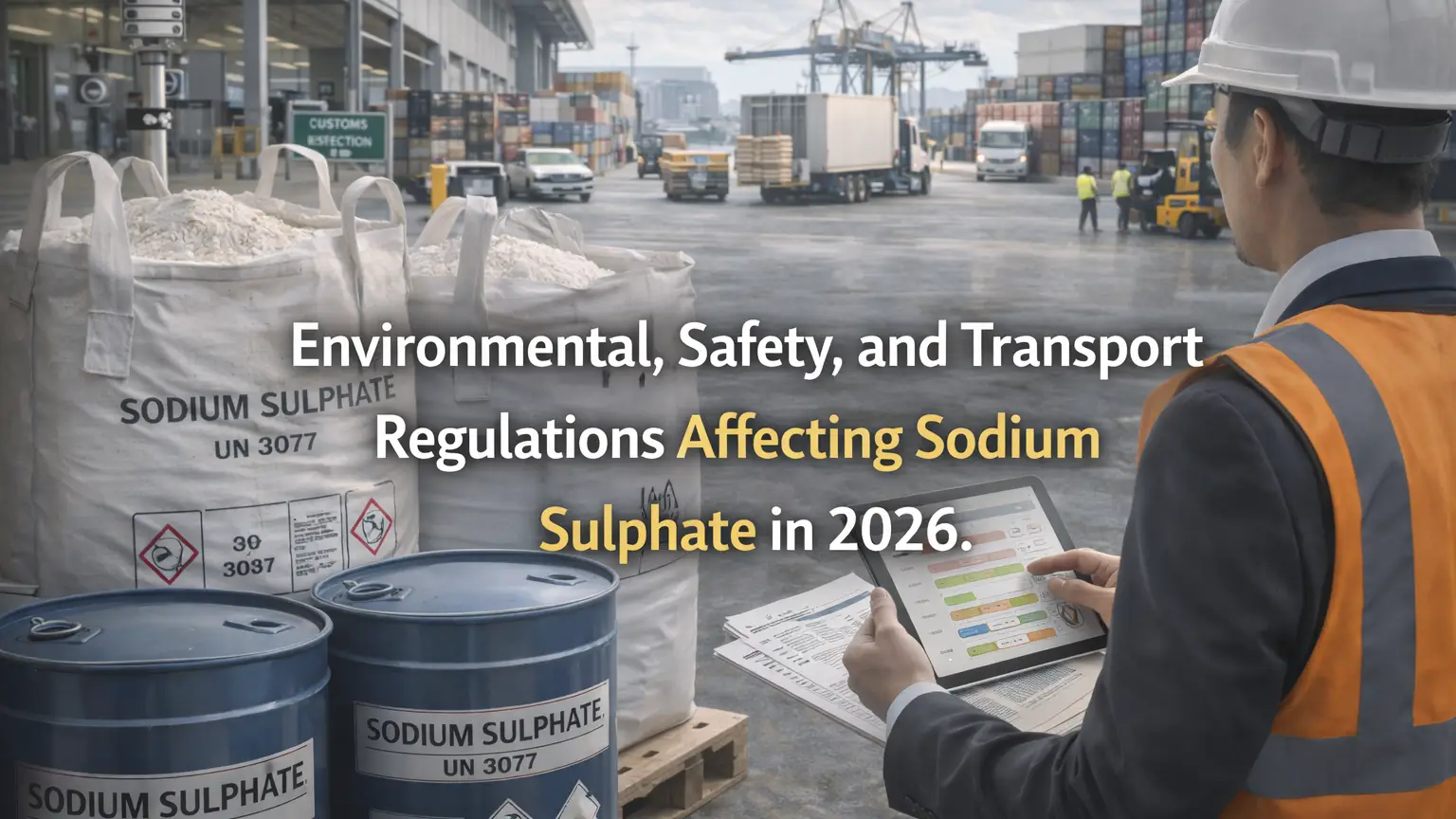
This article provides a practical regulatory overview of sodium sulphate in 2026, with a focus on environmental, safety, and transport compliance that directly affects industrial buyers and distributors.
Environmental and Sustainability Regulations
Sodium sulphate is not classified as hazardous waste, but environmental regulation focuses heavily on sulfate concentration and total dissolved solids in wastewater. Many jurisdictions impose sulfate discharge limits around 1,000 mg/L, making high-salt effluents a compliance concern for textile, detergent, and glass manufacturers.
To manage this, many facilities invest in recovery technologies such as membrane filtration, evaporation systems, or closed-loop water reuse. These systems reduce environmental liability while converting waste streams into reusable sodium sulphate, lowering both treatment costs and regulatory exposure.
Environmental compliance is increasingly tied to corporate sustainability programs. Buyers now expect suppliers to demonstrate water stewardship, waste reduction, and energy efficiency. Producers using solar evaporation, renewable energy, or recovery-based production routes often gain preference in procurement evaluations.
Chemical Safety Classification and SDS Obligations
GHS and CLP Status
Sodium sulphate is not classified as hazardous under the Globally Harmonized System or under EU CLP Regulation. It does not meet criteria for acute toxicity, skin or eye irritation, respiratory sensitization, or environmental hazard under normal industrial use. In rare cases, low aquatic toxicity classifications may appear, but these do not trigger labeling or transport controls.
As a result, sodium sulphate does not require hazard pictograms, signal words, or precautionary statements on packaging when supplied as a pure substance.
Safety Data Sheet Requirements
Despite its non-hazardous status, suppliers must still provide compliant Safety Data Sheets under REACH. SDS documents must include identification details, exposure guidance, handling instructions, and confirmation of regulatory status. They must also be updated promptly when regulatory references change.
Failure to maintain current SDS documentation remains one of the most common compliance gaps identified during EU enforcement actions. Buyers should ensure SDS files are current, complete, and available in the required local language.
Occupational Health and Safety Considerations
The primary workplace risk associated with sodium sulphate is dust exposure during handling, bagging, or transfer operations. Occupational exposure limits typically range from 10 to 20 mg per cubic meter for inhalable dust.
There is no significant systemic toxicity, so occupational controls focus on dust management rather than medical surveillance. Ventilation systems, enclosed transfer equipment, and routine housekeeping form the first line of control. Where dust generation is visible, basic respiratory protection, eye protection, and work clothing are recommended.
Facilities handling sodium sulphate in bulk should also manage moisture carefully. Humidity during pneumatic transfer can cause caking, leading to equipment blockage and increased manual intervention, which raises exposure risk.
Packaging, Storage, and Handling Requirements
Sodium sulphate is hygroscopic, meaning it absorbs moisture from the air. Improper storage leads to caking, reduced flowability, and quality disputes.
Best practice storage conditions include dry, enclosed warehouses with controlled humidity below 70 percent and temperatures between 10 and 30 degrees Celsius. Packaging must include adequate moisture barriers, particularly for sea freight and tropical climates.
Big bags with waterproof liners are standard for international trade, while paper sacks are typically limited to short-distance distribution. Stacking limits must be respected to prevent packaging failure and moisture ingress.
REACH, UK-REACH, and Regional Frameworks
Sodium sulphate holds a valid REACH registration and is not subject to authorization, restriction, or SVHC obligations. It is also exempt from PIC and POP regulations.
Under UK-REACH, importers must ensure appropriate notification or registration status through the UK Health and Safety Executive. While sodium sulphate falls into a low-priority category, documentation gaps can still delay imports if not properly managed.
Other regions such as ASEAN, the Middle East, and the Americas maintain generally permissive frameworks due to sodium sulphate’s benign profile, though environmental discharge rules and sustainability reporting are tightening globally.
Compliance Costs and Pricing Impact
Direct compliance costs for sodium sulphate are relatively modest compared to regulated chemicals. These include SDS maintenance, routine laboratory testing, and documentation management. Indirect costs arise from climate-controlled warehousing, moisture-resistant packaging, and sustainability audits.
In highly regulated markets such as the EU, compliance-related costs typically add a small premium to product pricing. However, these costs are often offset by reduced transport surcharges and lower regulatory risk.
Conclusion
Key developments to monitor include EU CLP enforcement campaigns, gradual implementation of One Substance One Assessment frameworks, and expanding ESG disclosure requirements. While sodium sulphate is unlikely to face reclassification, scrutiny of documentation accuracy and environmental performance will continue to increase.
For buyers and distributors, effective compliance in 2026 depends on strong supplier verification, accurate documentation control, proper storage practices, and ongoing regulatory monitoring. Working with experienced suppliers who understand regional requirements reduces risk and operational disruption.
Leave a Comment