
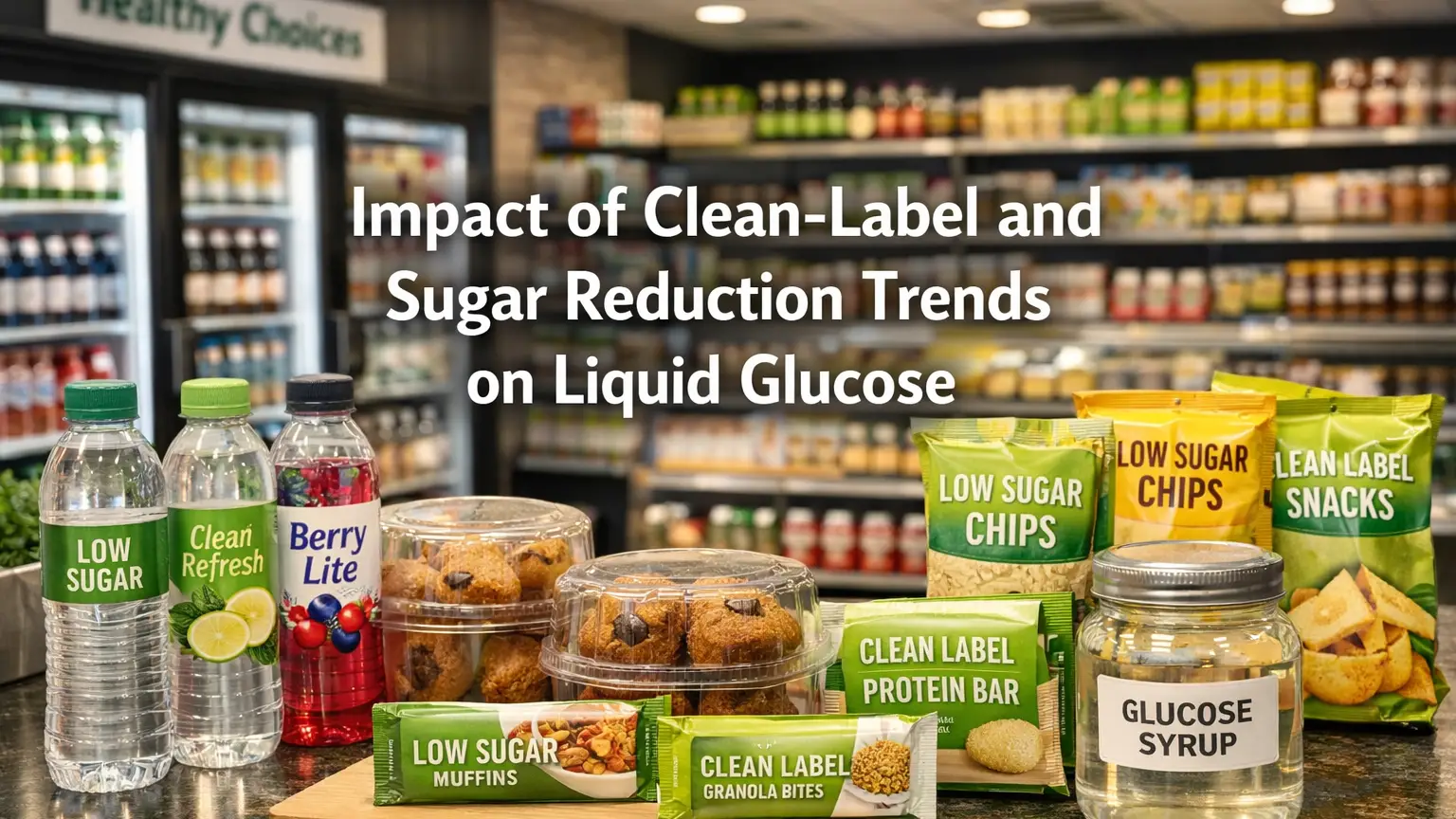
Clean-label and sugar reduction trends are reshaping how food manufacturers evaluate traditional sweeteners, including liquid glucose. Once valued mainly for sweetness and cost efficiency, liquid glucose is now assessed more critically for its labeling perception, nutritional classification, and functional contribution in reduced-sugar formulations. For ingredient buyers and formulation teams, the key question in 2026 is not whether liquid glucose is still relevant, but how it should be positioned and used under evolving clean-label expectations.
This article examines how clean-label demands and sugar reduction policies affect liquid glucose usage, where it continues to add value, and what strategic adjustments manufacturers are making to stay competitive and compliant.
Changing Sweetener Expectations in Food Products
Consumer awareness around sugar intake has grown steadily over the past decade, driven by public health campaigns, front-of-pack labeling, and sugar taxes. At the same time, clean-label preferences emphasize shorter ingredient lists and familiar names. These two forces intersect directly in sweetener selection.
Food manufacturers are under pressure to reduce added sugars while maintaining texture, shelf life, and sensory quality. Procurement teams now evaluate ingredients not only on price and performance, but also on how they appear on labels and how they are perceived by consumers. Liquid glucose sits at the center of this transition because it delivers essential functional benefits, yet it is still classified nutritionally as a free sugar.
What Liquid Glucose Does in Food Formulation
Liquid glucose, often labeled as glucose syrup, is produced through controlled hydrolysis of starch, commonly from corn, wheat, or tapioca. It is supplied as a viscous syrup with dry solids typically between 70 and 85 percent and a wide range of dextrose equivalent (DE) values.
DE level determines how liquid glucose behaves in a formulation. Lower DE grades provide body, viscosity, and moisture retention with limited sweetness. Higher DE grades contribute more sweetness and lower viscosity. Compared with sucrose, liquid glucose delivers roughly 60 to 80 percent sweetness, depending on DE.
Its real value in food manufacturing comes from functionality rather than sweetness. Liquid glucose:
- prevents sugar crystallization in confectionery
- improves mouthfeel and body in reduced-sugar systems
- enhances freeze-thaw stability in dairy and frozen desserts
- controls viscosity during processing
- supports shelf life by managing water activity
- These roles explain why liquid glucose remains widely used even as total sugar levels are reduced.
Clean-Label Trends and Ingredient Perception
Clean-label does not have a single legal definition, but it consistently favors ingredients that sound simple, familiar, and non-artificial. “Glucose syrup” often fares better than chemically complex names, yet it still carries an association with processed sugars.
In premium clean-label products, manufacturers increasingly scrutinize whether liquid glucose aligns with brand positioning. While it can be listed transparently, it cannot support claims such as “no added sugar” or “low sugar,” because regulatory frameworks classify it as a free sugar.
As a result, liquid glucose use has shifted away from headline sweetness toward background functional roles, especially in products where texture and stability matter more than sweetness delivery.
Sugar Reduction Policies and Regulatory Pressure
Global sugar reduction initiatives continue to tighten. The World Health Organization recommends keeping free sugars below 10 percent of daily energy intake, with additional health benefits below 5 percent. Governments have responded with a mix of taxes, labeling rules, and reformulation targets.
Examples include beverage sugar levies, front-of-pack warning labels, and voluntary or semi-mandatory reformulation programs extending into 2026 and beyond. These policies do not ban liquid glucose, but they limit how much can be used without triggering higher sugar declarations or taxes.
For manufacturers, this means liquid glucose volumes are often reduced, not removed. The ingredient remains valuable, but it must be used more precisely.
How Clean-Label Trends Affect Liquid Glucose Usage
Under clean-label pressure, liquid glucose faces two main constraints:
- It is perceived as a processed carbohydrate.
- It counts fully as added sugar in nutrition labeling.
These factors reduce its appeal in products marketed explicitly as clean-label or low-sugar. However, they do not eliminate its usefulness. Many manufacturers now use liquid glucose as part of blended systems, combined with fibers, maltodextrin, or high-intensity sweeteners to reduce total sugar while preserving functionality.
In this context, low-DE liquid glucose grades have gained attention because they contribute bulk and stability with limited sweetness impact.
Liquid Glucose in Reduced-Sugar Formulations
In reduced-sugar products, liquid glucose often acts as a functional carbohydrate rather than a sweetener. Its roles include:
- replacing lost solids when sucrose is reduced
- maintaining viscosity in beverages and sauces
- improving freeze-thaw stability in ice cream and frozen desserts
- supporting consistent processing behavior in baking and extrusion
For example, DE 36 to 44 liquid glucose grades are commonly used in low-sugar jams, bakery fillings, and dairy applications to preserve mouthfeel while allowing sugar reductions of 20 percent or more.
Comparison with Alternative Sweeteners
Liquid glucose competes and cooperates with a wide range of alternatives:
- Maltodextrin provides bulking and clean-label appeal but minimal sweetness.
- Polyols such as erythritol reduce calories but introduce cooling effects and higher costs.
- High-intensity sweeteners like stevia or monk fruit deliver sweetness without bulk, requiring functional partners.
- Rare sugars such as allulose offer clean-label potential but remain cost-intensive and supply-limited in many regions.
In practice, liquid glucose is rarely replaced one-to-one. Instead, it is repositioned within multi-ingredient systems that balance sweetness, texture, cost, and label perception.
Application-Specific Impact Across Food Categories
The impact of clean-label and sugar reduction varies by application:
- Confectionery relies on liquid glucose for crystallization control and texture, even at lower inclusion rates.
- Bakery uses it to retain moisture and softness in reduced-sugar cakes and fillings.
- Beverages apply carefully controlled levels for viscosity and mouthfeel.
- Dairy and frozen desserts depend on its freeze-thaw stability and body contribution.
- Processed foods benefit from humectancy and shelf-life support.
Across these categories, manufacturers report moderate volume reductions rather than elimination, reflecting liquid glucose’s functional importance.
Conclusion
Clean-label and sugar reduction trends are changing how liquid glucose is used, not removing it from formulations. Its future lies in functional performance, not headline sweetness. Ingredient buyers who focus on DE-specific grades, consistent quality, and clean-label compatible sourcing gain greater flexibility in reformulation.
Balanced portfolios that combine liquid glucose with alternative sweeteners and bulking agents allow manufacturers to manage cost, compliance, and product quality simultaneously.
For food manufacturers reviewing their sweetener strategy, Chemtradeasia supports sourcing of application-specific liquid glucose grades with clear specifications and regional supply options. This helps procurement and R&D teams adapt formulations to clean-label and sugar reduction requirements without sacrificing performance or production efficiency.