
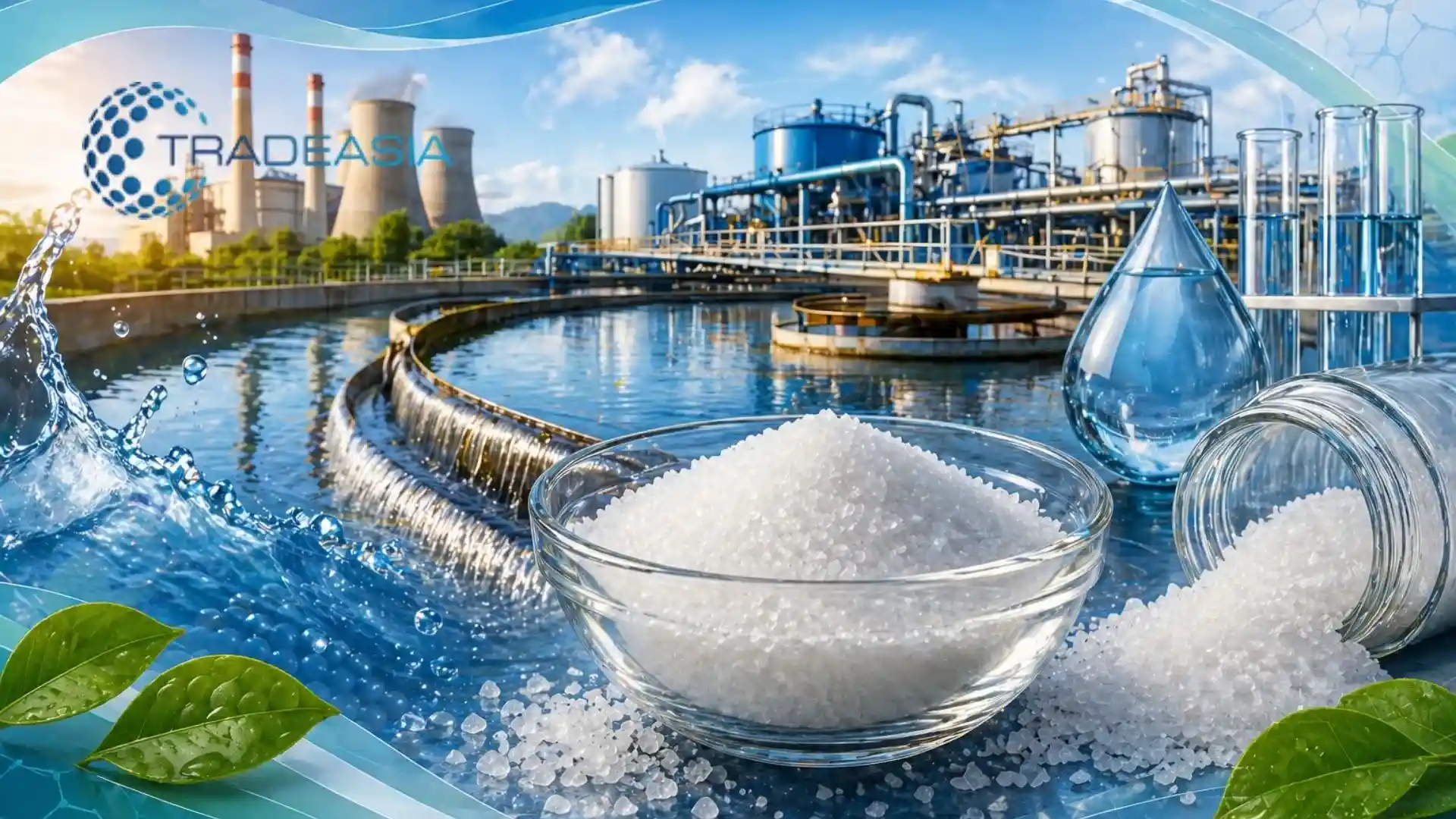
Introduction Borax Decahydrate
The global demand for industrial water treatment chemicals is rising steadily as industries face stricter environmental regulations, water scarcity, and escalating energy costs. Within this landscape, borax decahydrate is an important inorganic compound used in multiple water-related processes, from corrosion control and pH buffering to specialty formulations. Understanding how this material will be sourced, transported, and integrated into treatment programs by 2026 is critical for plant operators, procurement managers, and chemical distributors.
By 2026, the industrial water treatment chemicals market is expected to be shaped by decarbonization goals, circular water strategies, and digitalization of plant operations. These trends influence not only which chemicals are used, but also how they are manufactured, certified, and delivered. In this context, companies such as chemtradeasia play a key role as global distribution platforms, connecting producers of borax and boron derivatives with end-users in power generation, mining, oil & gas, and manufacturing.
This article provides a structured overview of the global market outlook for water treatment chemicals, explains the role and properties of borax decahydrate, and analyzes the supply chain factors that will matter most by 2026. It also examines key applications, benefits, and handling considerations, to help industry stakeholders plan sourcing strategies and technical evaluations in a rapidly evolving regulatory and commercial environment.
Global Market Outlook for Industrial Water Treatment Chemicals to 2026
The global industrial water treatment chemicals market has been expanding at a compound annual growth rate (CAGR) estimated in the range of 4–6% between 2021 and 2026, driven by tightening discharge limits, higher water re-use targets, and the growth of water-intensive industries in emerging economies. Regions such as Asia-Pacific, particularly China, India, and Southeast Asia, are seeing strong investment in power generation, petrochemicals, and metals, all of which rely heavily on robust water treatment programs. As a result, demand for scale inhibitors, corrosion inhibitors, coagulants, biocides, and pH adjusters continues to rise.
At the same time, environmental, social, and governance (ESG) pressures are reshaping chemical selection and supply chains. End-users increasingly look for products with lower toxicity profiles, improved biodegradability, and reduced carbon footprints. This creates opportunities for inorganic compounds like borax decahydrate, which can contribute buffering, alkalinity control, and corrosion mitigation functions without some of the environmental concerns associated with more hazardous additives. However, boron discharge limits in certain jurisdictions also require careful consideration of dosage and effluent management.
By 2026, digital monitoring and predictive maintenance will further influence chemical consumption patterns. Online sensors, digital twins, and AI-based dosing control are expected to optimize water chemistry in real time, reducing over-dosing and minimizing waste. For distributors and platforms such as chemtradeasia, this means customers will demand more consistent quality, clear technical documentation, and reliable logistics so that inventory and dosing strategies can be precisely aligned with operational data. In this environment, stable and transparent supply chains for boron-based chemicals will become an important competitive advantage.
Product Spotlight: Borax Decahydrate in Industrial Water Treatment
Borax decahydrate (sodium tetraborate decahydrate, typically Na2B4O7·10H2O) is a white, crystalline, water-soluble salt derived primarily from natural borate ores. It is widely used as a source of boron in glass and ceramics, detergents, metallurgy, and agriculture. In the context of industrial water treatment, its properties as a buffering agent, alkalinity contributor, and mild corrosion inhibitor make it a useful component in certain formulations and process water systems. Typical commercial grades offer borax content of around 99.5% minimum, with controlled levels of insoluble matter and trace impurities.
From a performance standpoint, borax decahydrate dissolves readily in water, providing a moderately alkaline solution with a pH usually in the range of 9–9.5 at common concentrations. This buffering capacity helps stabilize system pH, which is critical for minimizing corrosion in steel pipelines, optimizing the performance of coagulants and flocculants, and maintaining the effectiveness of biocides. In closed-loop cooling systems, boiler feedwater pre-treatment, and certain process waters, borax-based formulations can help maintain a stable chemical environment that protects assets and improves operational reliability.
Commercially, chemtradeasia and similar distributors supply borax decahydrate in various packaging formats, such as 25 kg bags, 50 kg bags, and jumbo bags, depending on the application scale and logistics requirements. Product specification sheets typically outline purity, moisture content, bulk density, and particle size distribution, which influence dissolution rate and handling. For water treatment formulators, these specifications are critical for ensuring that borax integrates smoothly into solid blends, liquid concentrates, or on-site dosing systems without causing sedimentation or inconsistent performance.
Supply Chain Dynamics of Borax Decahydrate for 2026
The supply chain for borax decahydrate is closely tied to natural borate deposits, which are geographically concentrated in a few key regions, including the United States, Turkey, South America, and parts of Asia. This concentration can create exposure to geopolitical risks, trade policy changes, and logistics bottlenecks. By 2026, stakeholders anticipate continued scrutiny of mining practices, environmental permitting, and energy use in borate production, all of which can influence product availability and cost structures. Stable sourcing strategies increasingly involve diversifying supply, maintaining safety stocks, and working with distributors that have multiple origin options.
Global logistics disruptions witnessed in recent years have highlighted the importance of resilient and transparent supply chains. Freight rate volatility, container shortages, and port congestion have affected the movement of bulk and packaged inorganic chemicals worldwide. For borax decahydrate, which is often shipped in large volumes, optimizing shipping modes (bulk vs. containerized), warehouse locations, and regional distribution hubs is essential. Platforms such as chemtradeasia aim to mitigate these challenges by leveraging multi-country sourcing networks, regional warehouses, and integrated order management systems that can reroute supply as conditions change.
By 2026, digitalization of supply chains is expected to further enhance visibility and planning for borax users. Advanced forecasting tools, real-time inventory tracking, and electronic documentation can reduce lead-time uncertainty and improve coordination between producers, traders, and industrial end-users. In addition, sustainability reporting requirements are pushing companies to document the carbon footprint and environmental attributes of their supply chains. For borax decahydrate, this may involve life cycle assessments, traceability back to specific mines, and certification schemes that validate responsible sourcing. Buyers will increasingly look for partners who can provide both competitive pricing and verifiable ESG performance.
Key Applications, Benefits, and Handling Considerations
In industrial water treatment, borax decahydrate is not typically used as a standalone treatment chemical, but rather as a functional component within broader formulations. One key application is as a pH buffer and alkalinity source in closed cooling water systems and certain process water loops. By stabilizing pH in the mildly alkaline range, borax helps minimize corrosion of carbon steel and other metals, especially when used in combination with nitrites, molybdates, or organic corrosion inhibitors. In some boiler water pre-treatment schemes, borax contributes to maintaining appropriate alkalinity and enhancing the performance of oxygen scavengers and dispersants.
Another application area is in specialty cleaners and membrane-compatible formulations used in water treatment plants. Borax decahydrate can act as a builder, enhancing the cleaning power of surfactants and helping to disperse soils and metal oxides from surfaces, heat exchangers, and filtration equipment. Its relatively low volatility and stable behavior at typical process temperatures make it suitable for repeated use in circulation cleaning and maintenance procedures. In addition, borax’s mild biostatic properties can complement primary biocides, though it is not usually relied upon as a primary microbiological control agent.
In terms of benefits, users often value borax decahydrate for its predictable chemistry, wide compatibility with other inorganic and organic additives, and relatively low acute toxicity compared with many heavy-metal-based treatment chemicals. However, boron compounds are subject to regulatory scrutiny in some regions due to potential environmental and health concerns at elevated exposures. Handling considerations therefore include proper storage in dry, well-ventilated areas; use of appropriate personal protective equipment to avoid dust inhalation and skin or eye contact; and careful management of discharges to ensure compliance with local boron limits. Technical documentation, including MSDS/SDS and product data sheets supplied by distributors like chemtradeasia, is essential for designing safe and compliant applications.
Conclusion
As the global industrial water treatment chemicals market moves toward 2026, borax decahydrate is positioned as a versatile, well-established inorganic component that supports pH control, corrosion mitigation, and cleaning functions in diverse industrial systems. Market growth, especially in emerging economies, along with tightening water quality and discharge regulations, will continue to drive demand for reliable, well-characterized treatment chemicals. Within this context, borax offers a combination of performance, compatibility, and cost-effectiveness that makes it attractive to formulators and end-users seeking robust and flexible water treatment strategies.
Supply chain resilience, sustainability, and digital integration will be central themes shaping the availability and competitiveness of borax decahydrate by 2026. Concentrated mining locations, evolving environmental standards, and logistics volatility underscore the need for diversified sourcing and strong partnerships across the value chain. Global distribution platforms such as chemtradeasia can provide value by connecting multiple production origins, offering standardized quality, and supporting customers with documentation, logistics coordination, and market intelligence that align with modern procurement and ESG requirements.
This article is intended solely for informational and market insight purposes and does not constitute technical, safety, regulatory, or professional advice. Users should independently verify all information with qualified experts, consult official documentation such as MSDS/SDS and applicable regulations, and contact their suppliers or our team for guidance on specific formulations, operating conditions, and compliance obligations.