Introduction
The global chemical landscape is witnessing a significant pivot towards Asia, with the hydrogen peroxide market standing as a prime example of this transformative shift. As a versatile and environmentally preferable oxidizing agent, hydrogen peroxide (H2O2) is becoming indispensable across modern industries. The trade dynamics for this chemical in Asia are being fundamentally reshaped not by generic demand, but by specific, powerful applications in sectors like textiles and water treatment. This application-driven demand is setting the stage for substantial market growth projected through 2026 and beyond.
For procurement managers, plant operators, and business leaders across the continent, understanding these drivers is crucial for strategic sourcing and maintaining competitive advantage. The market is no longer just about bulk chemical procurement; it's about securing high-purity, application-grade hydrogen peroxide from reliable partners who understand its end-use nuances. This article delves into the forces propelling Asia's hydrogen peroxide trade market, with a focused analysis on key consuming industries, product specifications, and the evolving role of specialized distributors in facilitating this essential trade.
The Asian Hydrogen Peroxide Market: A 2026 Outlook
Asia has firmly established itself as the epicenter of global hydrogen peroxide production and consumption. Countries like China, South Korea, India, and Indonesia host major manufacturing facilities utilizing the dominant anthraquinone auto-oxidation (AO) process. Market analysts project the Asia-Pacific region to maintain the highest CAGR in the hydrogen peroxide market through 2026, driven by robust industrial expansion, stringent environmental regulations phasing out chlorine-based chemicals, and cost-competitive production. The region's market value is expected to cross several billion USD by the decade's midpoint, with trade flows intensifying both within Asia and for export to other regions.
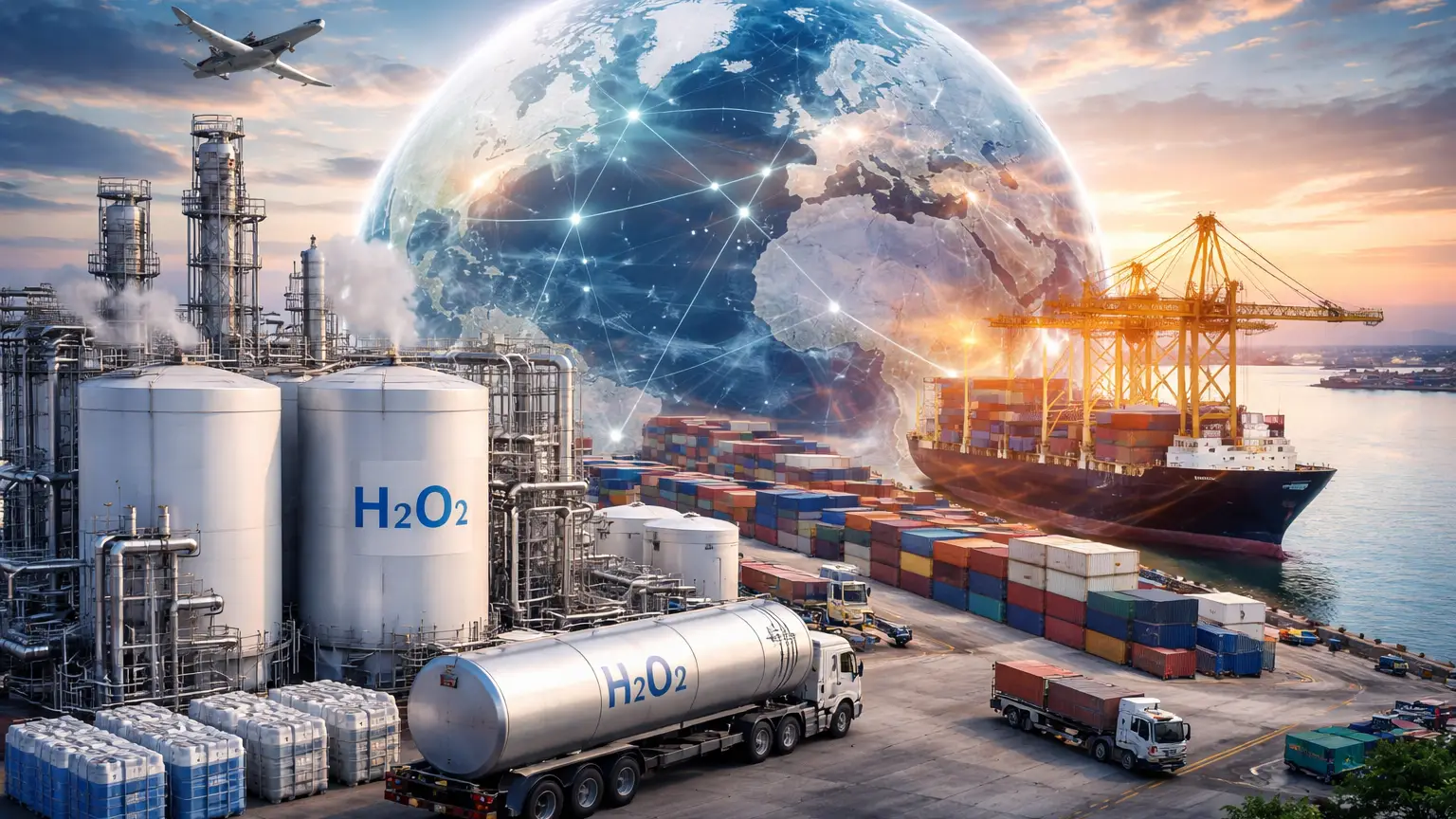
This growth is underpinned by massive investments in production capacity. However, the true narrative is in the consumption patterns. Unlike mature Western markets where pulp and paper dominate, Asia's demand is more diversified and dynamic. The rise of local manufacturing, particularly in Southeast Asia, for textiles, electronics, and consumer goods creates a decentralized yet voracious demand for industrial chemicals. This creates a complex trade network where efficient logistics, technical support, and consistent supply chain management become as critical as the product itself, a gap filled by proficient regional distributors.
Key Application Sectors Driving Demand
The propulsion of the hydrogen peroxide market in Asia can be directly attributed to its critical role in two flagship industries: textiles and water treatment. In the textile industry, hydrogen peroxide is the bleaching agent of choice for cotton and other natural fibers. Its decomposition into water and oxygen aligns perfectly with the global push for sustainable and eco-friendly textile processing. Major textile hubs in Bangladesh, Vietnam, India, and Indonesia are increasingly adopting hydrogen peroxide over traditional hypochlorite bleaches to meet the stringent environmental and quality standards demanded by international apparel brands, thus creating a steady, high-volume demand.
Parallelly, the water treatment sector presents a colossal growth avenue. Rapid urbanization and industrialization across Asia have escalated concerns over water pollution and scarcity. Hydrogen peroxide serves as a powerful oxidant in both industrial effluent treatment and municipal water purification. It is used to remove organic impurities, reduce BOD/COD, and as a precursor for advanced oxidation processes (AOPs). Furthermore, it is employed in the detoxification of cyanide in mining wastewater and in the treatment of flue-gas desulfurization wastewater from power plants. Government mandates for cleaner water discharge are making water treatment chemicals a non-negotiable expenditure for industries, securing long-term demand for hydrogen peroxide.
Beyond these primary drivers, significant demand emanates from the pulp and paper industry for bleaching chemical pulp, the electronics sector for wafer cleaning and etching, the mining industry for mineral processing, and the food industry for aseptic packaging sterilization. This application diversity makes the Asian market particularly resilient to sector-specific downturns, ensuring stable trade activity.
Spotlight on Product: Hydrogen Peroxide for Industrial Use
Not all hydrogen peroxide is created equal. For industrial buyers, understanding product specifications is paramount to ensuring process efficiency and safety. Industrial-grade hydrogen peroxide is typically available in aqueous solutions, with concentrations ranging from 35% to 70% by weight. The 50% concentration is widely common in trade due to its balance between oxidative strength, transportation efficiency, and stability. For specialized applications like electronics or certain AOPs in water treatment, higher purities (e.g., semiconductor grade) with ultra-low metallic ion content are essential to prevent contamination or catalyst poisoning.
The efficacy of hydrogen peroxide in textile bleaching depends on precise control of concentration, temperature, pH (managed using stabilizers), and time. A distributor with technical expertise can provide not just the chemical, but also guidance on optimal process parameters to achieve the desired whiteness index without damaging fiber strength. In water treatment, the product's role varies: it can be used directly as an oxidant, or in conjunction with catalysts like iron (Fenton's reagent) or UV light for degrading persistent organic pollutants. This requires a product free from impurities that could inhibit these reactions.
When sourcing, key specifications to verify include concentration (assay), stability (often enhanced with stabilizers like sodium stannate or phosphates), acidity (pH), and the presence of inhibitors for safe transportation and storage. Reputable suppliers and distributors provide detailed Material Safety Data Sheets (MSDS) and technical data sheets, ensuring buyers are equipped with the necessary information for safe handling and optimal application.
The Role of Specialized Chemical Distributors
In a complex and fragmented market like Asia, the bridge between large-scale manufacturers and diverse end-users is often built by specialized chemical distributors. Companies like Chemtradeasia (operating via portals such as chemtradeasia.in and chemtradeasia.co.id) play a multifaceted role that transcends simple logistics. They provide market access, regional expertise, and value-added services that are critical for international buyers and local SMEs alike. Their deep understanding of local regulations, customs procedures, and logistical networks within countries like India and Indonesia simplifies cross-border and domestic trade significantly.
For a product like hydrogen peroxide, which requires careful handling and storage, the distributor's role in supply chain integrity is vital. They ensure proper packaging (typically HDPE containers or specialized tankers), maintain storage facilities that prevent decomposition, and manage just-in-time delivery to minimize users' on-site inventory risks. Furthermore, a technical distributor can act as a knowledge partner, advising clients on the correct grade of hydrogen peroxide for their specific textile chemicals formulation or water treatment system, thereby optimizing consumption and cost.
This distribution model de-risks procurement for end-users. Instead of managing relationships with multiple overseas producers, buyers can rely on a single, locally-attuned partner to ensure consistent quality, competitive pricing aggregated from various sources, and reliable supply—factors that are indispensable for maintaining uninterrupted production in demanding industrial settings.
Challenges and Strategic Considerations for Buyers
Navigating the Asian hydrogen peroxide trade market presents distinct challenges that strategic buyers must anticipate. Price volatility remains a primary concern, influenced by fluctuations in the cost of key raw materials (like anthraquinone and hydrogen gas), energy prices, and regional supply-demand imbalances. Geopolitical tensions and trade policies can also disrupt established supply routes. Furthermore, the logistical complexity of transporting a hazardous chemical across vast distances and diverse regulatory jurisdictions requires meticulous planning and compliance expertise.
To mitigate these risks, astute buyers are adopting several strategic approaches. Firstly, there is a move towards building long-term partnerships with reliable distributors rather than engaging in sporadic spot purchases. This fosters supply security and can lead to more stable pricing agreements. Secondly, diversification of the supplier base, perhaps utilizing a distributor with access to multiple production sources across Asia, insulates against plant-specific outages. Thirdly, investing in on-site testing capabilities to verify concentration and purity upon delivery protects against quality discrepancies that could halt production or compromise treatment efficiency.
Finally, forward-thinking companies are integrating sustainability into their procurement criteria. Sourcing hydrogen peroxide—an inherently "green" chemical due to its benign decomposition products—from producers and distributors who demonstrate responsible environmental and safety practices adds to corporate sustainability credentials. This aligns with the broader end-market demand for sustainably manufactured textiles and responsibly treated industrial wastewater.
Conclusion
The trajectory of the Asian hydrogen peroxide trade market towards 2026 is unmistakably upward, charted by the powerful engines of the textile and water treatment industries. This growth is application-driven, specific, and demands a sophisticated approach to chemical sourcing. Success in this market will belong to those who look beyond the commodity transaction and recognize the value of technical grade, reliable supply chains, and expert partnership.
For industrial consumers across Asia, the path forward involves partnering with established, knowledgeable chemical distributors who can navigate the region's complexities. Entities like Chemtradeasia exemplify the modern distributor's role, providing not just chemicals like hydrogen peroxide and specialized textile chemicals, but also the logistical, regulatory, and technical support necessary to harness these products effectively. By aligning with such partners, businesses can secure their supply of critical water treatment chemicals and oxidizing agents, ensuring operational resilience, compliance, and competitiveness in the fast-evolving Asian industrial landscape.
Leave a Comment