Introduction Soda Ash Dense
The global textile industry is undergoing rapid transformation driven by sustainability pressures, stricter environmental regulations, and shifting consumer preferences toward higher-quality fabrics. Within this evolving landscape, Soda Ash Dense has remained a critical building-block chemical, especially in textile processing steps such as desizing, scouring, mercerization, and dyeing. As we approach 2026, understanding how demand, specifications, and sourcing strategies for Soda Ash Dense are changing has become essential for textile chemical buyers, procurement managers, and technical teams.
From 2023 to 2030, the global soda ash market is projected to grow at a CAGR of roughly 4–5%, with glass and detergents as major end-use sectors. However, textiles represent a strategically important niche, particularly in Asia-Pacific, which accounts for more than 60% of global textile production. As textile manufacturers upgrade lines for reactive dyes, digital printing, and eco-friendly wet processing, the role of high-quality Soda Ash Dense in process stability and cost optimization is becoming more pronounced.
This article provides a detailed, professional overview of the 2026 trends shaping the application of Soda Ash Dense in textile chemicals worldwide. It covers product characteristics, critical applications, evolving buyer expectations, and how trading and distribution platforms such as chemtradeasia are helping buyers secure reliable, compliant supply. The objective is to equip decision-makers with actionable market insight to align their procurement and technical strategies with the upcoming cycle of demand.
Global Overview of Soda Ash Dense in Textile Chemicals
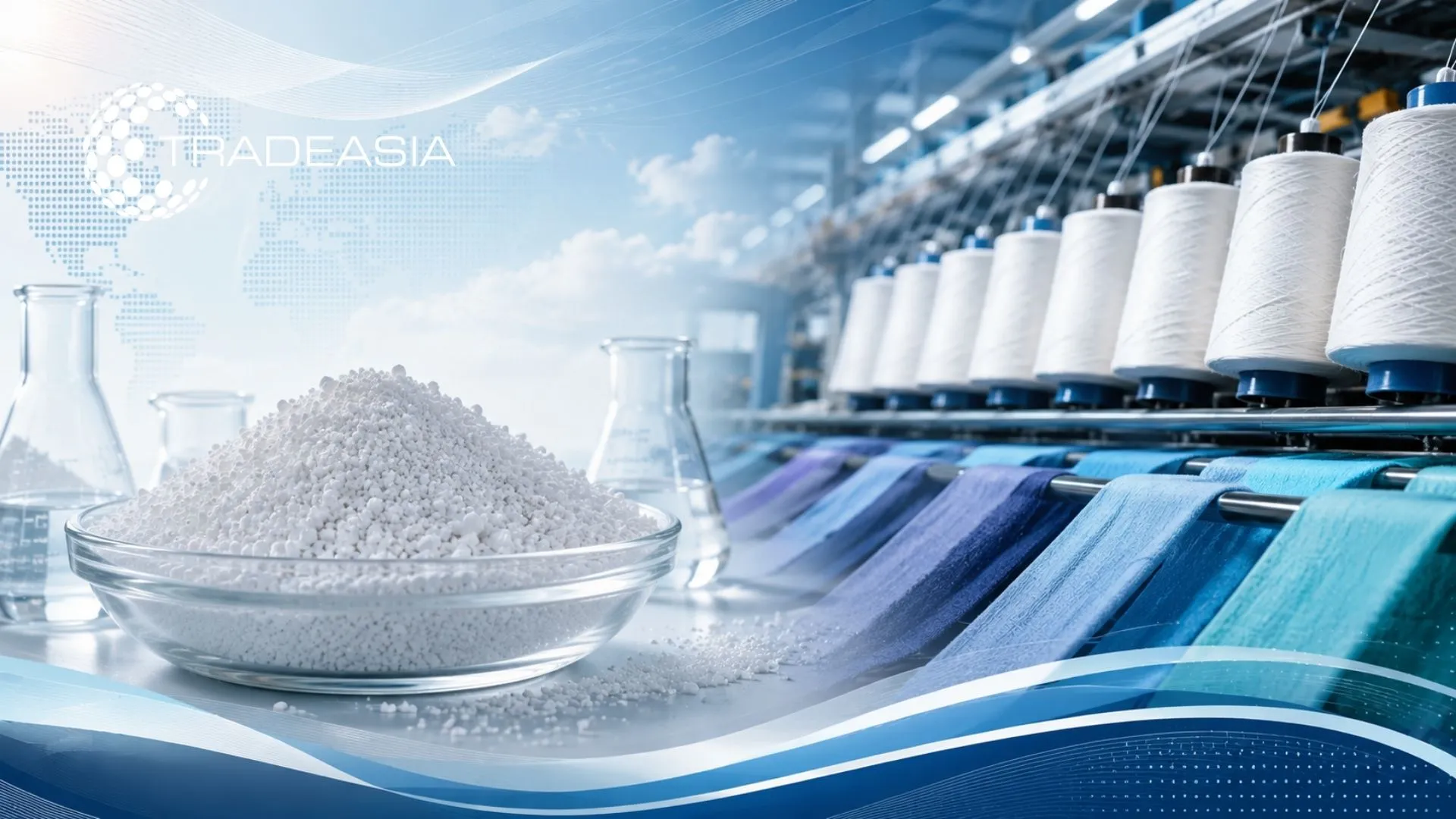
Soda Ash Dense, chemically known as sodium carbonate (Na2CO3), is a key inorganic alkali widely used across industries. While flat glass and container glass account for the majority of consumption, textiles remain an important downstream segment, particularly in countries such as China, India, Bangladesh, Pakistan, Vietnam, and Turkey. In textile processing, Soda Ash Dense primarily functions as a pH regulator and alkali source, enabling efficient dye fixation and fiber preparation.
Globally, soda ash capacity is concentrated in regions with natural trona deposits (notably the United States and parts of Turkey) and areas with established synthetic production based on the Solvay process (Europe, China, and some parts of Asia). The supply-demand balance is influenced by energy prices, environmental regulations, and glass industry cycles. For textile chemicals buyers, this means that Soda Ash Dense pricing and availability can be indirectly affected by developments in other sectors, making strategic sourcing and diversification of suppliers increasingly important.
By 2026, the global soda ash market is expected to be characterized by more disciplined capacity additions, increased focus on low-carbon production, and tighter quality controls. Textile buyers will likely see more product differentiation based on purity, bulk density, and sustainability credentials (such as lower CO2 footprints and responsible sourcing). Partners like chemtradeasia are already responding by expanding multi-origin sourcing options, offering both natural and synthetic Soda Ash Dense grades tailored to textile applications, and providing documentation to support regulatory and customer audits.
Technical Features and Specifications of Soda Ash Dense
For textile chemical formulators and mill technicians, understanding the technical profile of Soda Ash Dense is critical for process consistency. Dense soda ash typically has a higher bulk density (around 0.9–1.1 g/cm³) compared with light soda ash (0.5–0.7 g/cm³). This higher density makes it particularly suitable for bulk handling, silo storage, and automated dosing systems common in large textile processing plants. It is usually supplied as free-flowing granules or coarse powder, designed to minimize dust and improve dissolution behavior.
Typical industrial specifications for Soda Ash Dense used in textiles include Na2CO3 content of 99.0% minimum on a dry basis, low levels of chlorides (often <0.5%), iron (often <0.003%), and insoluble matter (generally <0.1%). These parameters are important because impurities can influence shade reproducibility, cause spotting, or contribute to equipment scaling. Moisture content is also controlled (commonly below 0.5%) to maintain stable dosing and prevent caking during storage. Buyers should always confirm product specifications against their mill’s standard operating procedures and dyehouse requirements.
From a performance standpoint, the key features that textile buyers typically look for include consistent alkalinity, rapid and complete solubility, low dust generation, and compatibility with other wet-processing chemicals. Compared to alternatives such as caustic soda (NaOH), Soda Ash Dense offers a milder and more controlled increase in pH, which is advantageous in reactive dyeing and mercerization where too aggressive an alkali can damage fibers or over-strip finishes. Platforms like chemtradeasia help buyers match these technical needs by offering multiple grades and origins, providing certificates of analysis (COAs), and enabling trial shipments before large-scale adoption.
Key Applications of Soda Ash Dense in the Textile Industry
In textile processing, Soda Ash Dense is primarily used in pretreatment and dyeing stages, where precise control of alkalinity is essential. In desizing and scouring, Soda Ash Dense helps remove sizing agents, natural waxes, pectins, and other impurities from cotton and cellulosic fibers. By elevating the pH, it enhances the action of surfactants and wetting agents, leading to improved absorbency and more uniform dye uptake. Mills targeting high-quality whites and bright shades often rely on stable soda ash quality to maintain reproducible results.
One of the most critical applications is in reactive dyeing of cotton and viscose. Reactive dyes form covalent bonds with the fiber, and this fixation reaction is highly pH-dependent. Soda Ash Dense is commonly used as the alkali to raise the dyebath pH to the optimal range (typically pH 10–11) for fixation. The use of dense soda ash allows for more accurate dosing in continuous dyeing ranges and jet dyeing machines, contributing to better shade consistency, higher color yield, and reduced salt and dye wastage. This, in turn, supports cost savings and lower effluent loads.
Another important application is in mercerization, where cotton is treated with concentrated alkali to improve luster, strength, and dye affinity. While caustic soda is the primary chemical, Soda Ash Dense is often used in subsequent neutralization and washing steps, as well as in certain controlled mercerization recipes where a combination of alkalis is employed. Additionally, Soda Ash Dense is used in the preparation of printing pastes, soaping-off processes after dyeing or printing, and in some bleaching formulations. As mills move toward shorter processing cycles and higher automation, the consistent performance and easy handling of dense soda ash are increasingly valued.
2026 Market Trends, Buyers’ Priorities, and Sourcing with chemtradeasia
Looking toward 2026, several macro trends are reshaping how textile chemical buyers approach Soda Ash Dense sourcing. First, sustainability and regulatory compliance are gaining prominence. Brands and retailers are tightening their restricted substance lists (RSLs) and requiring more transparency in chemical supply chains. Although soda ash itself is relatively benign compared to many specialty chemicals, buyers are increasingly asking about production methods, energy consumption, and carbon footprint. Suppliers able to provide documentation on environmental performance and origin are expected to be favored.
Second, supply chain resilience has become a core priority following recent disruptions in global logistics and energy markets. Textile mills and chemical distributors are diversifying their supply base, looking for multi-origin options, and seeking partners that can provide flexible shipment sizes, from containerized loads to bulk deliveries. Platforms such as chemtradeasia play a key role here by aggregating supply from different regions, offering both natural and synthetic Soda Ash Dense, and enabling buyers to switch origins when necessary without compromising on specification or quality.
Third, cost optimization remains central, particularly for mills operating on thin margins in highly competitive export markets. By 2026, buyers are expected to focus more on total cost of ownership rather than just price per ton. This includes evaluating how soda ash quality affects re-dyeing rates, shade reproducibility, machine downtime, and effluent treatment costs. chemtradeasia supports this shift by providing comparative data, technical datasheets, and market insights, helping buyers benchmark different grades and negotiate contracts that align with demand forecasts, hedging strategies, and inventory management practices.
Conclusion
As the global textile industry moves toward 2026, Soda Ash Dense will remain a foundational alkali in pretreatment, dyeing, and finishing operations. Its technical characteristics, high purity, controlled bulk density, and reliable alkalinity—make it indispensable for reactive dyeing, scouring, and mercerization. At the same time, broader market dynamics, including glass sector demand, energy prices, and environmental regulations, will continue to influence its availability and pricing, requiring textile chemical buyers to stay informed and agile.
Buyers who proactively align their specifications, quality requirements, and sourcing strategies with these evolving trends will be better positioned to manage risk and capture value. Partnering with multi-origin trading and distribution platforms such as chemtradeasia can provide access to diverse supply options, consistent product quality, and timely market intelligence. By combining robust technical understanding of Soda Ash Dense with data-driven procurement, textile manufacturers can improve process stability, reduce costs, and support their sustainability and compliance objectives in a competitive global market.
This article is intended solely for informational and market insight purposes and does not constitute technical, safety, or professional advice. Users should independently verify all information with qualified experts, consult official documentation such as MSDS/SDS for Soda Ash Dense and related textile chemicals, and, where appropriate, contact our team or other competent professionals before making decisions on specific formulations, processes, or applications.


Leave a Comment