
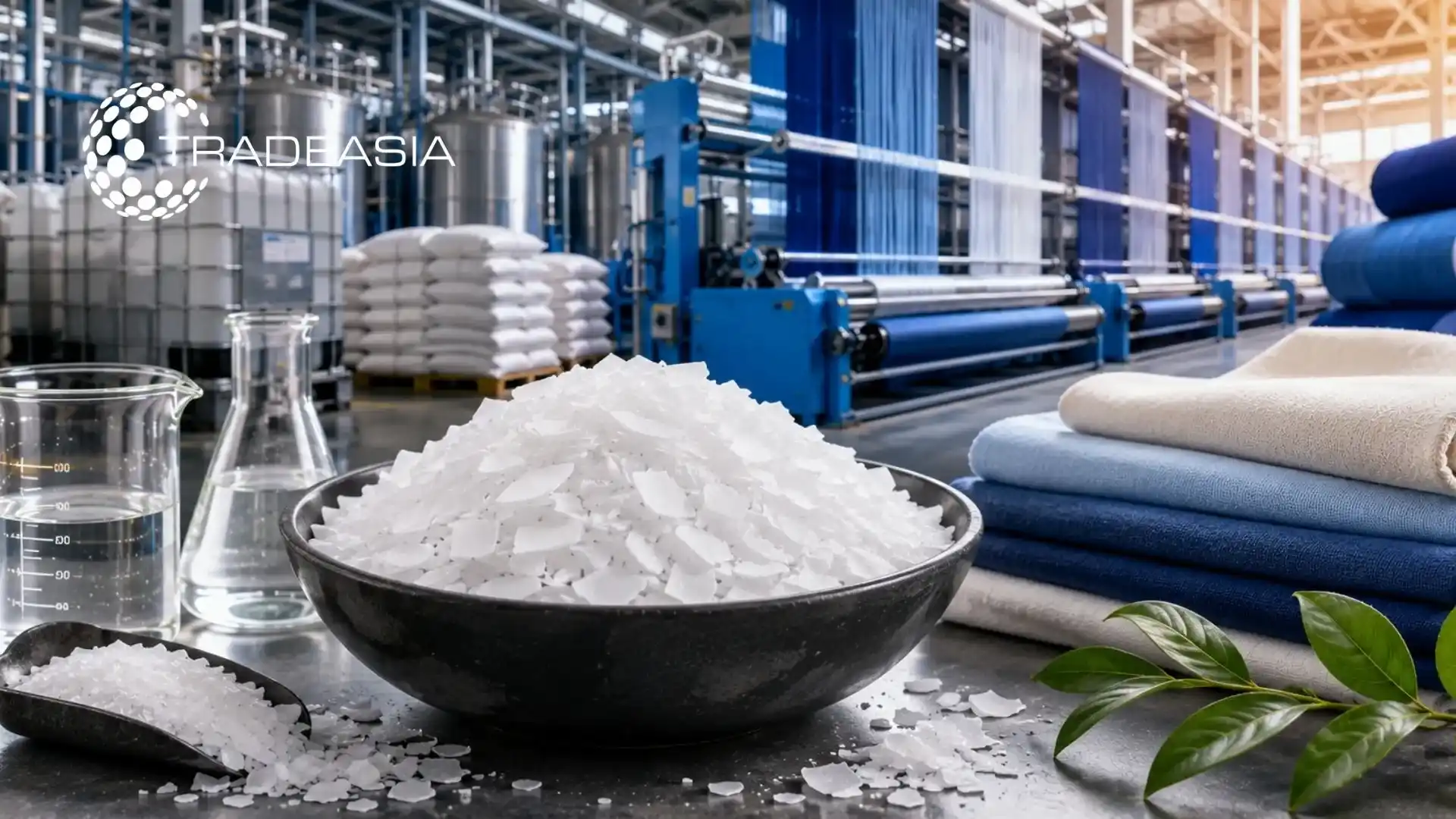
Introduction Caustic Soda Flakes
The global textile industry is undergoing rapid transformation, driven by shifting consumer preferences, sustainability regulations, and the continued expansion of manufacturing hubs across Asia, Africa, and Latin America. At the heart of many critical textile processes lies a fundamental inorganic chemical: caustic soda flakes, also known as sodium hydroxide flakes. From fiber preparation and scouring to mercerization and dyeing, this versatile alkali is indispensable to achieving the quality, uniformity, and performance that modern textile buyers demand.
As we look toward 2026, application buyers and procurement teams are reassessing their chemical portfolios to secure reliable, compliant, and cost-effective inputs. This includes a closer examination of caustic soda flakes for industry textile chemicals, not only in terms of technical performance but also supply chain resilience, environmental impact, and regulatory compliance. In this context, global distributors and platforms such as chemtradeasia play a crucial role in connecting producers with downstream textile manufacturers and chemical formulators.
This article provides a structured, in-depth overview of the evolving market for caustic soda flakes in textile applications through 2026. It covers market outlook, product characteristics, key applications, and sourcing strategies, with a particular focus on how buyers can leverage data, partnerships, and supply chain insights to make more informed purchasing decisions in a complex global environment.
Global Market Outlook for Caustic Soda Flakes to 2026
The global caustic soda market, encompassing liquid and solid forms (including flakes and pearls), has historically grown in line with industrial output in sectors such as pulp and paper, alumina, soaps and detergents, and textiles. Various industry analyses have estimated that the global caustic soda market value surpassed USD 35–40 billion in the early 2020s, with a compound annual growth rate (CAGR) of roughly 3–4% projected through 2026. While textiles represent a portion of total demand, they are a strategically important consumer due to the high purity and consistency requirements for textile processing chemicals.
By 2026, demand for caustic soda flakes is expected to be supported by continued textile production growth in key regions such as China, India, Bangladesh, Vietnam, and emerging hubs in Africa. At the same time, environmental regulations and energy costs are reshaping the chlor-alkali industry, the primary production route for caustic soda. Producers are gradually moving from older mercury-cell technologies toward membrane-cell processes, which are more energy-efficient and environmentally acceptable, but often require capital investment and can influence regional pricing structures.
Another critical factor for application buyers is logistics and trade flows. Caustic soda is produced in both integrated and merchant plants, often located near chlor-alkali complexes that also supply chlorine to PVC and other derivatives. Global trade in caustic soda flakes and solids is sensitive to freight rates, port congestion, and regional imbalances between supply and demand. As of the mid-2020s, many buyers are incorporating risk management strategies, such as multi-sourcing, regional diversification, and long-term offtake agreements, to mitigate volatility. Platforms like chemtradeasia have emerged as important intermediaries, providing access to multiple origins and logistics solutions through a single, coordinated interface.
Product Profile: Caustic Soda Flakes for Textile Chemicals
Caustic soda flakes are the solid, flaked form of sodium hydroxide (NaOH), typically produced by concentrating liquid caustic soda and then solidifying and flaking it. For textile chemical applications, product specifications are especially important. Industrial grades commonly used in textiles often feature NaOH content of 98–99% minimum, with low levels of impurities such as sodium chloride (NaCl), sodium carbonate (Na2CO3), and iron. Moisture content is tightly controlled to ensure predictable dissolution and to prevent caking during storage and transport.
Standard packaging formats for textile and chemical buyers include 25 kg polypropylene (PP) or kraft paper bags with inner liners, 500–1,000 kg jumbo bags, and, for larger consumers, bulk container loading. The choice of packaging influences handling efficiency, safety practices, and storage conditions. Because caustic soda flakes are highly hygroscopic and react with carbon dioxide in the air, they must be stored in dry, well-ventilated areas, away from acids and incompatible materials. Application buyers typically evaluate not only technical specifications but also packaging integrity, palletization standards, and labeling, including hazard symbols and batch traceability.
In textile applications, buyers frequently require consistency across batches to maintain process stability in scouring, desizing, and mercerization. This means that parameters such as apparent density, flake size distribution, and solubility rate can be relevant. Reliable suppliers and distributors, including chemtradeasia, often provide detailed certificates of analysis (COA), safety data sheets (SDS), and technical support to help textile chemical formulators integrate caustic soda flakes effectively into their product lines, whether for auxiliary agents, pre-treatment chemicals, or specialty finishing formulations.
Key Applications in the Textile and Related Industries
Within the textile value chain, caustic soda flakes are essential in several critical stages. One of the most significant uses is in scouring and desizing, where strong alkaline conditions are required to remove natural waxes, pectins, and sizing agents from cotton and other cellulosic fibers. This pre-treatment step enhances absorbency and prepares the fabric for uniform dye uptake. The use of caustic soda in carefully controlled concentrations helps minimize fiber damage while achieving high levels of cleanliness and whiteness, particularly important for high-quality apparel and home textiles.
Another core application is mercerization of cotton. In this process, fabrics or yarns are treated with concentrated caustic soda solutions under tension, resulting in improved luster, strength, and dye affinity. Mercerized cotton exhibits deeper, more vibrant colors and enhanced dimensional stability, attributes that are highly valued in premium textiles. Application buyers sourcing caustic soda flakes for industry textile chemicals must ensure that the product dissolves cleanly to produce stable, homogeneous mercerizing liquors with minimal insoluble residues that could impact fabric quality.
Beyond core textile pre-treatment and mercerization, caustic soda flakes are used in dyeing and finishing auxiliaries, pH adjustment, and effluent treatment. For reactive dyeing of cotton, controlled alkalinity is crucial to promote the fixation of dyes to the fiber. In finishing, caustic soda may be part of formulations for special effects, shrinkage control, or surface modification. Additionally, textile mills use caustic soda in wastewater treatment to neutralize acidic streams and adjust pH for optimal performance of biological treatment systems. This broad application range underscores why stable supply and consistent quality of caustic soda flakes are strategic priorities for textile sector buyers.
Supply Chain, Sourcing Strategies, and the Role of chemtradeasia
The supply chain for caustic soda flakes is inherently global, with major production centers in Asia, the Middle East, Europe, and North America. For textile manufacturers and chemical formulators, sourcing strategies must balance cost, reliability, and compliance. Freight costs, port infrastructure, and regional demand patterns can all influence landed prices. For example, large textile clusters in South Asia may source from nearby chlor-alkali producers, but also import from the Middle East or Southeast Asia when price differentials or capacity constraints arise. This dynamic environment encourages buyers to work with partners that have broad geographic reach and strong logistics capabilities.
Digital trading and distribution platforms such as chemtradeasia have become increasingly relevant for application buyers heading into 2026. By aggregating supply from multiple producers and offering standardized documentation, quality assurance, and logistics coordination, these platforms can reduce transaction complexity and help buyers benchmark offers across origins and specifications. For caustic soda flakes, this means easier comparison of NaOH content, impurity levels, packaging options, and compliance with national and international standards, including REACH, GHS labeling, and local import regulations.
Risk management is another key consideration. The experiences of recent years, marked by shipping disruptions, energy price volatility, and regulatory changes, have encouraged textile buyers to diversify their supplier base and build more resilient procurement models. Through partners like chemtradeasia, buyers can implement multi-origin sourcing, secure forward contracts, and access market intelligence on pricing trends and capacity expansions. This combination of product availability, technical documentation, and market insight supports more informed decision-making for caustic soda flakes and other critical textile chemicals.
Conclusion
As the global textile industry advances toward 2026, the role of caustic soda flakes in ensuring product quality, process efficiency, and cost competitiveness remains fundamental. From scouring and desizing to mercerization and dyeing, sodium hydroxide in flake form is a cornerstone of modern textile chemistry. Application buyers who understand the technical requirements of their processes, stay informed about market dynamics, and engage with reliable supply partners will be better positioned to secure consistent, high-quality material at competitive terms, even in a volatile global environment.
At the same time, broader trends, such as decarbonization of the chlor-alkali industry, stricter environmental regulations, and the digitalization of chemical trading—are reshaping how caustic soda flakes are produced, traded, and consumed. Buyers who leverage platforms like chemtradeasia gain access not only to product supply but also to market insights, documentation, and logistics solutions that can strengthen their overall supply chain strategy. By aligning procurement practices with these emerging trends, textile manufacturers and chemical formulators can enhance resilience and support long-term business growth.
This article is intended solely for informational and market insight purposes and does not constitute technical, safety, or professional advice. Users should independently verify all information with qualified experts, consult official documentation such as MSDS/SDS, and contact appropriate professionals or our team before making decisions or implementing caustic soda flakes in specific applications.