
A major policy deadline is approaching for India's chemical supply chain. The emergency customs duty waiver introduced during the Hormuz-related market disruption expires on June 30, 2026, ending temporary relief for dozens of imported petrochemical and chemical products.
For procurement teams, the India duty waiver expiry is more than a regulatory event. It directly affects the landed cost of key agrochemical intermediates, fertilizer inputs and industrial chemicals that many manufacturers rely on for production. Companies that fail to adjust sourcing plans before Q3 may face higher raw material costs and tighter margins.
Why India Introduced the Emergency Duty Waiver
The government introduced the temporary customs duty waiver after severe market disruptions pushed feedstock and chemical prices sharply higher.
Supply interruptions across major trade routes created cost pressure across multiple sectors. Import-dependent industries faced rapid increases in raw material expenses, particularly for petrochemicals and chemical intermediates.
Several factors drove the emergency response:
• Polymer prices reportedly surged by around 60%, creating significant pressure on manufacturers and downstream users.
• Chemical importers faced elevated freight costs, longer transit times and reduced supplier availability.
• Domestic industries required short-term support to prevent major disruptions in production and agricultural supply chains.
The waiver covered approximately 40 chemical and petrochemical products, helping companies maintain supply continuity during an exceptionally volatile period.
The June 30 Expiry and What Changes Next
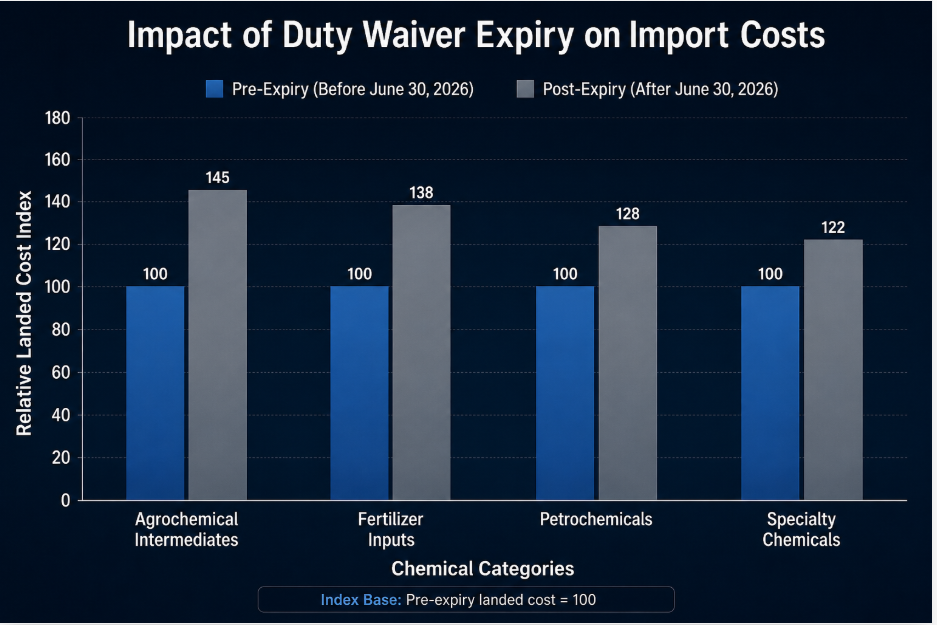
The waiver expires on June 30, 2026. Unless further extensions emerge, affected products will return to their standard customs duty structure from July onward.
That shift will immediately increase the landed cost of imported raw materials covered under the emergency measure.
For many buyers, the timing creates a procurement challenge. Inventory purchased before the deadline may retain a temporary cost advantage, while shipments arriving afterward could carry higher import expenses.
Agrochemical Import Costs Face New Pressure
The agrochemical sector could experience some of the most immediate effects from the tariff reversal.
Many manufacturers depend on imported intermediates for herbicides, fungicides and insecticides. Even modest tariff increases can affect formulation economics, especially in highly competitive export markets.
Procurement teams should pay close attention to:
• Imported active ingredient precursors used in crop protection products.
• Specialty intermediates sourced from international suppliers.
• Feedstocks linked to broader petrochemical value chains.
• Contract pricing arrangements that may not account for post-waiver duties.
Companies that operate with narrow inventory buffers may feel the impact first as replacement stock enters the supply chain under higher duty rates.
Implications for Fertilizer Blenders and Input Suppliers
Fertilizer blending operations also face a changing cost environment.
Many fertilizer products rely on globally traded chemical inputs whose pricing already reflects freight volatility, energy costs and supply constraints. The return of customs duties adds another layer of expense.
Blenders should evaluate:
• Existing inventory coverage for Q3 requirements.
• Exposure to imported raw materials.
• Alternative sourcing opportunities from lower-cost supplier regions.
• Customer pricing mechanisms and contract flexibility.
Organizations that delay procurement reviews may struggle to protect margins during the second half of the year.
Supply Chain Planning Becomes a Competitive Advantage
The most successful importers will not focus solely on the tariff itself. They will evaluate the entire landed cost structure.
Customs duties represent only one component of procurement economics. Freight rates, currency movements, supplier reliability and inventory carrying costs remain equally important.
Companies should consider several practical actions:
• Secure critical shipments before the deadline where commercially viable.
• Review supplier agreements for post-June pricing adjustments.
• Recalculate total landed cost assumptions for Q3 and Q4.
• Identify secondary suppliers in alternative export markets.
• Build contingency plans for products with concentrated sourcing risk.
How Global Chemical Trade Trends Affect Indian Buyers
The duty waiver expiry arrives during a period of significant change in global chemical trade.
The Hormuz disruption accelerated supplier diversification efforts across many industries. Importers increasingly evaluate sourcing strategies based on resilience rather than price alone.
Several exporting regions continue to gain importance:
• China remains a major supplier across commodity chemicals and intermediates.
• India continues to expand domestic chemical manufacturing capacity.
• The United States has strengthened its position in several petrochemical segments.
• Morocco maintains strategic influence in phosphate-related products.
As trade flows evolve, procurement managers must balance cost competitiveness with supply security.
Financial Impact on Procurement Budgets
The exact cost increase will vary by product category, supplier location and duty classification.
However, the broader impact extends beyond customs charges. Higher import costs can affect working capital requirements, inventory valuation and customer pricing decisions.
Procurement leaders should revisit budgeting assumptions for the remainder of 2026.
Areas requiring immediate attention include:
• Raw material spending forecasts.
• Margin projections.
• Inventory replenishment schedules.
• Supplier concentration risk.
• Customer contract negotiations.
Companies that adjust early will have greater flexibility than those reacting after new costs enter the supply chain.
Regulatory Monitoring Is Now Essential
Many chemical buyers focus heavily on pricing and logistics. Regulatory developments deserve equal attention.
Temporary trade measures often create short-term opportunities, but they can also introduce uncertainty when expiration dates approach.
Organizations should establish a structured monitoring process that tracks:
• Customs policy updates.
• Trade notifications.
• Import classification changes.
• Industry association guidance.
• Government announcements affecting chemical imports.
Timely regulatory intelligence can prevent unexpected cost increases and support more accurate procurement planning.
What Procurement Teams Should Do Now
The June 30 deadline creates a clear decision point for agrochemical manufacturers, fertilizer blenders and chemical importers.
The companies best positioned for Q3 will be those that act before the tariff reversal takes effect. Waiting until higher-cost shipments arrive may reduce purchasing flexibility and compress margins.
A practical action plan includes reviewing inventory positions, reassessing supplier contracts, updating landed cost calculations and evaluating diversification opportunities across multiple sourcing regions.
The end of the emergency waiver does not automatically create a supply crisis. It does, however, increase the importance of disciplined procurement management and forward planning across India's chemical and agricultural value chains.
Ready to source fertilizer raw materials from verified global suppliers? Explore competitive offers on our platform today.
Diammonium Phosphate (Technical 16-46) - Vietnam CAS: 7783-28-0