
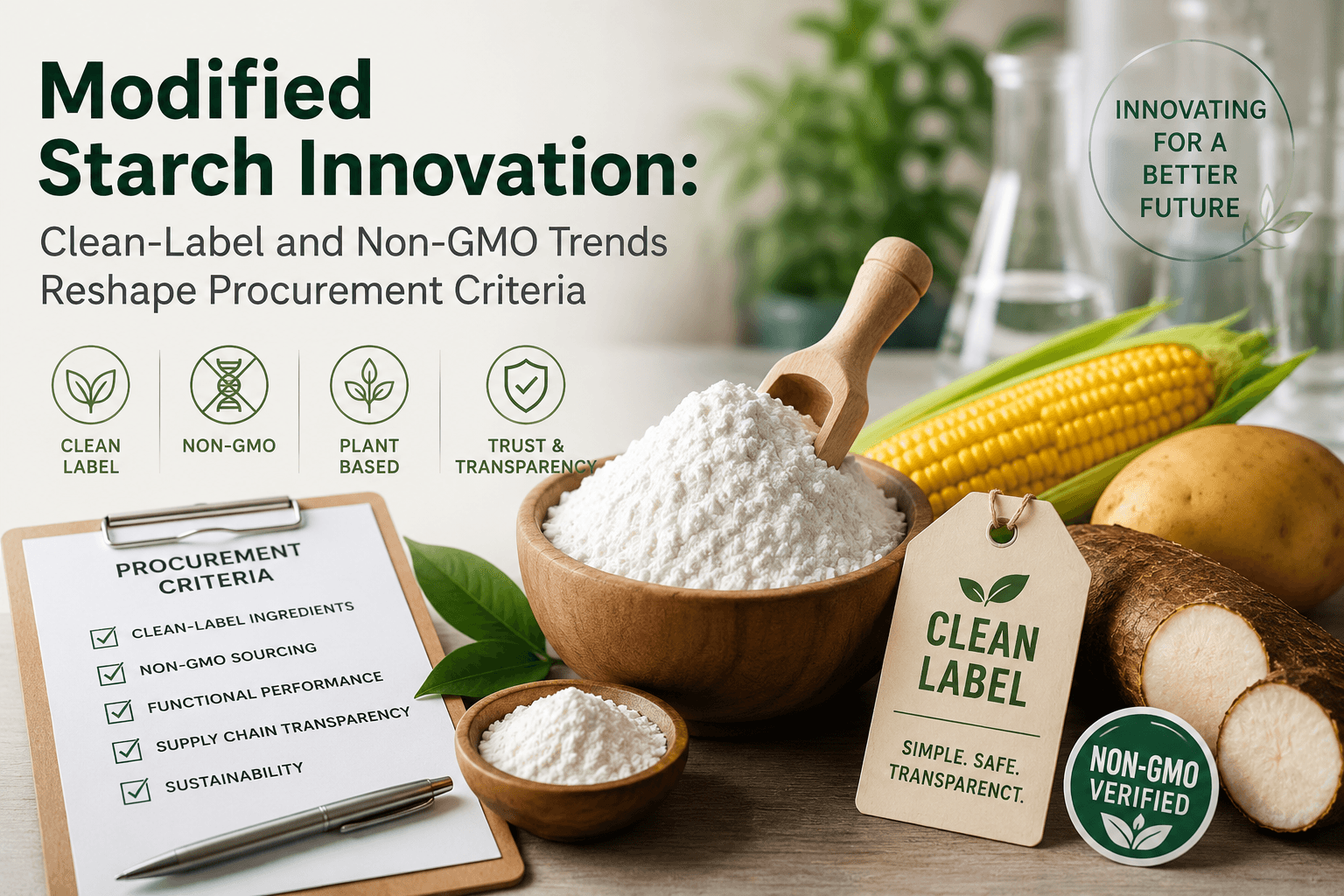
Modified Starch Innovation: Clean-Label and Non-GMO Trends Reshape Procurement Criteria
Introduction
Modified starches are essential functional ingredients used widely in processed foods to improve texture, stability, viscosity, and shelf life. They are found in products such as sauces, dairy items, bakery goods, meat products, soups, and ready-to-eat meals. Traditionally, many of these starches were chemically modified to achieve consistent performance across diverse processing conditions.
In 2026, however, the global modified starch market is undergoing a structural shift. Driven by clean-label demand, regulatory tightening in Europe, and consumer preference for “natural” ingredients, food manufacturers are actively reformulating products. This is reshaping procurement criteria and accelerating demand for physically and enzymatically modified, non-GMO, and certified starch solutions.
What Are Modified Starches?
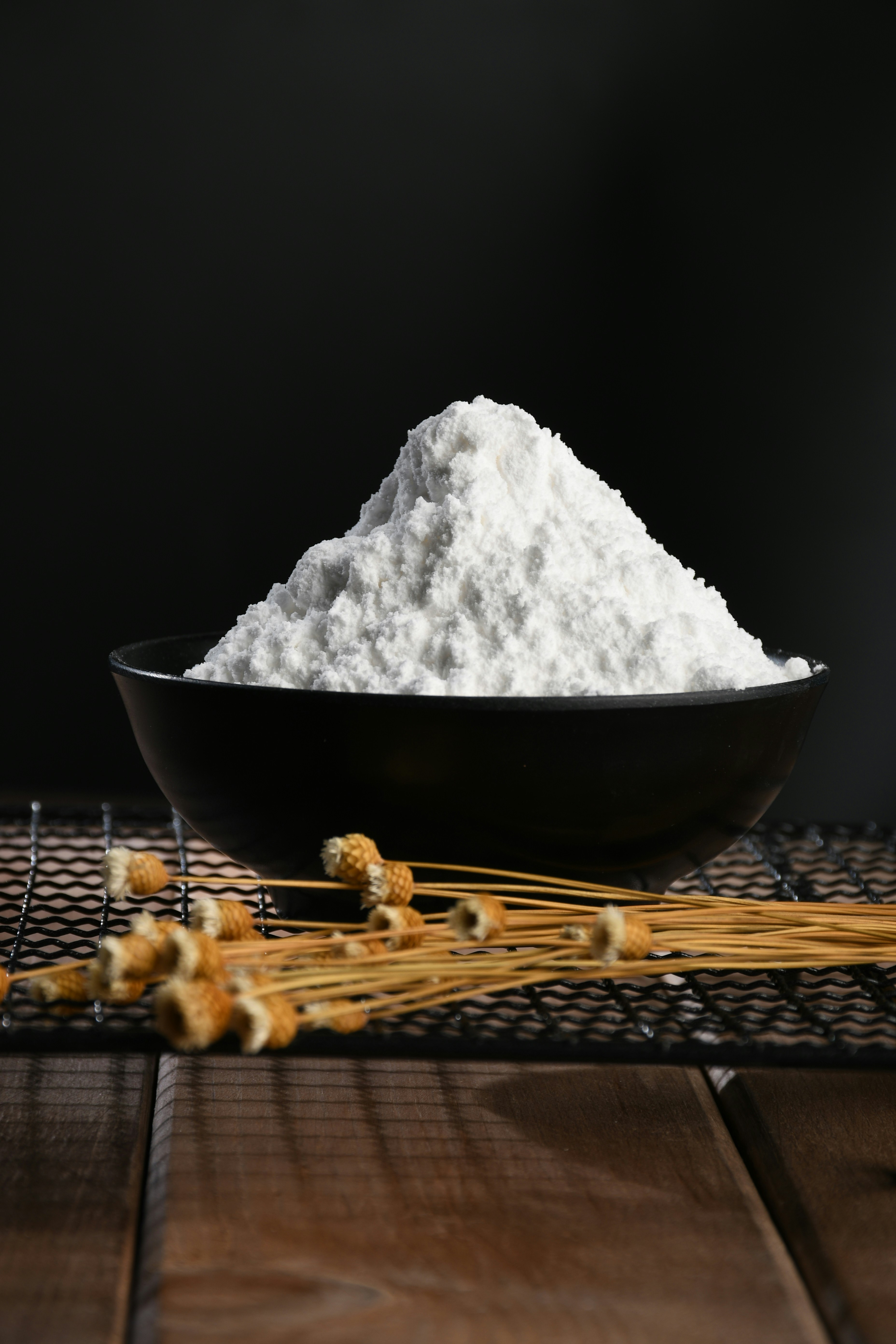
Modified starches are starches that have been altered to improve their functional properties compared to native starch.
Key functions:
Thickening
Stabilizing emulsions
Improving freeze-thaw stability
Enhancing texture
Preventing syneresis (water separation)
Improving shelf life
Common sources:
Corn starch
Tapioca starch
Potato starch
Wheat starch (limited applications due to allergen concerns)
Modified Corn Starch (E1442) CAS: 65996-63-6
Types of Modification
1. Chemical Modification (Under Pressure)
Historically the most widely used approach, involving processes such as:
Esterification
Etherification
Cross-linking
Challenges in 2026:
Increasing regulatory scrutiny in Europe
Clean-label resistance from consumers
Reformulation pressure from major food brands
Some esterified starches are now facing tighter compliance requirements under updated EU food additive frameworks.
2. Physical Modification (Clean-Label Friendly)
Physical methods include:
Heat treatment
Pressure treatment
Pre-gelatinization
Advantages:
No chemical additives
Better clean-label acceptance
Regulatory simplicity
These starches are increasingly preferred in Europe and North America.
3. Enzymatic Modification (Fastest Growing Segment)
Enzymes are used to modify starch structure in a controlled way.
Benefits:
Clean-label positioning
High functional performance
Consistent quality
Lower regulatory burden
This segment is expanding rapidly due to its compatibility with “natural ingredient” claims.
Clean-Label Movement Driving Reformulation
The clean-label trend is one of the strongest forces reshaping food ingredient procurement globally.
Key expectations from manufacturers:
Fewer chemical-sounding ingredients
Recognizable food components
Non-GMO certification
Simplified ingredient lists
Impact on starch usage:
Replacement of chemically modified starches
Increased use of native or physically modified starches
Higher demand for tapioca-based clean-label systems
This is especially strong in premium food categories.
Non-GMO and Organic Certification Pressure
Certification requirements are becoming a key procurement filter.
Key certifications in demand:
Non-GMO Project Verified
EU Organic certification
USDA Organic (US market)
Clean Label Project compliance (brand-driven)
Regional dynamics:
Europe: strongest regulatory and consumer pressure
North America: brand-led reformulation
Asia: export-driven certification upgrades
Suppliers without certifications are increasingly excluded from premium supply chains.
Regional Supply Landscape
Thailand: Tapioca-Based Clean-Label Leader
Thailand remains the global leader in tapioca starch production.
Strengths:
Strong cassava agricultural base
Well-established starch industry
High suitability for clean-label applications
Current trend:
Rapid expansion of non-GMO and organic-certified tapioca starch production
Strong demand from EU and US food manufacturers
China: Corn-Based Modified Starch Powerhouse
China dominates global modified starch capacity.
Strengths:
Large-scale corn processing infrastructure
Integrated food and chemical starch industry
Cost-competitive production
Current trend:
Upgrading certification standards for export markets
Increasing production of clean-label compliant starch derivatives
Strong domestic demand for processed foods
India: Emerging Alternative Supplier
India is expanding its starch modification capabilities.
Strengths:
Growing maize production base
Expanding food processing industry
Increasing export ambitions
Limitations:
Smaller scale compared to China and Thailand
Certification infrastructure still developing
However, India is increasingly targeting mid-tier and regional clean-label demand.
EU Regulatory Pressure in 2026
Europe is driving some of the strictest reforms in starch usage.
Key regulatory influences:
Updated food additive classifications
REACH-related chemical assessments
Stricter labeling requirements
Increased scrutiny of chemically modified food ingredients
Result:
Food manufacturers are proactively reformulating products to avoid future compliance risks.
Procurement Impact on Food Manufacturers
Procurement teams are adjusting sourcing strategies significantly.
Key changes:
Shift from chemically modified to enzymatically modified starches
Increased supplier qualification requirements
Stronger emphasis on documentation and traceability
Multi-origin sourcing strategies (Thailand + China + India)
Procurement priorities now include:
Clean-label compliance
Certification validity
Batch consistency
Regulatory risk mitigation
Application-Level Demand Trends
Sauces and Dressings
Viscosity control
Freeze-thaw stability
Dairy Products
Texture improvement
Emulsion stabilization
Bakery Products
Moisture retention
Shelf-life extension
Meat and Processed Foods
Water binding
Texture enhancement
Across all categories, clean-label reformulation is driving ingredient substitution.
Key Market Drivers
Rising consumer preference for natural ingredients
EU regulatory tightening on food additives
Growth of premium processed food segments
Expansion of export-oriented food manufacturing in Asia
Increased demand for non-GMO verified ingredients
Market Outlook
The modified starch market in 2026 is defined by a transition away from chemically modified systems toward cleaner, more transparent, and certification-driven alternatives. While total demand for functional starches remains strong, the composition of that demand is shifting significantly.
Thailand and China remain dominant global suppliers, but both are investing heavily in non-GMO, organic, and enzymatically modified product lines to maintain access to high-value EU and US markets. India is emerging as a secondary growth hub, particularly for regional supply chains.
Key Takeaways
Modified starch demand is being reshaped by clean-label and non-GMO trends.
Chemically modified starches face increasing regulatory and consumer pressure.
Enzymatically and physically modified starches are the fastest-growing segments.
Thailand dominates tapioca-based clean-label starch supply.
China leads global corn-based modified starch production.
India is an emerging supplier for regional markets.
EU regulatory updates are accelerating reformulation cycles.
Procurement is increasingly driven by certification and traceability requirements.