Spot Markets vs Contract Markets in Chemical Trading
Introduction
Chemical trading is a vital component of the global chemical industry, connecting manufacturers, distributors, traders, and end users across international markets. One of the most important decisions chemical buyers and sellers face is whether to operate through spot markets or contract markets. Both approaches offer unique advantages and challenges, influencing pricing, supply security, risk management, and procurement strategies.
Understanding the differences between spot and contract markets is essential for businesses seeking to optimize purchasing decisions, maintain supply continuity, and manage market volatility. As chemical markets become increasingly dynamic due to fluctuating feedstock costs, freight rates, and geopolitical events, selecting the right procurement strategy has become more important than ever.
What Are Spot Markets?
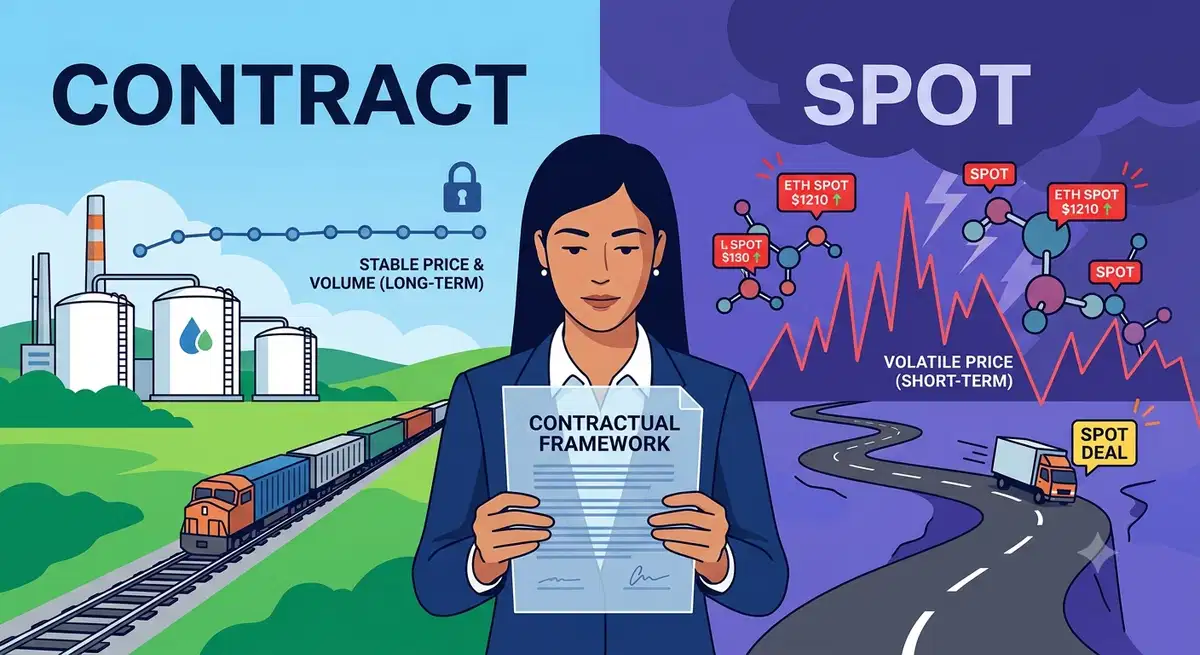
A spot market is a marketplace where chemical products are bought and sold for immediate delivery at current market prices. Transactions are typically completed quickly, with prices determined by prevailing supply and demand conditions.
Spot purchases are commonly used when buyers require urgent material, need additional inventory, or want to take advantage of favorable market prices.
Characteristics of Spot Markets
Immediate or near-term delivery.
Prices based on current market conditions.
Short-term purchasing arrangements.
Flexible buying quantities.
Limited long-term commitments.
Because spot prices react quickly to market changes, they often fluctuate more than contract prices.
What Are Contract Markets?
Contract markets involve long-term agreements between buyers and suppliers. These contracts typically specify pricing mechanisms, delivery schedules, quality requirements, and purchase volumes over a defined period.
Contract agreements can range from several months to multiple years depending on the nature of the chemical product and the relationship between trading partners.
Characteristics of Contract Markets
Long-term supply agreements.
Predefined pricing structures.
Stable supply commitments.
Predictable delivery schedules.
Stronger supplier relationships.
Contract markets provide greater certainty and are widely used for critical raw materials and high-volume chemical purchases.
How Spot Market Pricing Works
Spot market prices are influenced by real-time market conditions. Prices can rise or fall rapidly depending on factors such as:
Supply Availability
Unexpected plant shutdowns, maintenance activities, or supply disruptions can reduce product availability and increase spot prices.
Demand Fluctuations
Increased industrial activity or seasonal demand can create temporary shortages, pushing prices higher.
Feedstock Costs
Changes in crude oil, natural gas, naphtha, or other feedstock prices often impact spot market valuations.
Freight and Logistics Conditions
Shipping costs, transportation bottlenecks, and port congestion can affect product availability and pricing in regional markets.
As a result, spot prices are often more volatile than contract prices.
How Contract Market Pricing Works
Contract pricing is generally based on predetermined mechanisms agreed upon by both parties.
Common contract pricing models include:
Fixed Pricing
Prices remain constant throughout the contract period regardless of market fluctuations.
Formula-Based Pricing
Prices are linked to feedstock indices, market benchmarks, or production costs and adjust according to agreed formulas.
Index-Linked Pricing
Contract prices move in line with published market indices while maintaining predefined adjustment structures.
These pricing methods help create greater predictability for both buyers and suppliers.
Advantages of Spot Markets
Flexibility
Buyers can purchase chemicals only when needed without committing to long-term agreements.
Opportunity to Benefit from Lower Prices
When market prices decline, spot buyers can take advantage of lower costs immediately.
Suitable for Short-Term Requirements
Spot purchases are ideal for emergency procurement, inventory replenishment, and temporary demand increases.
Supplier Diversification
Companies can source products from multiple suppliers, reducing dependence on a single source.
Challenges of Spot Markets
Price Volatility
Spot prices can fluctuate significantly due to market uncertainty and supply-demand imbalances.
Supply Risks
Product availability may be limited during periods of high demand or supply disruptions.
Budgeting Difficulties
Frequent price changes make procurement planning and cost forecasting more challenging.
Increased Procurement Effort
Buyers may need to continuously monitor markets and negotiate new transactions.
Advantages of Contract Markets
Supply Security
Long-term agreements help ensure consistent product availability, even during market disruptions.
Price Stability
Contract pricing provides greater cost predictability and supports long-term budgeting.
Strong Supplier Relationships
Long-term partnerships often result in improved service levels, collaboration, and strategic support.
Reduced Market Exposure
Contract buyers are less vulnerable to short-term price spikes and supply shortages.
Challenges of Contract Markets
Limited Flexibility
Buyers may be required to purchase predetermined volumes regardless of market conditions.
Potential Opportunity Loss
If market prices decline significantly, contract buyers may pay more than spot market participants.
Long-Term Commitments
Contract obligations can reduce the ability to switch suppliers or adjust procurement strategies quickly.
Contract Complexity
Negotiating pricing formulas, delivery schedules, and volume commitments can require significant effort.
When Should Companies Use Spot Markets?
Spot purchasing is often appropriate when:
Demand is uncertain.
Inventory requirements fluctuate.
Market prices are expected to decline.
Additional material is required urgently.
Supply alternatives are readily available.
Many organizations use spot purchases to supplement existing contract agreements.
When Should Companies Use Contract Markets?
Contract procurement is generally preferred when:
Supply continuity is critical.
Large volumes are required regularly.
Budget stability is important.
Long-term supplier relationships are valued.
Market volatility is expected to increase.
Contract agreements help reduce uncertainty and support long-term operational planning.
Hybrid Procurement Strategies
Many successful chemical companies combine both approaches through a hybrid procurement strategy.
For example:
70–80% of demand may be secured through long-term contracts.
20–30% may be sourced through spot markets.
This approach balances supply security with flexibility and allows organizations to respond effectively to changing market conditions.
By combining contract stability with spot market opportunities, companies can optimize procurement performance while managing risk.
The Future of Chemical Trading
Digital procurement platforms, real-time market intelligence tools, and predictive analytics are transforming chemical trading. Buyers now have greater access to pricing data, supply chain visibility, and forecasting capabilities than ever before.
As market transparency improves, organizations will increasingly use data-driven strategies to determine the optimal balance between spot and contract purchasing.
Companies that effectively leverage both market structures will be better positioned to control costs, manage risk, and maintain a competitive advantage in global chemical markets.
Conclusion
Spot markets and contract markets each play an important role in chemical trading. Spot markets offer flexibility and opportunities to capitalize on favorable pricing, while contract markets provide supply security, cost predictability, and stronger supplier relationships.
The most effective procurement strategy depends on business objectives, market conditions, risk tolerance, and supply requirements. For many organizations, a balanced approach that combines both spot and contract purchasing delivers the best results. By understanding the strengths and limitations of each market structure, companies can make smarter sourcing decisions and navigate the complexities of the chemical industry more effectively.
Betaine Anhydrous CAS: 107-43-7