
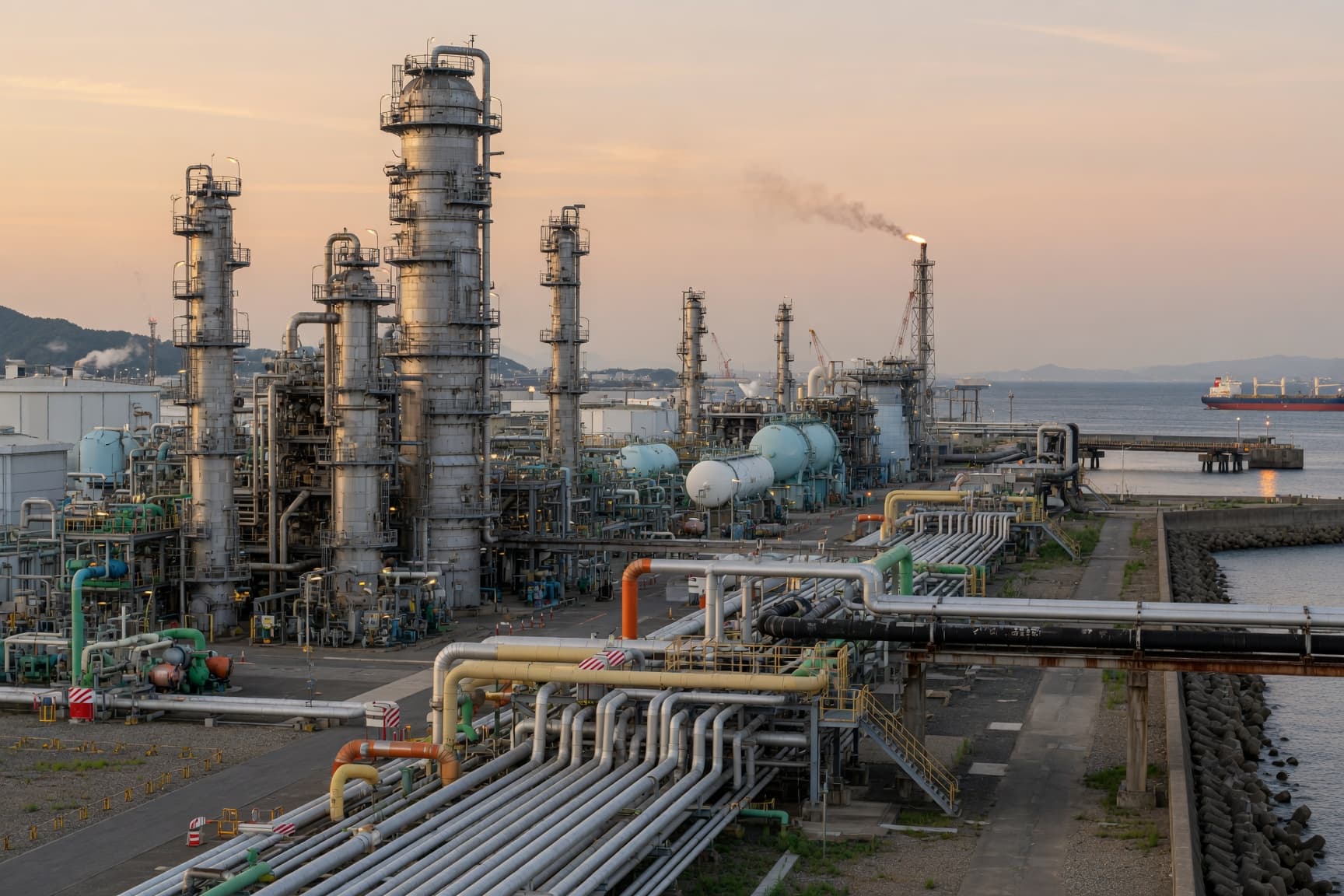
Japan’s petrochemical industry is entering a major transition period as naphtha supply constraints push producers to reconsider traditional feedstock strategies. The Japan petrochemical outlook for 2026 is being shaped by falling cracker utilization, Middle East supply dependence and growing interest in bio-based alternatives.
Japanese naphtha cracker utilization declined sharply in 2026 as supply disruptions affected one of Asia’s most important petrochemical feedstock flows. With the region heavily dependent on Middle Eastern naphtha, reduced availability has created significant pressure on ethylene and propylene production economics.
For chemical buyers, the shift signals a broader transformation in Asian petrochemical sourcing and production models.
Japan Naphtha Cracker Utilization Falls Under Supply Pressure
Naphtha crackers are central to producing key petrochemical building blocks including ethylene and propylene. These materials support plastics, synthetic fibers, packaging and industrial chemical production.
Japan’s average cracker utilization dropped to around 50% in April 2026, compared with much higher operating levels earlier in the year. ICIS Chemical Foresight projected utilization at approximately 57% in May, reflecting continued feedstock constraints.
The decline has affected:
Ethylene production economics.
Propylene availability.
Regional polymer supply.
Producer operating decisions.
Lower utilization rates indicate the pressure producers are facing from both supply limitations and weak margins.
Middle East Naphtha Dependence Creates Supply Vulnerability
Asia’s petrochemical industry depends heavily on Middle Eastern naphtha supply, with the region providing a significant share of imported feedstock.
This dependence creates exposure to:
Shipping disruptions.
Energy market volatility.
Geopolitical uncertainty.
Regional supply interruptions.
When naphtha availability tightens, crackers often reduce operating rates to manage costs and protect margins.
The 2026 disruption has highlighted the importance of feedstock diversification.
Bioethanol Emerges as Alternative Petrochemical Feedstock
The supply crisis is accelerating Japan’s interest in bio-based chemical production routes. Bioethanol can be converted into ethylene, creating an alternative pathway that reduces dependence on fossil-based naphtha.
This transition supports Japan’s broader circular economy goals.
Potential benefits include:
Greater feedstock flexibility.
Reduced exposure to imported fossil feedstocks.
Support for lower-carbon chemical production.
Alignment with sustainability targets.
The shift will not replace naphtha overnight, but it may become an increasingly important part of Japan’s long-term strategy.
Japan’s Circular Economy Strategy Reshapes Chemical Production
The Japanese government launched a ¥1 trillion Circular Economy Action Plan in April 2026 to strengthen recycling infrastructure and position Japan as an international recycling hub.
The initiative reflects a wider industrial transformation focused on:
Resource efficiency.
Recycling systems.
Alternative raw materials.
Lower-emission manufacturing.
Chemical producers are increasingly evaluating how these policies affect future investments and production models.
Major Japanese Chemical Companies Adjust Operations
Several major companies are reviewing their petrochemical strategies as market conditions change. Firms including Idemitsu Kosan, Asahi Kasei and Mitsui Chemicals are adapting operations, restructuring assets and reducing exposure to less profitable segments.
Industry adjustments include:
Reviewing production capacity.
Improving operational efficiency.
Investing in alternative technologies.
Divesting underperforming assets.
These actions reflect broader pressure on mature petrochemical markets.
Impact on Ethylene and Propylene Supply Chains
Ethylene and propylene are essential raw materials for many downstream products, including polyethylene, polypropylene and specialty chemicals.
Reduced cracker utilization can influence:
Regional polymer availability.
Import requirements.
Production costs.
Contract negotiations.
Buyers dependent on Japanese supply may need to monitor production rates and alternative regional sources.

Procurement Implications for Chemical Buyers
The changing Japanese petrochemical landscape requires buyers to reconsider traditional sourcing assumptions. Feedstock availability is becoming a more important factor in supplier reliability.
Procurement teams should evaluate:
Supplier feedstock flexibility.
Alternative production regions.
Long-term contract structures.
Bio-based material availability.
Inventory planning.
Companies with broader sourcing networks may be better prepared for future feedstock disruptions.
Challenges in Japan’s Bioethanol Transition
Although bioethanol offers strategic advantages, scaling alternative feedstocks requires significant investment and infrastructure development.
Challenges include:
Limited current production capacity.
Higher transition costs.
Technology requirements.
Supply consistency.
The transition will likely develop gradually alongside continued use of conventional petrochemical feedstocks.
Regional Impact Across Asian Chemical Markets
Japan’s feedstock challenges may influence wider Asian markets because the region operates through interconnected chemical trade networks.
Important regional factors include:
China’s growing petrochemical capacity.
Southeast Asia’s feedstock strategies.
Middle East export availability.
Regional polymer demand trends.
Changes in one major producer can influence pricing and trade flows across Asia.
What Buyers Should Expect From Japan’s Petrochemical Shift
Japan’s petrochemical sector is moving toward a more diversified feedstock model as supply risks expose the limitations of traditional naphtha dependence. The immediate challenge is managing production pressure while building a more resilient chemical ecosystem.
For buyers, the coming years may bring greater availability of recycled and bio-based chemical options alongside conventional products.
Companies that track feedstock developments and adapt procurement strategies will be better positioned as Japan reshapes its chemical production landscape.
Ready to source Bioethanol from verified global suppliers? Explore competitive offers on our platform today.
Coconut Diethanolamide CAS: 120-40-1