
With 20 years of experience as a chemical supplier In India, Tradeasia International offers solutions for the ever-growing need for raw materials applied in a wide range of industries. We aim to be a one-stop solution for our customers, as we provide a vast range of products that will fulfill both chemical commodities and specialty needs across the world. As a reliable chemical distributor and wholesaler In India, we strive to provide a seamless supply chain experience for chemical products complying with the customer's requirements. Our experienced team leaders along with the support of our global team are working around the clock to provide optimized supply chain services. Discover our market solutions and targeted industry trends to achieve a competitive advantage for your business.
With over two decades of expertise in global supply chain management, Tradeasia International offers optimal solutions for the distribution of raw materials and industrial chemicals worldwide. Propel your industry growth with the solutions provided by Tradeasia International today.
Organizing cargo consolidation and shipping using the company's supply chain strategy to meet your needs.
Conducting quality and quantity inspection before shipment to guarantee a smooth transacation and process.
Providing safe supply chain solutions for dangerous and non-dangerous goods and cargo.
Let us know how we can serve you better
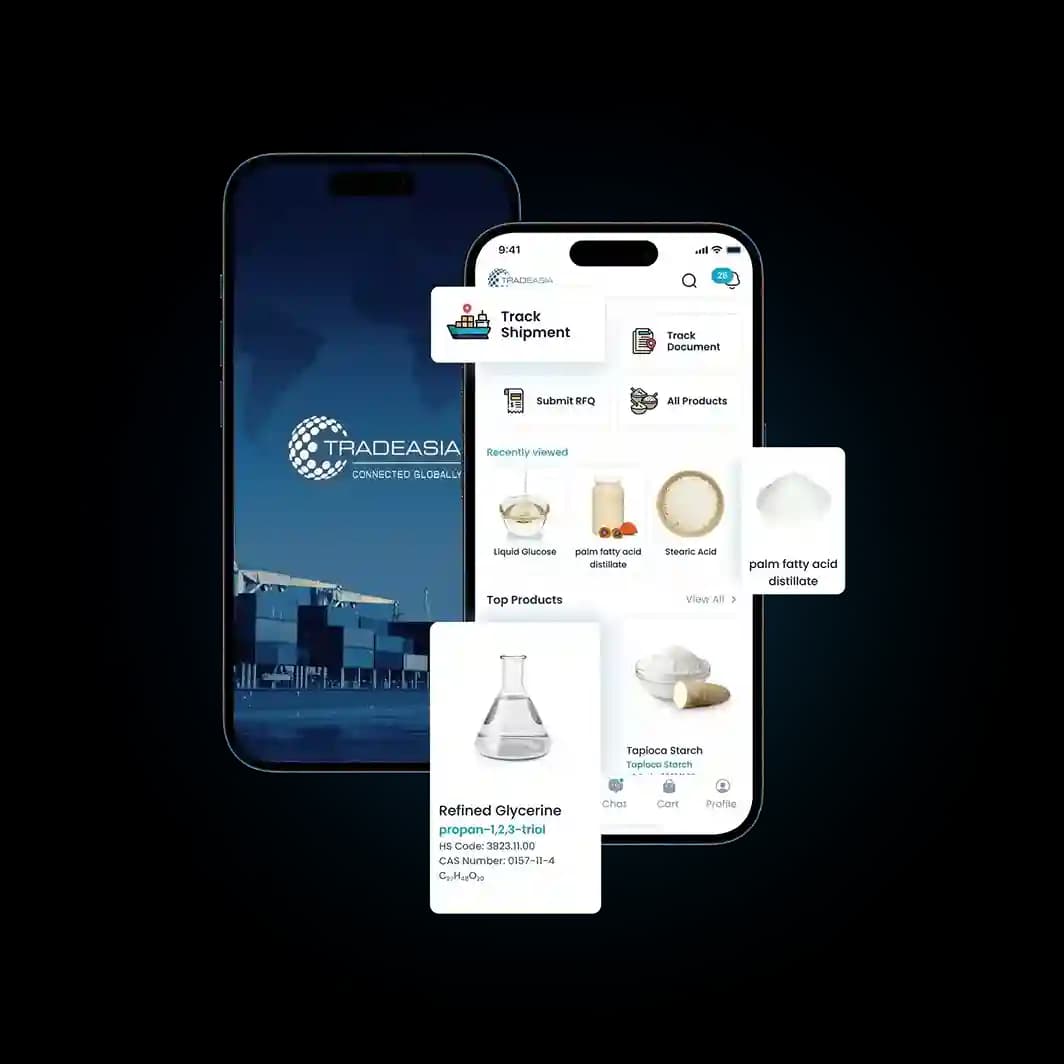
Your solution to efficient shipment tracking and document access. Download Now for a Seamless Experience!